Lunch cooks comparing salt
If tomatoes form the base of a soup, bean dish or pasta sauce, the salt figure per 100g lets you compare tins on the same basis. The seasoning in the rest of the meal matters too.


For a single-tin lunch, compare salt per 100g and ingredients, then choose a tomato texture that works in the dish. Tesco Italian Chopped Tomatoes lists 0.09g salt per 100g and M&S Organic Italian Chopped Tomatoes lists 0.02g; Mutti Polpa offers a finer texture but lists 0.30g salt per 100g, according to the respective Tesco, Ocado and Mutti product information.
If tomatoes form the base of a soup, bean dish or pasta sauce, the salt figure per 100g lets you compare tins on the same basis. The seasoning in the rest of the meal matters too.
A 400g tin may cover more than one portion: Ocado lists the M&S Organic tin as two servings, while Tesco lists approximately two 200g portions for Napolina Chopped Tomatoes. Plan how you will use any remainder.
Chunkier chopped tomatoes suit a dish where distinct pieces are welcome. Finely chopped tomatoes offer a more even base when larger pieces would get in the way.
Start with the nutrition and ingredients panels, then check the tomato form, pack size and storage instructions against your lunch plan.
| Priority | What to check | Your needs |
|---|---|---|
| Salt | Compare salt per 100g, not figures for differently sized servings. The NHS defines 0.3g salt or less per 100g as low. | If I am watching the salt in a lunch with stock, cheese or sauce, I want to compare the tomato base on the same per-100g basis. |
| Ingredients | Read the list for added salt, herbs or other seasoning. Check the exact variant rather than assuming a flavoured tin matches the plain one. | I would rather season the tomatoes myself if the recipe already includes strongly flavoured ingredients. |
| Texture | Choose chunky chopped tomatoes for distinct pieces or finely chopped tomatoes for a more even base. Whole plum tomatoes are a different form. | For a quick sauce, I want to know whether the tomatoes will need chopping before they go into the pan. |
| Portions | Confirm that the listing is one 400g tin rather than a multipack. Compare any stated serving size with the amount your recipe uses. | One tin may cover my lunch and leave some for another dish, so the label’s serving count is a planning aid rather than a fixed portion. |
| Leftovers | Read the chosen product’s instructions for transferring, refrigerating and using tomatoes after opening. Check its best-before date separately. | If I will not use the whole tin, I need a way to store the remainder and use it within the period stated for that product. |
The product information from Ocado, Tesco and Mutti lists different amounts per 100g for M&S Organic, Tesco Italian and Mutti Polpa. Other ingredients in the lunch also contribute to its total salt.
Compare the per-100g figures on the tins you are considering, then check the seasoning you plan to add.
A pack of several tins does not match a plan to buy only one for lunch.
Check the pack quantity as well as the weight of each tin; Napolina lists both single-tin and multipack formats.
An organic label or Italian origin does not tell you the salt figure, ingredients or texture of the specific tin.
Use those descriptions as preferences, then read the nutrition and ingredients panels for the product you will cook with.
A best-before date concerns the unopened product’s quality; it is not an instruction for storing tomatoes after opening.
Follow the chosen tin’s opened-storage directions. The Laila plum tomato listing, for example, instructs customers to refrigerate leftovers in a non-metallic container and use them within two days.
These examples show differences between specific tins; the figures should not be applied to every product from the same brand.
Tesco Italian Chopped Tomatoes is a 400g chopped-tomato option with nutrition information listed per 100g.
M&S Organic Italian Chopped Tomatoes is a 400g option listed by Ocado as two servings.
Napolina Chopped Tomatoes comes in a 400g single tin as well as multipack formats; Napolina describes its chopped tomatoes as chunky.
Mutti Polpa is a finely chopped tomato option for dishes where larger pieces are unwanted.
These 400g options include chopped tomatoes and whole plum tomatoes. Choose the form that suits your recipe rather than treating them as interchangeable.
 No image available
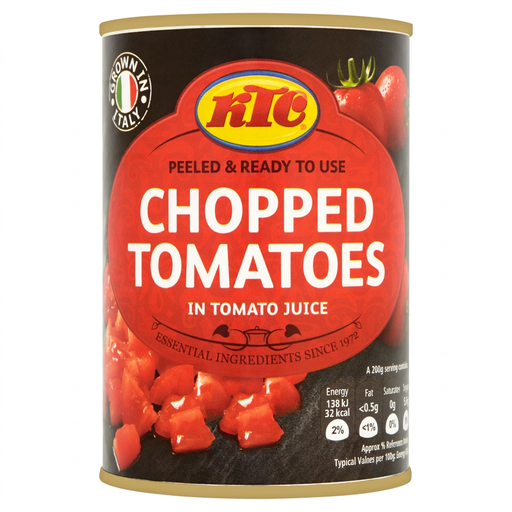
A single tin of chopped tomatoes for a soup, sauce or stew. The listing gives 0.09g salt per 100g and ingredients of tomatoes, tomato juice and citric acid. Check the can for serving and opened-storage instructions if you expect leftovers.
 No image available
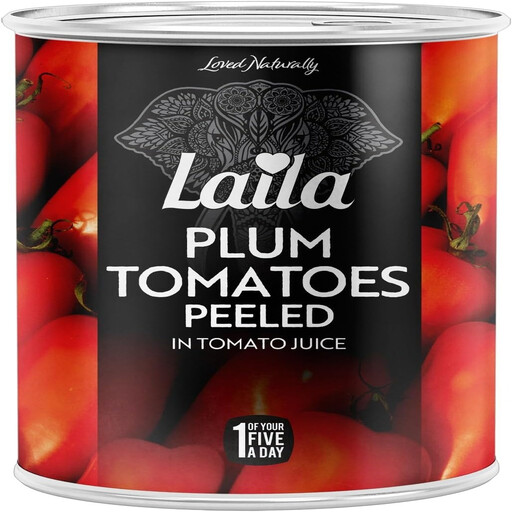
Choose this single tin when whole peeled plum tomatoes suit the dish; they are not pre-chopped. The listing gives 0.1g salt per 100g, states 2–4 servings and instructs you to refrigerate leftovers in a non-metallic container and use them within two days.
Compare salt per 100g on the specific tins, then consider what else you will add to the lunch. Ocado lists 0.02g per 100g for M&S Organic Italian Chopped Tomatoes, Tesco lists 0.09g for Tesco Italian Chopped Tomatoes, and Mutti lists 0.30g for Polpa; the NHS defines 0.3g or less per 100g as low in salt.
Not necessarily. Ocado lists the 400g M&S Organic Italian Chopped Tomatoes as two servings, and Tesco describes the Napolina 400g tin as approximately two 200g portions. The amount you use will depend on whether tomatoes are the main part of the dish or one ingredient in it.
They can work when you are happy to break up or chop the tomatoes as you cook, but they will not have a pre-chopped texture straight from the tin. Check which form the recipe needs before choosing between the Laila plum tomatoes and a chopped-tomato option.
Follow the opened-storage instructions on the product you use. The Laila plum tomato listing says to transfer leftovers to a non-metallic container, refrigerate them and use them within two days; do not assume another tin has the same period.
A best-before date is about quality rather than a use-by deadline. GOV.UK lists canned tomatoes among foods commonly marked best before and says food is usually safe to eat after that date, although its quality may have changed. Follow the can’s storage directions.