Family batch bakers
You make several trays of tartlets or cook other dishes for the same gathering, so usable shelf space and documented multi-level cooking matter.


Choose a fan oven with documented multi-level cooking if you regularly bake several trays of tartlets. Consider added steam if you also want it for other baking, or a double oven if accompanying dishes need separate cooking space. Whichever format you choose, confirm the cabinet fit, electrical connection, cleaning system and energy information for the exact model.
You make several trays of tartlets or cook other dishes for the same gathering, so usable shelf space and documented multi-level cooking matter.
You need a fan oven for the tartlets but are also considering humidity-assisted modes for other baking.
You need the new oven to fit its cabinet space and work with the available electrical connection before its cooking features become useful.
Start with the trays and dishes you need to cook together: a single fan cavity may cover the tartlets, while separate cavities matter if the rest of the meal needs different cooking space. Treat steam as an additional baking choice, then check that the oven can be installed in your kitchen.
| Concern | What to check | Who this matters to |
|---|---|---|
| Several trays | Look for multi-level cooking documented for the exact model; compare shelf positions and usable cavity space. | If I am baking tartlets for a crowd, I need room for several trays without assuming every fan oven handles them alike. Around 36% of consumers would put multi-tray baking first. |
| Optional steam | Check which programmes use steam and what water handling and cleaning they require. | I would use humidity-assisted modes for other baking, not just for tomato tartlets. Consumers chiefly concerned with that flexibility account for around 29%. |
| Installation fit | Compare the cabinet cut-out with the installation instructions, then check the electrical load and connection type. | If I am replacing a built-in oven, the new appliance has to suit my cabinet and electrical supply. Around 21% of consumers would make installation compatibility their main concern. |
| Cleaning and energy information | Identify the exact cleaning system and inspect the model's energy label and product information sheet. | After a family meal, I want a cleaning routine I can manage and energy information I can compare. That would be the primary concern for around 14% of consumers. |
Recipes can give different temperatures for conventional and fan ovens. Abel & Cole's tomato-tart recipe, for instance, specifies 200°C conventional or Fan 180°C.
Follow the fan setting in your chosen recipe and use the oven manual to identify the corresponding programme.
A built-in oven must suit both its cabinet space and electrical provision. Electrical Safety First notes that connection requirements vary and some ovens need hardwiring.
Measure the cabinet space, check the model's installation instructions and electrical requirements, and arrange qualified installation where needed.
Multi-level cooking claims apply to particular models and features, not automatically to every fan oven.
Check the exact model's multi-level guidance, shelf positions and supplied trays before planning a large batch.
Added steam is an optional baking function; Abel & Cole's tomato-tart recipe uses a standard fan setting.
Consider a steam-enabled oven if its humidity-assisted modes suit other recipes you intend to make, and check its water-handling and cleaning instructions.
Bosch has relevant examples of multi-level hot-air cooking, added steam and built-in double ovens.
NEFF is relevant when comparing documented multi-level fan baking with access and cleaning features.
AEG offers a relevant SteamBake example for cooks considering humidity-assisted baking alongside fan cooking.
These built-in single and double ovens are relevant to baking tartlets and planning accompanying dishes. Compare each model's documented cooking modes and installation instructions before deciding which format suits your kitchen.
 No image available
Consider this double-oven format if tartlets and accompanying dishes need separate cooking space. Check the installation instructions for cabinet fit, electrical requirements and shelf guidance.
 No image available
Consider the double-oven format when the family meal involves tartlets and another dish. Check the required cabinet space, electrical connection and cooking modes for each dish.
 No image available
A single oven is worth considering when tartlets are the main baking job and one cavity suits the meal. Check this model's shelf guidance, cabinet fit and electrical connection before choosing it for several trays.
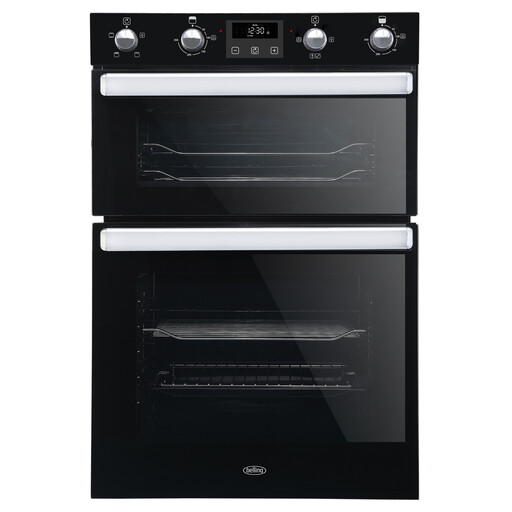 No image available
This double-oven format may suit tartlets alongside another dish. Check the shelf arrangement, cabinet dimensions and electrical connection against your planned meal and kitchen.
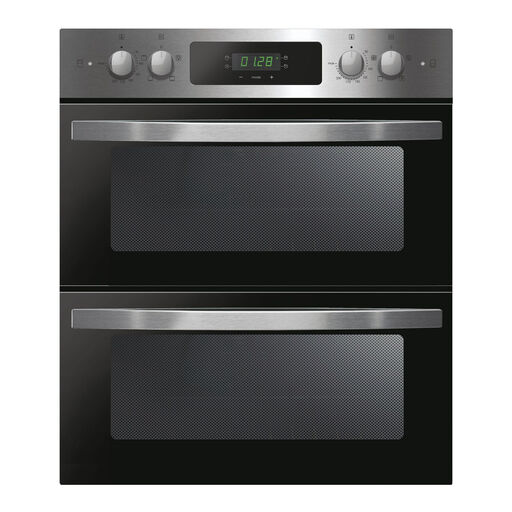 No image available
Consider this built-under double-oven format if you want separate cooking space beneath a worktop. Confirm the usable cavity space, cabinet cut-out and electrical requirements before ordering.
Use the fan temperature in your chosen recipe, rather than its conventional-oven temperature. Abel & Cole's tomato-tart recipe gives 200°C conventional or Fan 180°C; follow your tartlet recipe and oven manual for the relevant setting.
No: added steam is not a requirement of the Abel & Cole tomato-tart recipe, which gives a standard fan setting. Consider a steam function if you also intend to use its humidity-assisted modes for other baking, and check how the model handles water and cleaning.
Do not assume that you can: the connection method depends on the oven and your electrical installation. Electrical Safety First advises checking power requirements and having an oven fitted by a qualified electrician; some models require hardwiring.
Check the energy label and product information sheet for the domestic oven you are considering. GOV.UK guidance covers these documents for products in scope; confirm which documentation applies to your delivery location, as application differs between Great Britain and Northern Ireland.