Shoppers carrying one drink to lunch
A sealed 150ml can gives you a compact portion to take with you or keep at work. Tesco lists Fever-Tree Indian tonic in this size, while Sainsbury’s lists 150ml Schweppes tonic cans.


For one lunch away from home, a sealed 150ml tonic can is easier to carry without leaving an opened large bottle. Choose between regular and lighter tonic by comparing the declared nutrition and ingredients per 100ml; if botanical flavour matters more, check the particular product’s pack format before relying on it for a portable serving.
A sealed 150ml can gives you a compact portion to take with you or keep at work. Tesco lists Fever-Tree Indian tonic in this size, while Sainsbury’s lists 150ml Schweppes tonic cans.
Look at the per-100ml panel rather than treating “premium” or “light” as a nutrition figure. Tesco lists 15kcal and 3.8g sugars per 100ml for Fever-Tree Refreshingly Light Indian tonic, against 36kcal and 8.0g for its regular Indian tonic.
If citrus and herbal ingredients influence your choice, read the product description as well as the pack size. Fentimans describes herbal infusions, Sicilian lemon oil and lemongrass in its Premium Indian Tonic Water; check the format of the product you plan to carry.
Start with the serving you need at lunch, then compare the label details that will affect what you drink.
| Priority | What to check | Your needs |
|---|---|---|
| Pack format | Check can volume and pack count. For a larger bottle, read its after-opening storage instructions. | I only want one portion away from home, without taking an opened bottle back with me. |
| Nutrition | Compare energy and sugars per 100ml on the same basis; then check the ingredients for sugar or named sweeteners. Tesco lists 36kcal and 8.0g sugars for regular Fever-Tree Indian tonic, and 15kcal and 3.8g for its Refreshingly Light version. | If I drink tonic on its own, I want to know what the portion contains rather than choosing by the word “light”. |
| Flavour | Read the stated citrus, herbal and flavouring ingredients. Fentimans describes Sicilian lemon oil and lemongrass in its Premium Indian tonic; decide whether you want that botanical direction or a more familiar Indian tonic. | Will I enjoy this chilled on its own at lunch, or am I keeping it to mix with another drink later? |
| Quinine | Check the ingredient list on the pack: tonic water is not plain sparkling water. If you have previously had an adverse reaction to quinine, seek appropriate clinical advice before choosing a quinine-containing drink. | I need to recognise quinine on the label, particularly if I have reacted to it before. |
Tesco’s regular and Refreshingly Light Fever-Tree Indian tonics have different declared per-100ml energy and sugar figures. The word “premium” does not tell you either value.
Compare the nutrition panels on the same per-100ml basis and read the sweetener ingredients if they matter to your choice.
A bottle may leave you with tonic to store after the meal. Sainsbury’s instructs buyers of its 1L Indian tonic to refrigerate it after opening and use it within 3 days.
For a single carried portion, check whether a sealed small can meets your needs instead.
A partly used bottle needs fridge space and prompt use under that product’s instructions.
The tonic products discussed here contain quinine. The Medicines and Healthcare products Regulatory Agency notes that adverse reactions can involve quinine found in tonic water and other drinks.
Read the current pack ingredients; if you have previously reacted to quinine, seek appropriate clinical advice before drinking tonic.
Tesco lists regular and Refreshingly Light Indian tonic in 150ml cans, making the two formats straightforward to compare for a carried portion.
Sainsbury’s lists Schweppes Tonic Water in a 12 × 150ml can pack for shoppers seeking a compact, conventional tonic.
Fentimans describes its Premium Indian Tonic Water using herbal infusions, Sicilian lemon oil and lemongrass extract.
Britvic’s 2023 announcement described 330ml Indian Tonic Water cans in classic and zero-sugar variants.
Tesco lists own-label tonic options, including Finest Indian Tonic Water in a 500ml bottle, alongside branded formats.
Sainsbury’s lists own-label Indian and Diet Indian tonic in 1L bottles.
These canned Indian and Mediterranean tonics offer 150ml portions to consider for lunch or for mixing later. Compare the named variant and pack count before choosing.
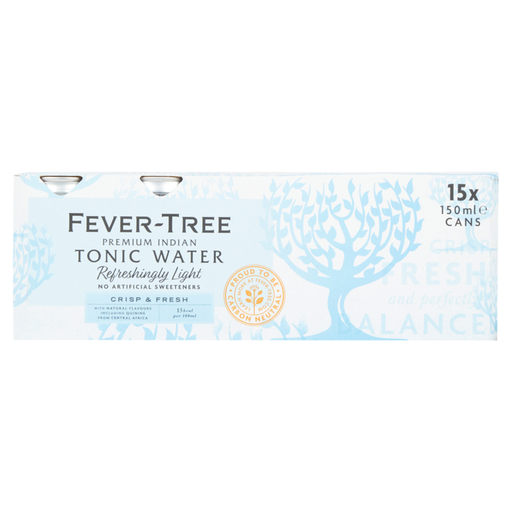 No image available
The 150ml portions suit taking one sealed can to lunch while keeping the rest for later.
The Joybuy product information declares 15kcal and 3.8g sugars per 100ml. It contains quinine and is not sugar-free.
 No image available
This regular Indian tonic offers a sealed 150ml can to carry or keep at work.
Tesco’s listing for the same pack declares 36kcal and 8.0g sugars per 100ml. It contains quinine.
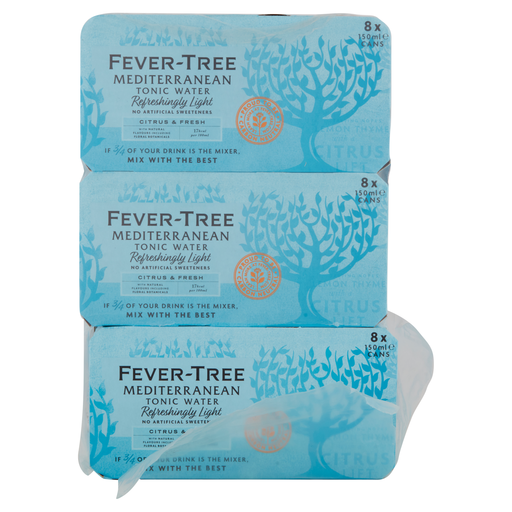 No image available
The 8 × 150ml format lets you take one can without opening the remaining portions.
This is the Mediterranean variant, not the Indian tonic above; check its own ingredients and nutrition panel when comparing them. It contains quinine.
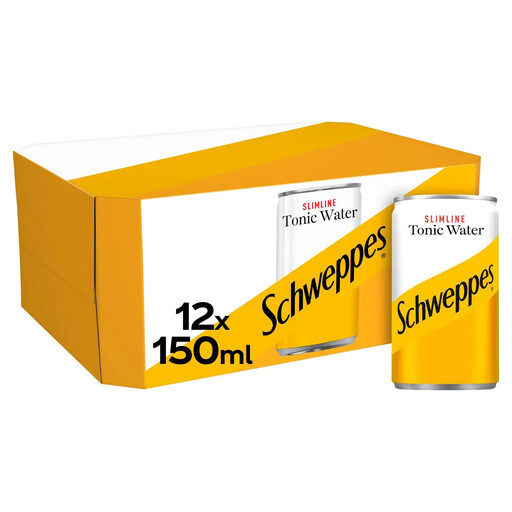 No image available
The 150ml cans offer individual portions when you want a slimline tonic at lunch or later.
Check this variant’s label for its sweetener declaration: the product information identifies aspartame and a source of phenylalanine. It also contains quinine.
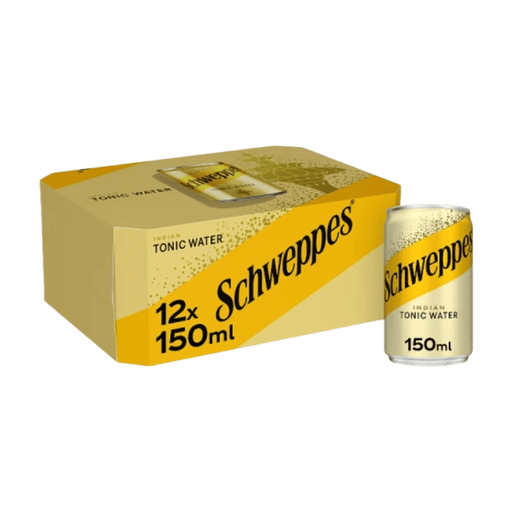 No image available
This Indian tonic comes in sealed 150ml cans for carrying one portion or keeping several at work.
It contains quinine; check the pack’s sugar and sweetener ingredients if you are comparing it with Slimline tonic.
The Fever-Tree, Schweppes and Fentimans tonics discussed here are presented as soft drinks, not alcoholic drinks. You can drink tonic on its own; alcohol is introduced only if you mix it with an alcoholic drink.
Compare the declared energy and sugars per 100ml, then read the ingredients for sweeteners. Tesco lists Fever-Tree Refreshingly Light Indian tonic at 15kcal and 3.8g sugars per 100ml; a different pack size or a “diet” label is not a substitute for checking that product’s panel.
Do not use tonic water as a treatment for leg cramps. The Medicines and Healthcare products Regulatory Agency advises against routine quinine use for nocturnal leg cramps and highlights previous adverse reactions to quinine, including quinine found in tonic water. Seek medical advice about symptoms or a previous reaction.
Follow that bottle’s storage label. Sainsbury’s instructs buyers of its 1L Indian Tonic Water to refrigerate it after opening and use it within 3 days; a sealed small can avoids storing a remainder when you only need one portion away from home.