Commuters carrying breakfast food
A small can can be carried with a pastry, fruit or other food. Fever-Tree describes its tonic cans as an on-the-go format; the drink is an accompaniment, not the breakfast itself.


A premium tonic can accompany a quick breakfast, but it should not take the place of food: Fentimans lists 0 g protein per 100 ml for its Premium Indian Tonic Water. Choose a small pack if you need to carry one serving, compare exact labels when considering a light tonic, and choose another drink if tonic’s bitter flavour is not what you want in the morning.
A small can can be carried with a pastry, fruit or other food. Fever-Tree describes its tonic cans as an on-the-go format; the drink is an accompaniment, not the breakfast itself.
If you like tonic’s bitter-citrus flavour but want to compare formulations, read the sugars, calories and serving size on the exact packs. Fever-Tree describes its Refreshingly Light Indian Tonic as a lower-calorie alternative to its regular version; that comparison does not describe every light tonic.
Fentimans describes its Premium Indian Tonic Water as combining herbal infusions, Sicilian lemon oil, lemongrass and quinine. Those ingredients offer a more specific starting point for choosing a flavour than a premium label alone.
Decide whether you want tonic alongside food, then compare the flavour, nutrition label and pack size for the occasion.
| Priority | What to check | Your needs |
|---|---|---|
| Breakfast role | Keep the drink separate from the food you plan to eat. Fentimans lists 0 g protein per 100 ml for its Premium Indian Tonic Water; check the nutrition panel of any other drink you consider. | I want something fizzy with breakfast, not a drink to take the place of food. |
| Sugars and calories | Compare sugars and calories per 100 ml, then check how much you will drink. Fentimans lists 4.4 g sugar per 100 ml for its Premium Indian Tonic; a light label alone does not tell you the sugar content. | If I choose a light tonic, I want to know what changes on the exact pack rather than assume it is sugar-free. |
| Flavour | Read the ingredient and flavour descriptions. Fever-Tree describes quinine and Mexican bitter-orange oils in its Premium Indian Tonic; Fentimans describes herbal infusions, lemon oil and lemongrass in its Premium Indian Tonic. | I would choose a different drink if quinine bitterness does not appeal to me in the morning. |
| Pack size | Check the volume of each can or bottle as well as the total pack. Tesco’s tonic category lists 150 ml multipacks and 1 L formats; Fever-Tree describes cans as suitable for taking on the go. | For one breakfast on the move, I want a portion I can carry without opening a larger bottle. |
A portable mixer is still a drink. Fentimans lists 0 g protein per 100 ml for its Premium Indian Tonic Water.
Choose food separately if you intend to have breakfast, and use tonic as a drink alongside it.
Fever-Tree’s lower-calorie comparison is with its own regular Indian tonic; it does not establish the sugars or ingredients of every light product.
Compare the exact packs’ sugars, calories, ingredients and serving sizes before choosing.
A 1 L bottle and a 150 ml can meet different carrying and serving needs. Tesco’s tonic category lists both formats.
Check the individual container size, not just the multipack size, if you plan to take one serving with you.
Its Indian tonic range includes regular and light options, with cans described by the brand as an on-the-go format.
Its Premium Indian Tonic Water is an option for shoppers interested in herbal and citrus ingredients.
Tesco’s tonic category lists Schweppes alongside other tonic brands and shows a range of pack formats across the category.
Britvic identifies mixers in its portfolio and lists The London Essence Company among its brands.
These tonic multipacks offer individual 150 ml cans to consider as drinks alongside a quick breakfast. Compare each pack’s label for the flavour and nutrition details that matter to you.
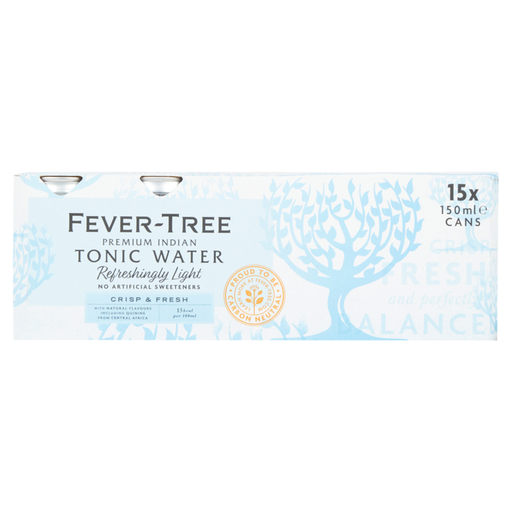 No image available
The 150 ml cans provide individual portions to carry with breakfast food. If choosing this light variant for its nutrition, compare the current pack label with the regular tonic rather than relying on a general light claim.
 No image available
Eight individual 150 ml cans offer an Indian tonic to carry alongside food. Check the nutrition panel if you are comparing this pack with a light tonic.
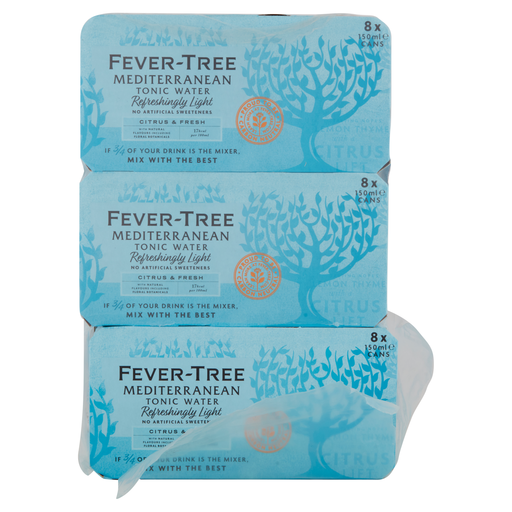 No image available
This Mediterranean tonic comes in eight individual 150 ml cans. Compare its ingredients and nutrition with an Indian tonic if flavour or the light formulation is driving your choice.
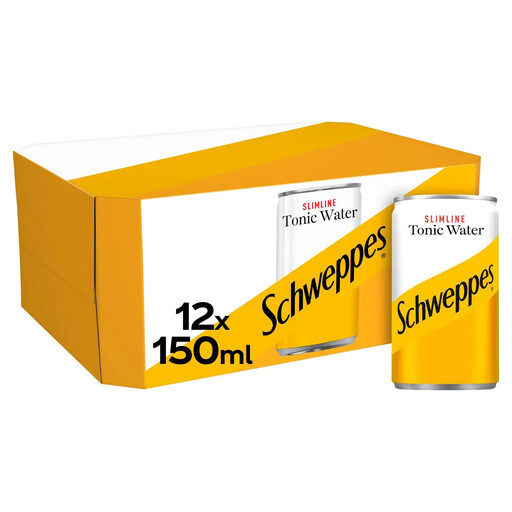 No image available
Twelve individual 150 ml cans provide a slimline tonic option for carrying with breakfast food. Read the exact pack’s sugar declaration and ingredients rather than assuming all slimline tonics have the same recipe.
No: choose it as a drink alongside food, not as the food itself. Fentimans lists 0 g protein per 100 ml for its Premium Indian Tonic Water, illustrating why a mixer should not be treated as breakfast nutrition.
Choose by comparing the exact packs’ nutrition and ingredients against your preference. Fever-Tree describes its Refreshingly Light Indian Tonic as lower in calories than its own regular version, but a light name does not establish that a tonic is sugar-free.
Start with sugars per 100 ml, then account for the amount you intend to drink. Fentimans lists 4.4 g sugar per 100 ml for its Premium Indian Tonic Water, equivalent to 8.8 g in a 200 ml serving of that product.
Check the ingredients, nutrition declaration and pack size on the product you buy. Look at the serving amount as well as the per-100 ml figures so that you compare the quantity you would actually drink.