
24/7 Customer Support

Free returns

Same-day & Next-day Delivery

Quality Guaranteed

Unlock Your Welcome Offers: FREE Delivery | Up to 80% OFF | Free 30-day JoyPlus trial
Download the APP
Tonkotsu ramen noodles are a convenient way to enjoy a rich, savoury Japanese-style meal at home, work or while travelling. However, product descriptions can make similar-looking packs seem interchangeable when they differ considerably in format, preparation method, noodle type, allergens, salt content and serving size.
Before buying instant tonkotsu ramen, watch for three common pitfalls:
Instant noodles are commonly sold as fried, non-fried, dried, fresh-style or udon-style noodles. Non-fried ramen noodles are air-dried or otherwise made without the traditional frying step, but they still need to be assessed alongside the full ingredient list and nutrition panel.
For a springy, chewy texture, look for details such as wheat flour, starch, sodium carbonate or a stated cooking time of around three minutes. Japanese ramen noodles, including Hakata ramen and Kyushu ramen, are often thinner and lighter in texture. Udon-style tonkotsu noodles are much thicker and chewier, making them suitable for shoppers who prefer a more substantial bowl.
Tonkotsu traditionally refers to a creamy pork-bone-style broth, but instant products use different seasoning systems. Some contain pork-style flavouring, while others combine chicken-style seasoning, seafood ingredients, soy sauce, yeast extract, garlic or miso.
If you prefer a deeper, roasted profile, consider black garlic tonkotsu ramen. For heat, choose spicy tonkotsu ramen, checking whether chilli is included in the soup powder, oil sachet or both. Tomato versions provide a sweeter and more acidic flavour, rather than a classic savoury-only profile.
A separate Japanese ramen soup base can be useful if you want to add your own noodles, vegetables, egg or cooked meat. This gives you greater control over portion size and toppings, although the base may still contain soy, wheat, fish or other allergens.
Choose the format according to where you intend to eat it:
Many products in this selection require boiling water and approximately three minutes of standing time. Always add sachets in the order shown on the packaging. Some instructions tell you to add the soup after steeping, while others require the seasoning to be added before cooking.
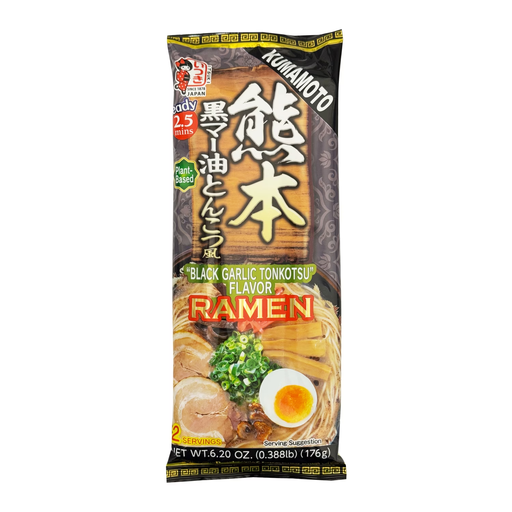
Why This Fits Their Persona: A compact two-pack for shoppers trying Japanese-style pork bone ramen without committing to a large multipack.
The two-pack makes the actual purchase quantity clear and the product is described specifically as Kumamoto tonkotsu style.
Includes noodles, soup base and seasoning oil; contains wheat, soya beans and sesame.
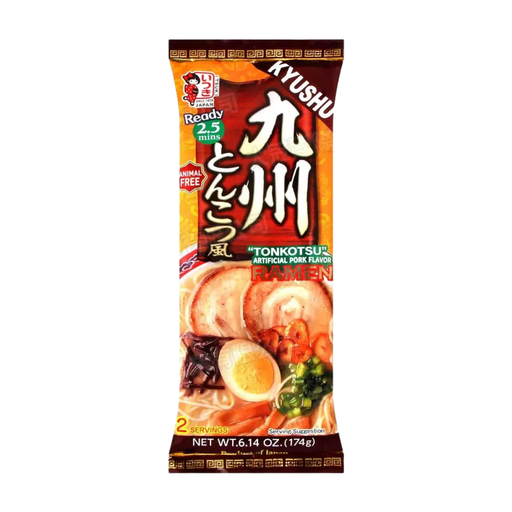
Why This Fits Their Persona: Suits shoppers looking for a region-inspired Kyushu ramen format that can be customised with traditional toppings.
The product listing explains the separate noodle and soup-base components rather than relying only on broad flavour language.
Preparation uses approximately 550ml of water and three minutes; contains wheat, soya and milk.
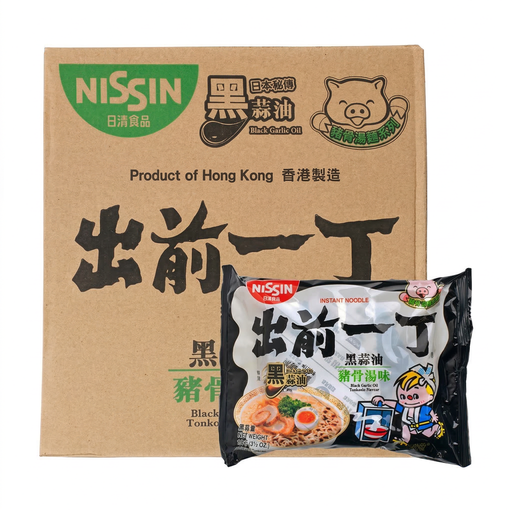
Why This Fits Their Persona: A 30-bag tonkotsu ramen multipack is designed for households, shared accommodation or frequent cupboard stocking.
The listing states the individual 100g bag size and total quantity, making it easier to assess storage and value.
Black garlic powder and garlic oil provide a distinct flavour direction; contains wheat, egg, milk, soya and sesame.
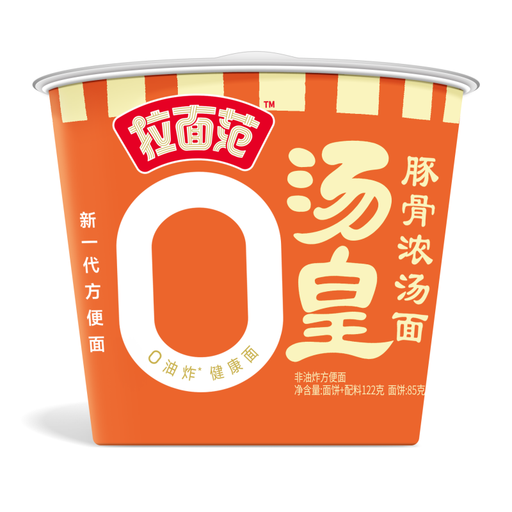
Why This Fits Their Persona: The cup format is convenient for a quick lunch at work, in student accommodation or during travel where kitchen equipment is limited.
The single 122g quantity and stated three-minute preparation time make portion and convenience expectations clear.
Includes non-fried noodles, soup, oil, seasoned slices and vegetables; contains wheat and soya.
We have compiled a complete, real-time list of products that fully satisfy these strict selection criteria and UK safety regulations.
Most cup, bowl and sachet products in this selection take around three minutes after adding boiling water. Some bagged noodles require cooking in a saucepan. Follow the specific instructions, as water volume and sachet order affect the final texture and broth strength.
Many products contain wheat and soya, while some also include milk, sesame, fish, egg or barley. Read the bold allergen information on the packaging every time, particularly if recipes may change. Do not rely on the product name alone.
As shelf-stable cupboard products, unopened packs can generally be stored in a cool, dry place until the best-before date shown on the packaging. Store cups and packets away from moisture and direct sunlight, and consume prepared noodles promptly. For the most accurate date, check the physical pack before purchase or use.