
24/7 Customer Support

Free returns

Same-day & Next-day Delivery

Quality Guaranteed

Unlock Your Welcome Offers: FREE Delivery | Up to 80% OFF | Free 30-day JoyPlus trial
Download the APP
Rich, savoury and ready in minutes, tonkotsu ramen noodles are a practical choice for busy UK households, students and anyone who enjoys Japanese-style noodles at home. However, the packaging can make similar products look interchangeable when the eating experience, portion size and allergen profile may differ considerably.
Before adding a product to your basket, look beyond phrases such as “rich broth” or “restaurant-inspired”. The format, seasoning sachets and preparation method usually tell you more about whether the product suits your routine.
Instant tonkotsu noodles generally use seasoning powders, oils, extracts and flavourings to create a pork bone-style profile. They are designed for convenience and should not automatically be treated as equivalent to ramen made with broth simmered for many hours.
Some products also combine tonkotsu-style seasoning with chicken-style, seafood or fish sauce ingredients. If you want a particular flavour profile, read the full ingredients list rather than relying on the front-of-pack description.
A five-pack may offer useful cupboard value, but individual noodle weights vary. A 112g serving, a 125g serving and a 73g cup are not directly comparable. Check the net weight per serving, number of portions and whether the product includes vegetables, oil, garnishes or a separate topping sachet.
Cups can be convenient for an office drawer or travel, while bags and larger multipacks are often more suitable for preparing meals in a kitchen.
Many Japanese instant ramen products contain wheat, soya, sesame or milk. Some also include fish, barley or egg. Ingredients can vary between flavours and pack sizes, so check the specific product label every time, particularly if buying for a family.
Nutrition panels are normally shown per 100g. This makes comparisons easier, but it is not always the same as the amount you will eat. For example, the listed salt content for several products ranges from 3.9g to 6.8g per 100g. Use the packet’s serving information and follow current UK dietary guidance when planning how often to eat instant noodles.
Look for whether the noodles are fried or non-fried, and whether they need boiling or simply steeping in hot water. Non-fried noodles can have a smoother, chewier texture, while fried noodle cakes are common in cup and bag formats.
Many products in this selection take approximately three minutes to prepare. That does not mean every item uses the same method. Some require the soup powder at the beginning; others instruct you to add soup or oil after steeping. Following the packet instructions helps the seasoning dissolve properly and avoids an overly concentrated or diluted bowl.
A classic tonkotsu-style seasoning may include garlic, onion, yeast extract, soya sauce powder, powdered oil and pork-style flavouring. Variations can include Hakata tonkotsu ramen, black garlic tonkotsu or spicy tonkotsu ramen.
Check whether the product contains extras such as chilli oil, sesame, dried mushrooms, seaweed or vegetable packets. These can add aroma and texture, but also introduce additional allergens. Always use the latest packaging as the final reference because formulations and label information may change.
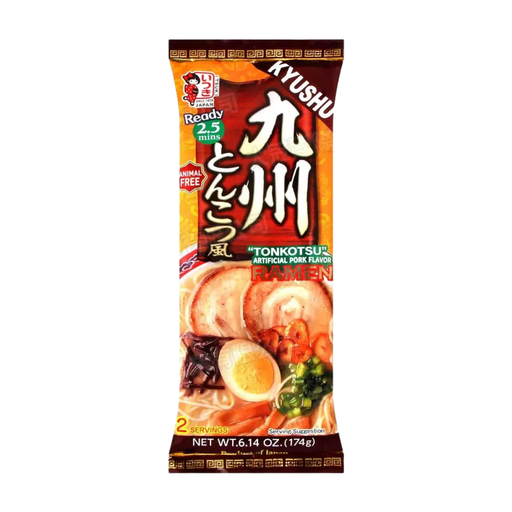
Why This Fits Their Persona: A straightforward bag format for shoppers trying Japanese instant ramen without committing to a large multipack. Each 176g pack contains two noodle portions and a concentrated soup base.
The listed preparation method specifies 550ml of water and a three-minute steep, making the serving process clear rather than leaving the result to guesswork.
Two portions per pack; wavy pre-cooked noodles; soup base can be customised with egg, spring onion or nori.
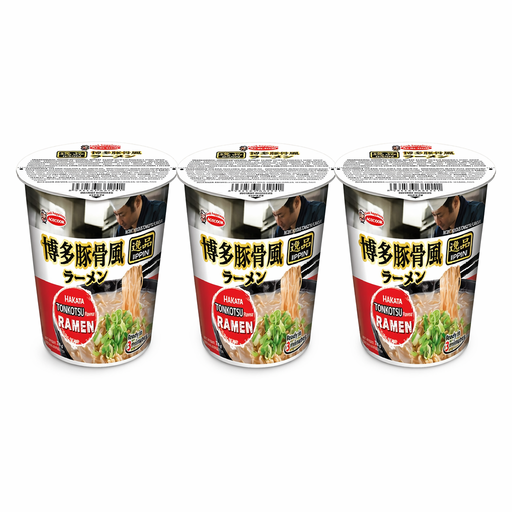
Why This Fits Their Persona: A cup multipack for shoppers who value a more layered seasoning format and the convenience of individually portioned bowls.
The product is clearly portioned at 74g per cup and lists its preparation format, helping avoid confusion between a single bowl and a family pack.
Includes noodles and seasonings in a cup; dried leek and roasted sesame are listed; preparation is designed for hot water.
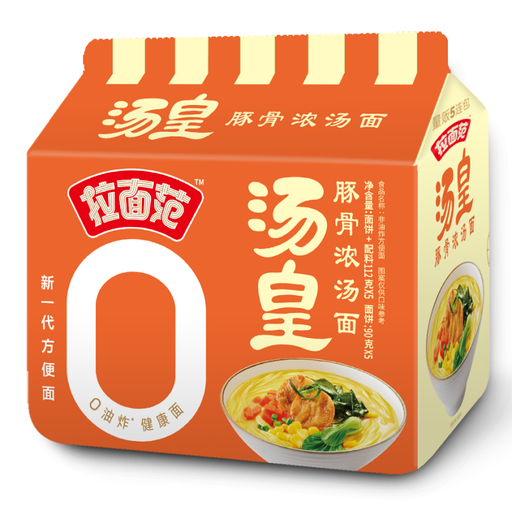
Why This Fits Their Persona: A family-size option for regular ramen eaters, shared households and shoppers who want multiple prepared components in each serving.
The listing states the total weight as 560g, divided into five 112g packs, so the quantity is transparent for cupboard planning.
Non-fried noodle block; separate soup, oil, savoury slice and vegetable packets; three-minute steeping method.
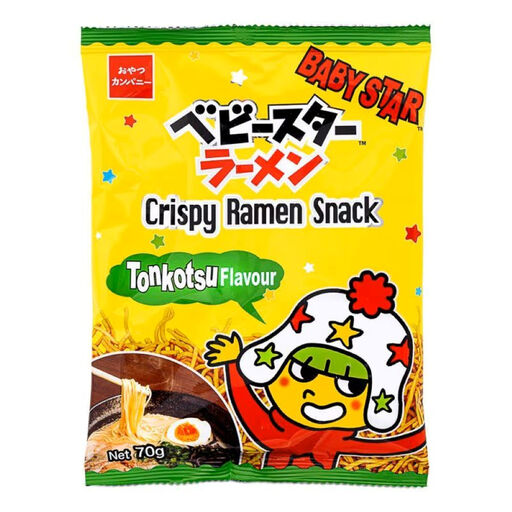
Why This Fits Their Persona: Suitable for commuters, packed lunches and people looking for a crunchy tonkotsu-flavoured snack rather than a hot noodle soup.
Its listing identifies it as a ready-to-eat snack, so buyers are less likely to mistake it for a complete instant ramen meal.
Ready to eat; thin noodles provide a crisp texture; can also be used as a topping for salads or soups.
Instant ramen can be adapted without adding much preparation time. Try:
For a tomato variation, a tomato tonkotsu ramen cup or five-pack combines pork bone-style seasoning with tomato notes. For a stronger aromatic profile, consider black garlic tonkotsu. Spicy versions may include chilli extract, sesame and fish sauce, so review the label before serving.
We have compiled a complete, real-time list of products that fully satisfy these strict selection criteria and UK safety regulations.
Many cup and bowl products are ready after approximately three minutes with boiling water. Bagged products may require boiling in a pan or steeping in a bowl. Always follow the instructions on the specific packaging, including the stated water volume.
Not necessarily. “Tonkotsu-style” seasoning may contain pork-style flavouring, chicken-style seasoning, fish sauce or other animal-derived ingredients. Check the complete ingredient list and any suitability statement rather than assuming the flavour name indicates vegetarian suitability.
Keep unopened products in a cool, dry place away from direct sunlight. Store cups and multipacks according to the packaging instructions, and check the best-before date before use. Once prepared, consume immediately and do not reuse opened seasoning sachets.