
24/7 Customer Support

Free returns

Same-day & Next-day Delivery

Quality Guaranteed

Unlock Your Welcome Offers: FREE Delivery | Up to 80% OFF | Free 30-day JoyPlus trial
Download the APP
Buying tool kits can appear straightforward until you compare the piece count, materials, drive sizes and included accessories. A large toolbox is not automatically useful, while a low-priced home tool kit may omit the items you need most.
Whether you are furnishing a new home, preparing for DIY projects or looking for a mechanic tool set for your car, the right choice depends on how you plan to use it. This guide explains the practical details to check before buying and highlights suitable options for different UK households and hobbies.
A toolbox containing hundreds of pieces may include duplicates, small accessories or sizes you rarely use. Check the contents list rather than relying on the headline number. For general home repair tools, essentials such as screwdrivers, pliers, a hammer, tape measure, hex keys and a level may be more useful than a large collection of specialist bits.
For automotive work, look for a meaningful range of sockets, ratchets, spanners and drive accessories. A smaller socket set with the sizes you use can be more practical than a larger set with poor organisation.
Not every bit fits every drill, driver or ratchet. A hex bit set may be intended for a 3/8-inch drive tool, while a cordless drill commonly uses a keyless chuck with a specified capacity. Socket sets may use 1/4-inch, 3/8-inch or 1/2-inch drives, and these are not interchangeable without the correct adaptor.
Before ordering, check the drive size, socket measurement system and included connectors. If you maintain vehicles, confirm whether the set includes both metric and imperial sizes where required.
Loose tools are easy to misplace, particularly in a busy garage, student room or shared office. A case with moulded slots or separate trays helps you identify missing pieces quickly. It also reduces the chance of bits and sockets knocking together during transport.
For cordless equipment, check whether the case has room for the battery and charger. For a home toolbox set, consider the case dimensions and weight as well as its locking clips and carrying handle.
Common materials include carbon steel, chrome vanadium steel and S2 steel. Chrome vanadium is widely used for sockets, spanners and hand tools, while S2 steel is often used for hardened driver bits. A polished or plated finish can make tools easier to wipe clean and may help resist surface corrosion, but all tools should still be stored dry.
Look for handles with a non-slip surface where controlled grip matters. This is particularly useful for screwdrivers, pliers and tools used during furniture assembly.
For household tasks, a compact DIY tool set with screwdrivers, pliers, a hammer and hex keys may cover everyday jobs. For car maintenance, a socket set with multiple drive sizes provides greater flexibility. Smaller 1/4-inch drives suit lighter fasteners, while larger drives are generally used with bigger sockets and higher-load applications.
Check the actual socket range, not just the number of pieces. A set covering common metric sizes may be more suitable for many UK vehicles and household fixtures, although the correct choice depends on your equipment.
For drilling into masonry, a cordless hammer drill set should be assessed by battery voltage, chuck range, speed control and impact function. The material and correct bit type also matter: masonry bits should be used for suitable masonry applications, and hammer mode should not be used indiscriminately.
For engraving, polishing, trimming and small crafting jobs, a rotary tool set benefits from variable speed. Lower speeds can provide more control for delicate work, while higher speeds may suit cutting or sharpening when the accessory is rated for that speed. Always follow the supplied instructions and accessory limits.
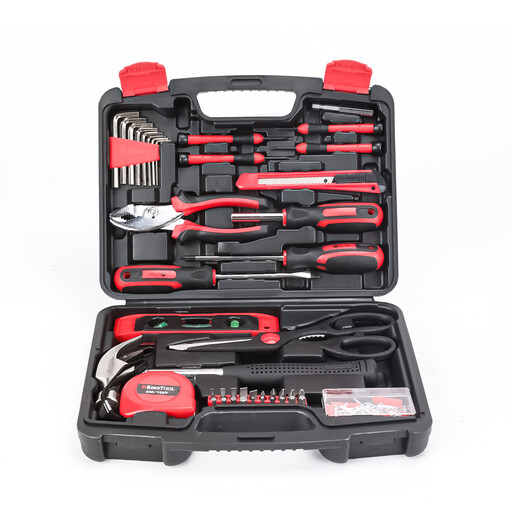
Why This Fits Their Persona: A practical choice for new homeowners, students, office users and anyone building a basic household toolkit for assembly, hanging items and everyday repairs.
The contents are clearly itemised and stored in individual case slots, making it easier to distinguish useful hand tools from filler pieces.
Includes pliers, hammer, level, tape measure, screwdrivers, hex keys and a hardware box with screws and nails.
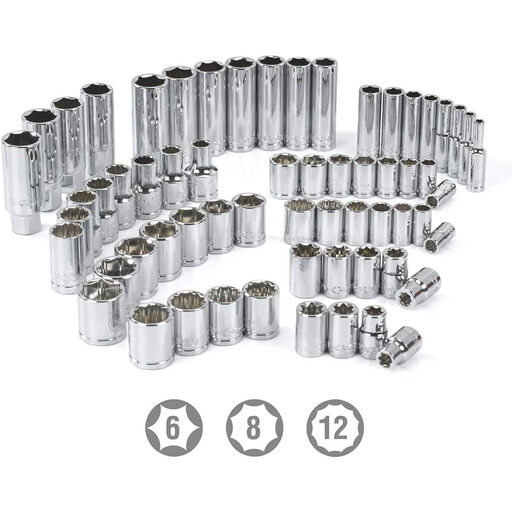
Why This Fits Their Persona: Suits car owners, garage users and buyers who want broad coverage for vehicle maintenance alongside general household work.
The four-tray blow-moulded case helps prevent a high piece count becoming an unmanageable collection of loose parts.
Includes 1/2-inch, 1/4-inch and 3/8-inch drive equipment, metric and imperial sockets, spanners, bits and hex keys.
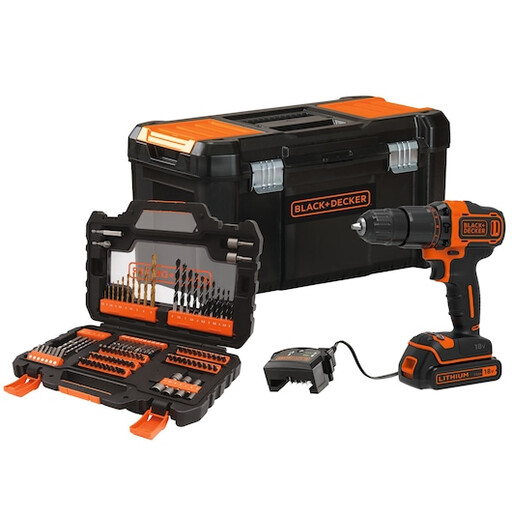
Why This Fits Their Persona: Designed for DIY users who regularly drill, drive screws and work with wood, metal or suitable masonry surfaces without a mains cable.
The specification states the battery, charger, chuck range, two-speed gearbox and hammer function instead of relying only on accessory count.
Features 18V power, 0–360 and 0–1,400 RPM settings, 21,000 BPM impact rate, an 11-position clutch and 104 accessories.
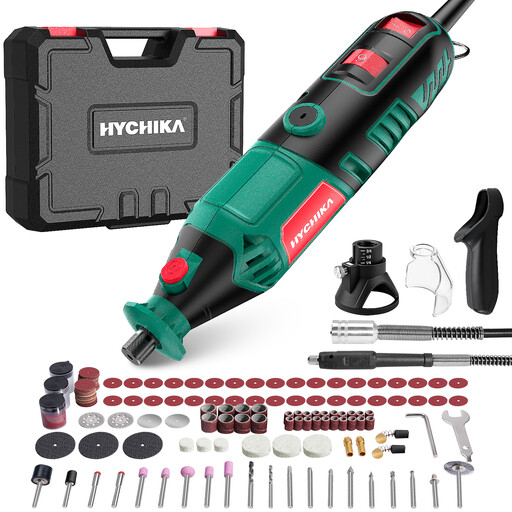
Why This Fits Their Persona: A corded multi-tool kit for engraving, polishing, deburring, carving, sharpening and other detailed DIY or creative tasks.
Its six speed settings and stated 8,000–35,000 RPM range provide more control than a single-speed rotary tool for varied accessories.
Includes a 1m flexible shaft, 173 accessories, a 170W motor and a storage toolbox.
Use eye protection whenever cutting, drilling or working with materials that may create flying particles. A dust mask and hearing protection may also be appropriate depending on the task and material. Disconnect powered tools before changing accessories, and inspect bits, cables, batteries and handles for damage.
For hand tools, wipe away moisture and store them in the case. Keep cutting accessories sharp and correctly fitted. With a rotary tool, clean ventilation slots with a dry brush and follow the manual for motor-brush replacement. Do not use electrical tools in damp or explosive environments unless the product instructions specifically permit it.
We have compiled a complete, real-time list of products that fully satisfy these strict selection criteria and UK safety regulations.
A general home tool kit is useful for furniture assembly, tightening fittings, hanging shelves and minor household maintenance. Prioritise screwdrivers, pliers, a hammer, tape measure, level, hex keys and a selection of driver bits. For electrical or structural work, use a suitably qualified professional where required.
Choose a mechanic tool set with a useful socket range, ratchet handles, extensions, spanners and both metric and imperial sizes if relevant to your vehicles. A 3/8-inch drive set can suit many general tasks, while a larger drive may be needed for bigger fasteners. Always confirm that the tools are appropriate for the specific vehicle job.
A cordless drill requires charging and may eventually need a replacement battery, while a corded rotary tool uses mains electricity during operation. Running cost depends on usage, electricity rates and battery capacity. For occasional detail work in one location, corded equipment can be straightforward; cordless tools offer easier movement where access to a socket is limited.