
24/7 Customer Support

Free returns

Same-day & Next-day Delivery

Quality Guaranteed

Unlock Your Welcome Offers: FREE Delivery | Up to 80% OFF | Free 30-day JoyPlus trial
Download the APP
A well-chosen set of tool kits can cover furniture assembly, loose hinges, wall hanging, basic maintenance and small DIY projects without repeated trips to a hardware shop. However, large accessory counts and impressive power figures do not always translate into a useful purchase.
As the Joybuy Product Recommendation Officer, I focus on separating practical features from marketing noise. Before choosing a home tool kit, check these common buying traps.
A 100-piece or 150-piece DIY tool set may sound comprehensive, but the total can include duplicate screwdriver bits, small fixings or accessories suited to only one type of task. A smaller case with properly chosen essentials may be more useful than a crowded box.
Look for core items such as:
Torque is the turning force available for driving screws. Speed, measured in revolutions per minute (RPM), affects how quickly a drill or rotary tool turns. These figures describe different capabilities.
A compact electric screwdriver may be suitable for flat-pack furniture, while a cordless drill kit is more appropriate for drilling into wood or metal. Masonry work requires a hammer-action drill and suitable masonry bits. A rotary tool is designed for detailed cutting, grinding, polishing or engraving rather than drilling large holes.
A toolbox with tools is only convenient if the tools stay organised. Loose accessories can be misplaced, while a case without space for the battery or charger may become difficult to carry.
For powered sets, check the following before ordering:
For household repair tools, look for descriptions such as heat-treated carbon steel, CR-V steel or S2 tool steel. These terms indicate the material used, but they do not guarantee that every tool will suit heavy professional use.
A basic home repair kit should also match your likely tasks. A new homeowner may need a level, tape measure, hammer and pliers, whereas a car owner may benefit more from sockets, ratchets, spanners and hex keys. For electronics, bicycles or small fittings, a dedicated screwdriver set with precision and extended bits is often more practical.
For a cordless drill, consider torque adjustment, speed ranges and chuck size rather than voltage alone. For example, a drill with 21+1 clutch settings offers more adjustment for screwdriving than a basic fixed-speed model. A 10mm keyless chuck accepts a range of common drill and driver accessories.
For a rotary tool set, variable speed is particularly important. Lower speeds can help with delicate engraving or polishing, while higher speeds are generally intended for cutting or grinding, subject to the accessory instructions. Always stay within the stated RPM limit for each attachment.
A fitted case helps prevent tool loss and keeps sharp accessories covered. During use, wear suitable eye protection, secure the workpiece and disconnect powered tools before changing bits. For masonry, metal or dusty materials, additional hearing or respiratory protection may be appropriate.
Check that the product includes clear instructions and that the tool, charger and accessories are intended to work together. Never substitute an incompatible battery or charger.
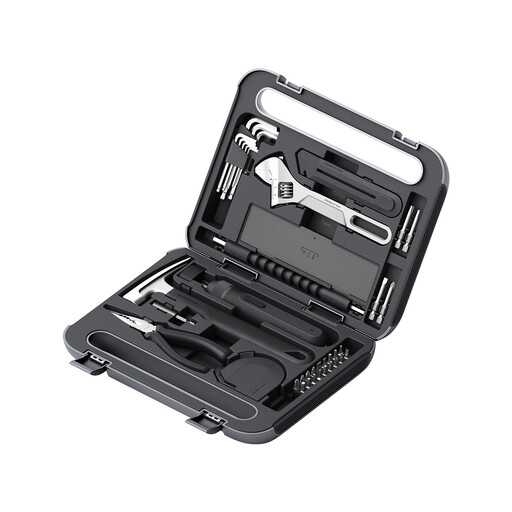
Why This Fits Their Persona: This compact electric-and-manual kit suits renters, students and new homeowners handling everyday assembly and small repairs where storage space is limited.
It combines manual tools with an electric screwdriver rather than relying on a large selection of rarely used accessories. The case has fixed slots and clasps for organised storage.
The screwdriver offers 3 torque settings, a maximum 4N·m power-mode torque, Type-C charging and manual operation when the battery is depleted.
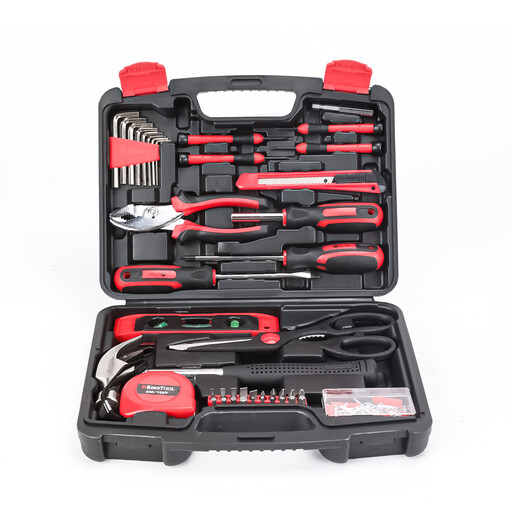
Why This Fits Their Persona: Homeowners wanting broad manual coverage may value the combination of repair tools, measuring equipment, hex keys and hardware in one fitted case.
The 149-piece count includes identifiable household essentials and a hardware box, making it easier to assess what is actually included.
The set lists heat-treated carbon steel, CR-V and stainless-steel components, plus a plastic case with individual tool slots.
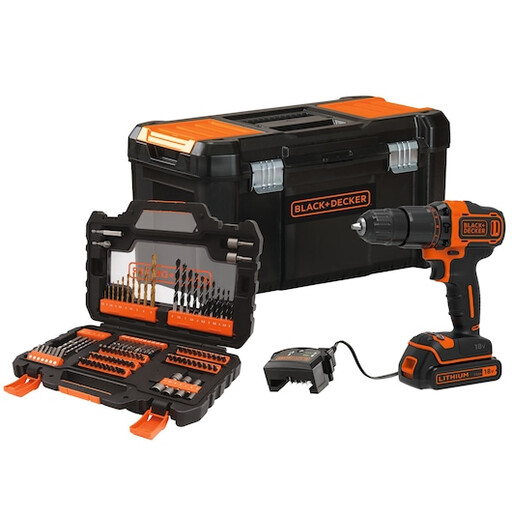
Why This Fits Their Persona: DIY users drilling into wood, metal or masonry may prefer a powered set with hammer action and a larger accessory selection for renovation and installation tasks.
The set distinguishes between hammer action, two speed settings and an 11-position clutch, helping users select control appropriate to the task.
It includes an 18V drill, 1.5Ah battery, charger, 104 accessories and a 19-inch toolbox. The stated speed range is 0–360 / 0–1,400 RPM.
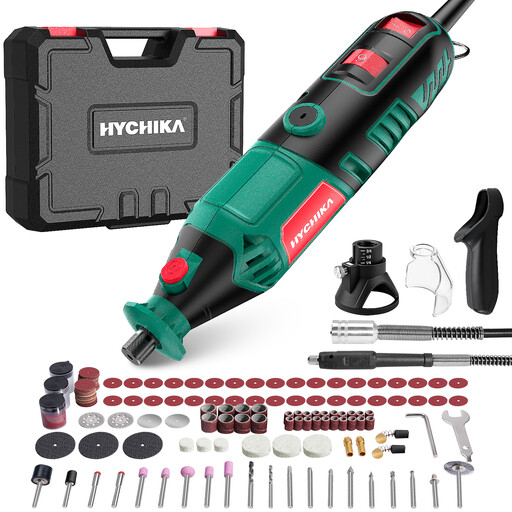
Why This Fits Their Persona: Crafters and hobbyists working on engraving, polishing, trimming or deburring can use the flexible shaft to reach awkward angles and reduce hand fatigue.
Six selectable speeds make the tool more adaptable than a fixed-speed model, while the accessory list identifies uses including cutting, drilling, grinding and polishing.
The corded 170W tool operates from 8,000–35,000 RPM and includes a 1-metre flexible shaft, 173 accessories and a storage toolbox.
We have compiled a complete, real-time list of products that fully satisfy these strict selection criteria and UK safety regulations.
Choose a set with a hammer, pliers, adjustable wrench, tape measure, utility knife, screwdrivers, hex keys and common driver bits. Add a level and wall-fixing accessories if you expect to assemble furniture or hang shelves.
It can be worthwhile if you regularly assemble furniture, drill wood or metal, or drive many screws. Compare battery capacity, torque settings, speed ranges, chuck size and included accessories. For occasional light assembly, a manual or compact electric screwdriver may be sufficient.
Wipe tools clean, keep metal components dry and return each item to its designated slot. Store batteries separately if instructed by the manufacturer, use the supplied charger and avoid leaving cases in damp sheds where moisture may encourage corrosion.