
24/7 Customer Support

Free returns

Same-day & Next-day Delivery

Quality Guaranteed

Unlock Your Welcome Offers: FREE Delivery | Up to 80% OFF | Free 30-day JoyPlus trial
Download the APP
Buying a tool set can seem straightforward until you discover that a large case contains duplicate bits, limited socket sizes or accessories that wear out quickly. Whether you are a home owner, vehicle owner, hobbyist crafter or tradesperson, the right kit should match the work you actually intend to do.
A practical choice depends less on the headline piece count and more on drive sizes, material, speed control, storage and replacement options. The following guide explains the key details to check before selecting a DIY tool kit, rotary tool set or mechanic tool set in the UK.
A 450-piece tool set may look more comprehensive than a 123-piece tool set, but the total can include small driver bits, duplicate sockets and accessories for occasional tasks. Check the actual contents list rather than relying on the number printed on the case.
For household maintenance, prioritise:
For car repair tools, also check whether the kit includes the drive sizes and metric/imperial sockets your vehicle requires.
Low-cost tools can have uncomfortable handles, poorly fitting sockets or finishes that become difficult to clean. For frequently used hand tools, look for stated materials such as chrome vanadium steel (CR-V) and a polished or plated surface.
A triple-chrome-plated finish can make cleaning easier and may help resist surface corrosion, but it does not make a tool suitable for every environment. Wipe tools dry after use, particularly if they have been used outdoors or around moisture.
A flexible shaft rotary tool can be useful for engraving, trimming and reaching awkward angles, but the accessory count alone does not indicate how well it will suit a project. Check:
Do not use an accessory above its stated speed limit. Wear suitable eye protection, hearing protection and a dust mask where the material or task creates airborne particles.
A socket set may include 1/4-inch, 3/8-inch and 1/2-inch drives, each suited to different levels of access and fastening work. Smaller drives are useful for compact fittings, while larger drives are generally chosen for heavier fasteners. A kit containing both metric and imperial sockets can be practical for mixed household, bicycle and automotive jobs.
Before ordering, inspect the size range and confirm whether the set includes:
A ratchet wrench set should also offer a secure socket connection and a direction selector that is easy to operate while wearing work gloves.
For a general home repair tool kit, CR-V steel is a commonly stated material for sockets, spanners and other hand tools. Heat treatment and surface plating are additional details worth checking, although they do not remove the need for sensible use.
Avoid applying excessive force with a ratchet that is not designed as a breaker bar. If a manufacturer does not specify a torque rating, use caution with seized fasteners and consider a dedicated tool for high-load applications.
A rotary tool set should provide enough control for the materials and jobs you have in mind. Lower speeds are generally more manageable for delicate engraving or polishing, while higher speeds can support cutting, grinding and sharpening when the accessory is appropriate.
A corded model may be suitable for a workshop or craft area where a consistent power supply is available. Check the stated voltage, plug arrangement, cable length and ventilation requirements before purchase. Disconnect the tool from the mains before changing accessories or carrying out maintenance.
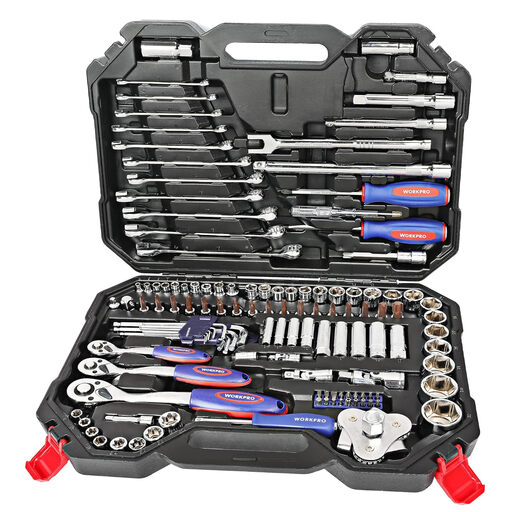
Why This Fits Their Persona: This compact option suits first-time home owners, renters and drivers who need everyday tools for flat-pack furniture, minor household maintenance and basic vehicle tasks without managing a very large case.
The listed contents are more informative than a headline count alone, with sockets, spanners, bits, hex keys and a quick-release ratchet in a designated storage case.
123 pieces; polished, heat-treated and triple-chrome-plated finish; blow-moulded case with locking clips.
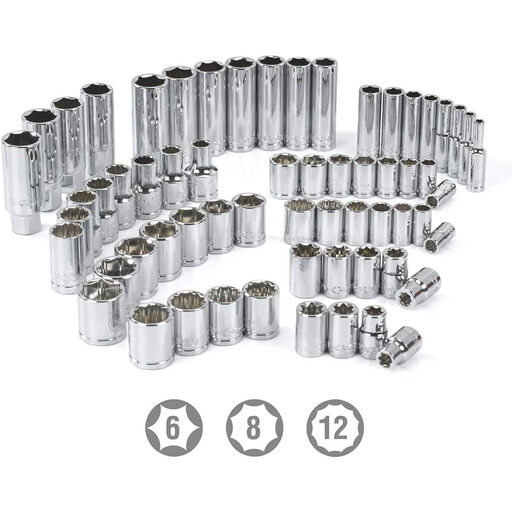
Why This Fits Their Persona: Suitable for vehicle owners, home renovators and workshop users who prefer a broad selection of metric and imperial fittings in one organised case.
The four-tray case makes the large selection easier to sort, while the metric and imperial format helps reduce the need to buy separate socket ranges.
450 pieces; 1/2-inch, 1/4-inch and 3/8-inch drives; sockets, spanners, bits and hex keys in a locking blow-moulded case.
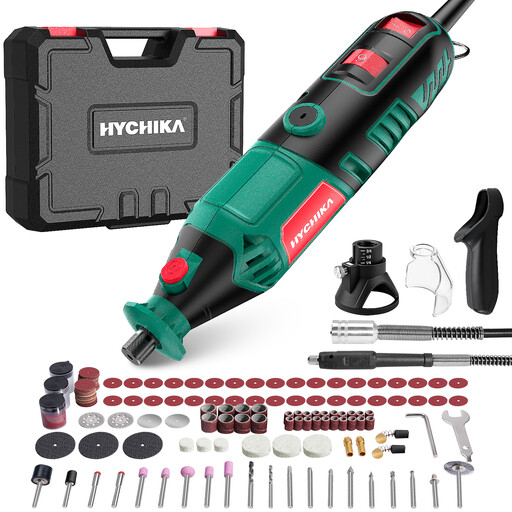
Why This Fits Their Persona: Designed for hobbyist crafters, detail workers and DIY users handling engraving, polishing, deburring, sharpening, drilling and light cutting tasks.
The six-speed control gives more adjustment than a single-speed model, and the 1-metre flexible shaft helps with detailed work in awkward positions.
170W motor; 8,000–35,000 RPM range; 173 accessories; replaceable motor brushes and a storage toolbox.
A tool case should protect the contents and make missing pieces easy to identify. Look for moulded locations, locking clips and secure trays, especially if the kit will travel in a car or be stored in a shed.
For corded electric tools, check the product instructions, plug specification and applicable UK marking information before use. Keep ventilation slots clear, use the tool only in dry conditions and disconnect it before changing bits. For hand tools, inspect sockets and handles regularly; stop using any item that is cracked, distorted or no longer grips securely.
It can cover many routine jobs, including furniture assembly, basic maintenance, small fittings and some vehicle work. Check the socket sizes and included tools rather than assuming every 123-piece set has the same contents. A larger kit may be more suitable if you regularly work on cars or need both metric and imperial sizes.
Some rotary tool accessories are designed for cutting metal, but suitability depends on the disc, material thickness and the tool’s recommended RPM. Secure the workpiece, wear eye and hearing protection, and follow the accessory instructions. A rotary tool is generally intended for detailed or light-duty work rather than replacing dedicated heavy cutting equipment.
Return each item to its designated case position after use, wipe metal surfaces clean and dry, and keep tools away from damp storage areas. For a rotary tool, clear the ventilation slots with a dry brush and replace motor brushes when required by the instructions. Proper storage also makes it easier to notice missing or damaged components before the next project.