
24/7 Customer Support

Free returns

Same-day & Next-day Delivery

Quality Guaranteed

Unlock Your Welcome Offers: FREE Delivery | Up to 80% OFF | Free 30-day JoyPlus trial
Download the APP
A well-chosen set of tools can make household maintenance, vehicle repairs and DIY projects far more manageable. However, buying a large case simply because it contains hundreds of pieces can lead to wasted money and unusable accessories.
The right choice depends on the work you actually do, the fastener sizes you encounter and how easily the tools can be stored and transported. This guide explains the main buying pitfalls, the specifications worth checking and several practical options for different UK households, garages and workshops.
A 149-piece home repair tool kit may sound more useful than a compact 40-piece kit, but the total can include duplicate screwdriver bits, small hardware accessories or sizes you rarely use. Check the actual contents rather than relying on the headline number.
For car and motorcycle repairs, a mechanics tool set should contain suitable sockets, ratchets, extension bars and drive sizes. For general household work, screwdrivers, pliers, a tape measure, a hammer and hex keys may be more valuable than a large collection of specialist sockets.
Most UK household and automotive work uses metric fasteners, but older vehicles, imported equipment and some machinery may use imperial sizes. A set containing only one measurement system can leave you reaching for another tool when a job is already under way.
Look for clearly listed metric and SAE tools if you work on a variety of vehicles or machinery. Also check whether the listed sizes are individual sockets or double-ended accessories covering multiple sizes.
A case that does not hold tools securely can become frustrating after repeated use. Missing pieces, unclear size markings and loose accessories reduce efficiency. A suitable case, roll or tool bag should protect the contents, make identification straightforward and suit the way you work.
For damp garages, sheds and outdoor jobs, inspect the case or bag design and keep metal tools dry after use. Storage helps reduce corrosion, but it does not replace cleaning and maintenance.
Chrome vanadium steel tools, commonly marked Cr-V, are widely used for hand tools such as sockets, spanners and pliers. Heat treatment can increase hardness and strength, while chrome plating or a polished finish can make surfaces easier to wipe clean and help resist corrosion.
Impact sockets are different from standard hand sockets. For high-torque impact drivers, choose sockets specifically described as impact-rated and made from an appropriate material, such as chrome molybdenum steel. Do not assume that every socket in a large case is suitable for powered impact equipment.
A socket set may use 1/4-inch, 3/8-inch or 1/2-inch square drives. Smaller drives are convenient for lighter fasteners and confined spaces, while larger drives are generally used with larger sockets and higher loads. Select a set that matches the fasteners and clearance available on your vehicle or project.
A ratchet’s tooth count indicates how small the working swing can be. For example, a 72-tooth ratchet requires less movement between clicks than a lower-tooth design. A 90-tooth ratchet may be useful in restricted spaces, but tooth count alone does not determine overall tool suitability. The head shape, handle comfort, release mechanism and correct socket fit also matter.
For plumbing, maintenance and general gripping, compare the maximum jaw opening of a pliers set or water pump pliers. A wider jaw can accommodate larger pipes and fittings, but a smaller pair may be easier to control in confined areas.
A spanner set with offset or ratcheting heads can improve access around obstructions. Check the actual size range, angle and box-end design. A 12-point ring end can offer more engagement positions, while the correct size and secure fit remain essential to avoid damaging fasteners.
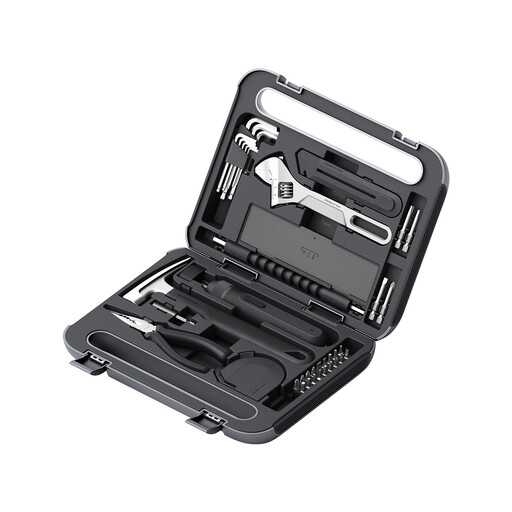
Why This Fits Their Persona: A compact option for flats, new homeowners and occasional DIY, combining an electric screwdriver with manual tools in one case.
Its contents are specified individually, including the screwdriver, bits, pliers, spanners and storage case, rather than relying only on a high piece count.
Includes Type-C charging, LED lighting, manual screwdriver mode and a claw hammer with a protective rubber cover.
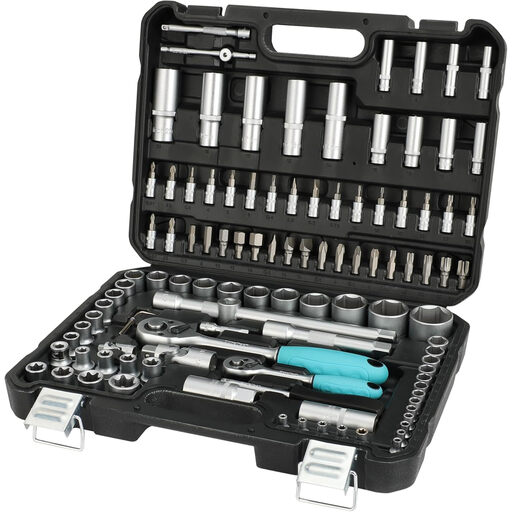
Why This Fits Their Persona: Suitable for regular garage work, motorcycle maintenance and DIY users who want multiple drive sizes and accessories in one organised case.
The specification lists 1/4-inch and 1/2-inch ratchets, sockets, bits, universal joints and extension bars, with visible size markings for identification.
Uses Cr-V sockets, S2 bits and 72-tooth ratchets, with a blow-moulded storage case.
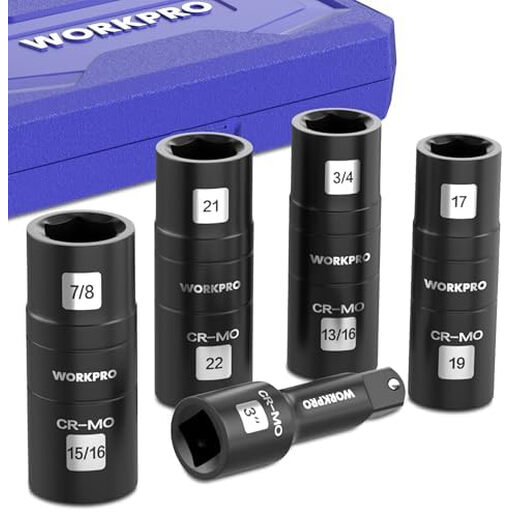
Why This Fits Their Persona: Designed for wheel, brake and other automotive jobs where 1/2-inch impact-compatible sockets and quick size changes are useful.
It is identified as an impact socket set and lists eight metric and SAE sizes, rather than presenting standard sockets as suitable for impact use.
Made from heat-treated Cr-Mo steel, with laser-etched markings, a 3-inch extension bar and a storage box.
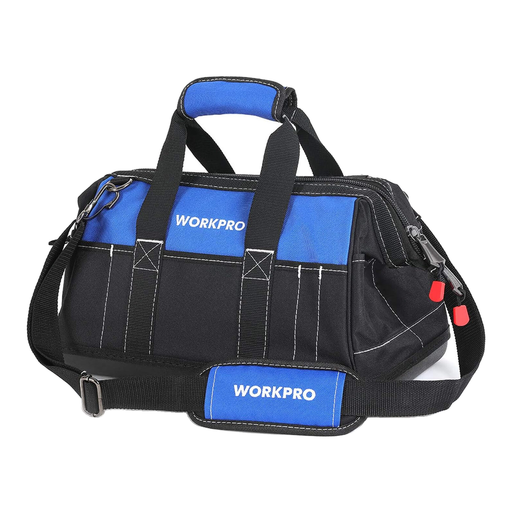
Why This Fits Their Persona: A practical choice for electricians, plumbers and maintenance workers carrying hand tools between homes, workshops and job sites.
The open-mouth design, internal frame and multiple pockets reduce the need to search through a loose tool bag for individual items.
Features 8 internal pockets, 13 external pockets, a waterproof hard base and a stated 15 kg carrying capacity.
We have compiled a complete, real-time list of products that fully satisfy these strict selection criteria and UK safety regulations.
A useful starter kit usually includes screwdrivers, combination pliers, long-nose pliers, side cutters, an adjustable spanner, a hammer, tape measure, utility knife, hex keys and assorted bits. Add a socket or spanner set if you regularly maintain bicycles, vehicles or machinery.
Price alone does not establish durability. Compare the steel type, heat treatment, finish, ratchet mechanism, case design and warranty or returns information. A smaller set with relevant sizes and suitable materials can be more practical than a larger set containing low-use accessories.
Wipe away grease and moisture after use, especially when working outdoors or in a damp garage. Store tools in their fitted case, roll or tool bag, and keep moving parts lightly lubricated where appropriate. Never use a damaged socket, pair of pliers or spanner, and select the correct size before applying force.