
24/7 Customer Support

Free returns

Same-day & Next-day Delivery

Quality Guaranteed

Unlock Your Welcome Offers: FREE Delivery | Up to 80% OFF | Free 30-day JoyPlus trial
Download the APP
A toolbox and tool kit can make household repairs far easier, but the wrong combination may create more problems than it solves. A box that looks spacious online may not fit a drill, a hammer and essential fixings together. A rolling workshop may offer impressive capacity but become difficult to manoeuvre when fully loaded. Some DIY tool kits may also include numerous accessories while leaving out the hand tools you use most often.
Before buying, focus on how you will transport, organise and protect your tools. The following guide explains common purchasing traps, the specifications worth checking and our top recommendations for different UK users.
A tool storage box can appear large because its measurements include the lid, wheels, handles and outer walls. The internal compartment may be considerably smaller. Check the stated volume, internal layout and maximum load rather than relying on photographs.
A compact portable toolbox may suit screwdrivers, pliers and measuring equipment, while power tools often require a deeper main compartment. If you need to store a drill, charger and accessories, check whether the box has enough height and whether the lid closes without pressure.
A rolling workshop is convenient across a garage or worksite, but the unit itself adds weight before any tools are loaded. A fully packed system may be unsuitable for stairs, narrow corridors or transport in a small car.
Conversely, a lightweight toolbox may be easier to carry but lack the capacity for bulkier home improvement tools. Consider the distance you normally travel, the type of flooring and whether you will lift the box into a van or boot.
Plastic clips, metal latches and a padlock eye serve different purposes. A metal latch toolbox can provide a firm mechanical closure for regular transport, while a lockable toolbox gives an additional deterrent when tools are left unattended. However, a padlock eye does not make the contents theft-proof, so valuable equipment should not be left unsecured in public areas.
Also check whether removable trays and modular sections remain properly attached when the unit is lifted or rolled.
Match the box to your current tools rather than buying solely for a possible future collection. A stated maximum load capacity tells you how much the structure is designed to carry. Exceeding it can affect latches, wheels, handles and stability.
For occasional household repairs, a toolbox between approximately 10 and 20 litres may be practical. Users with hand tools and power tools may benefit from a modular system with separate compartments for bulky equipment, frequently used tools and small parts.
Look for features that reduce searching time:
A portable tool organiser is particularly useful for maintenance professionals and mobile workers who need to move a specific selection of equipment rather than an entire workshop.
High-impact polypropylene is commonly used for lightweight tool storage, while steel latches can provide a more substantial closure. For rolling systems, check wheel size, handle construction and the maximum load. Larger wheels may be more practical across uneven garage floors or outdoor surfaces than small castors.
For powered accessories, review the included charging connection and operating specifications. For example, an electric screwdriver tool kit may be suitable for furniture assembly and light fastening, but it should not automatically be treated as a replacement for a high-torque drill.
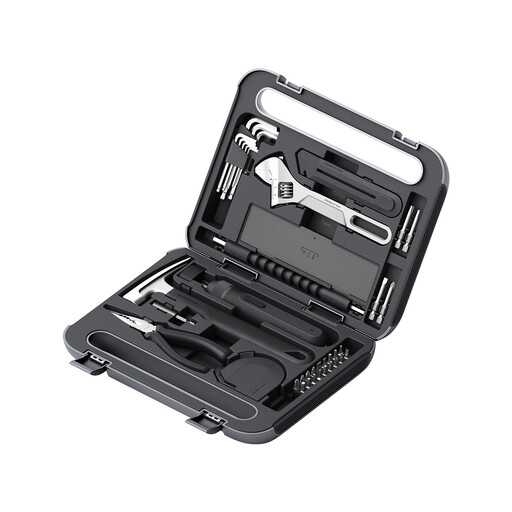
Why This Fits Their Persona: A practical starting set for UK homeowners, renters and DIY beginners handling furniture assembly, minor repairs and everyday maintenance.
The clamshell case uses fixed slots and flexible clasps, helping prevent loose tools and accessories from becoming mixed together.
Includes manual tools and an electric screwdriver, with Type-C charging, three power torque settings and a manual mode.
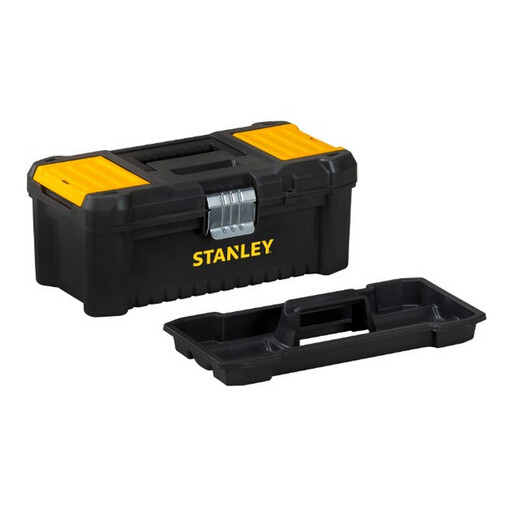
Why This Fits Their Persona: Suitable for DIY users and tradespeople who want a conventional carry toolbox for garages, workshops, vehicles or regular maintenance work.
The 48.2 × 25.4 × 25 cm format states the carrying footprint clearly, while the 16.8-litre volume and 8 kg maximum load help set realistic expectations.
Features metal latches, a padlock eye, a removable internal tote tray and top organisers for small parts.
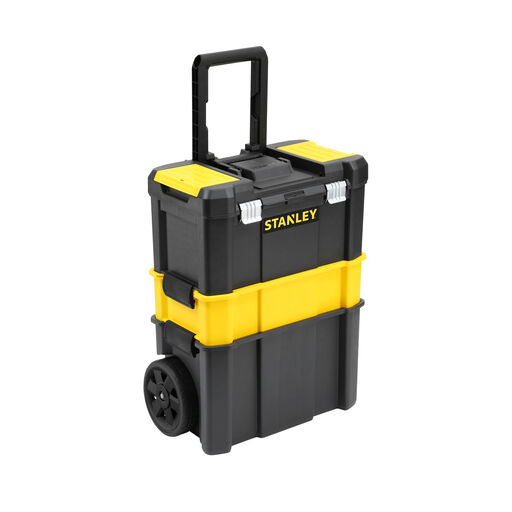
Why This Fits Their Persona: Designed for mobile professionals, workshop users and tradespeople carrying larger quantities of tools between vans, garages and worksites.
The modular three-section design separates bulky equipment, frequently used tools and smaller accessories, reducing the need to empty one deep box.
Includes 7-inch wheels, a telescopic handle, metal latches and a stated maximum load capacity of 20 kg.
We have compiled a complete, real-time list of products that fully satisfy these strict selection criteria and UK safety regulations.
Keep heavier items low in a rolling workshop to reduce the risk of tipping. Engage every side latch before lifting or moving a modular unit, and avoid using any toolbox as a seat or step. Store batteries, chargers and power tools according to their instructions, away from damp conditions and excessive heat.
For a metal latch toolbox, periodically check that hinges and closures remain aligned. Do not exceed the stated load capacity, even if the compartment appears to have spare space. A simple inventory list can also help identify missing drill bits, fixings or hand tools before leaving for a job.
A tool kit can provide a practical starting selection, particularly when it combines an adjustable wrench, pliers, hammer, tape measure, screwdriver and bits. A separate portable toolbox may be more suitable if you already own tools and mainly need organised storage.
Choose a portable toolbox when you regularly carry a smaller selection or need to use stairs. Consider a rolling workshop when you transport heavier hand tools and power tools across a garage, workshop or job site. Check the loaded weight, wheel design and storage space in your vehicle before ordering.
Manual tools have no operating cost beyond maintenance or replacement. An electric screwdriver tool kit may require occasional charging and, depending on use, eventual battery replacement. Check the charging method, battery capacity and included accessories to understand what is supplied and what may need replacing later.