
24/7 Customer Support

Free returns

Same-day & Next-day Delivery

Quality Guaranteed

Unlock Your Welcome Offers: FREE Delivery | Up to 80% OFF | Free 30-day JoyPlus trial
Download the APP
Choosing toothpaste can seem straightforward until you compare fluoride levels, age guidance, sensitivity ingredients, whitening claims and tube sizes. A low-priced tube may not suit a child, while a whitening formula may be unsuitable for someone already experiencing sensitivity.
This guide explains what UK shoppers should check before buying, then matches selected products to practical household needs.
Most whitening toothpaste is designed to remove or polish away surface stains caused by food, drinks or tobacco. It does not work like professional whitening treatment and cannot change the natural internal colour of teeth in the same way.
Look for clear wording about surface-stain removal rather than relying only on phrases such as “brighter smile”. If your teeth are sensitive, a whitening formula may not be the most comfortable everyday option.
Fluoride concentration and age guidance vary. A toothpaste containing 1450 parts per million (ppm) fluoride is common in adult and older-child products, whereas baby and young-child formulas may contain around 1000 ppm fluoride.
The correct amount also matters. Children aged six years and younger should generally use a pea-sized amount under supervision, while babies and toddlers may require only a smear, depending on age and professional guidance. Always follow the product label and speak to a dentist if your child uses fluoride supplements.
A fresh mint toothpaste may leave a strong clean sensation, but that feeling does not by itself indicate cavity protection or effective plaque removal. Similarly, a pump dispenser can be convenient, but the formula and fluoride content remain more important than the container.
Check the ingredient list, net quantity, age suitability and directions before adding a product to your basket.
For everyday cavity protection, check whether the product contains fluoride and note the stated concentration. Several options in this guide contain 1450 ppm fluoride, including Colgate Fresh Gel Mint Toothpaste 75ml and Sensodyne Daily Care Original Mint Toothpaste 75ml.
Some children’s products use sodium monofluorophosphate rather than sodium fluoride. This is still a fluoride source, but the concentration and age range should be checked carefully. Brush twice daily as directed, spit rather than swallow, and supervise younger children.
Choose the formula according to the main problem you want to address:
Persistent or worsening sensitivity can have an underlying cause. Toothpaste should not replace a dental assessment.
Common UK sizes include toothpaste 75ml and toothpaste 100ml tubes. A 75ml tube can be practical for travel, work or a smaller bathroom cabinet, while a 100ml format may reduce how frequently a household needs to reorder.
For families, compare the total volume rather than only the tube price. A two-pack, such as Oral-B 3D White Arctic Fresh 2in1 Toothpaste 2 x 75ml, can provide more stock at once, but check expiry information and storage instructions before buying multiple tubes.
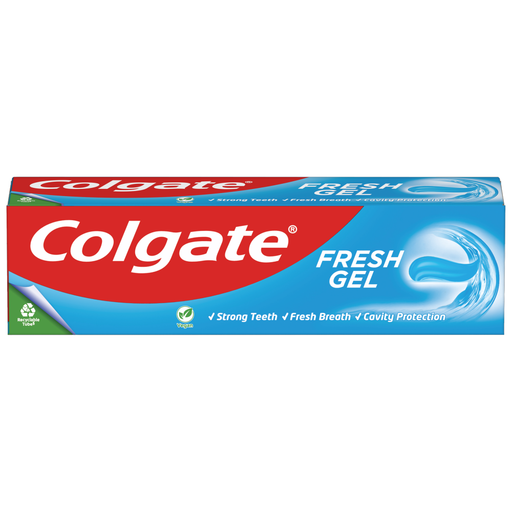
Why This Fits Their Persona: A practical 75ml everyday option for shoppers setting up a bathroom, flat share or family routine without paying for a specialist formula.
Its product information clearly states the fluoride content as 1450 ppm and gives age and supervision guidance, rather than relying only on fresh-breath wording.
Sodium fluoride formula, smooth blue gel texture, refreshing mint flavour and a 75ml format.
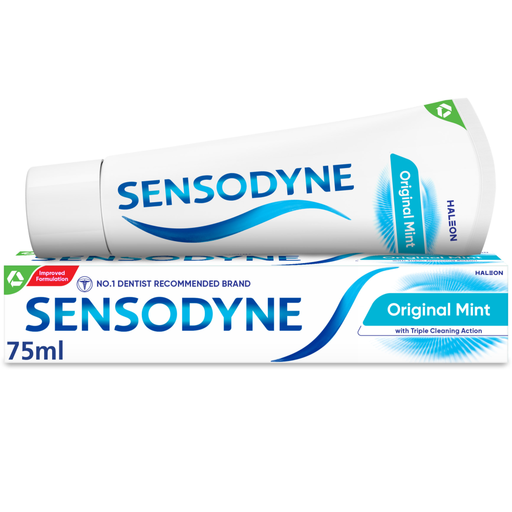
Why This Fits Their Persona: Suitable for adults and children aged 12 and over who want everyday cleaning alongside a formula designed for sensitive teeth.
The product is labelled for sensitivity-focused daily care and states that symptoms which persist or worsen should be discussed with a dentist.
Contains potassium nitrate and 1450 ppm sodium fluoride, with an original mint flavour for a gentler fresh-mouth feel.
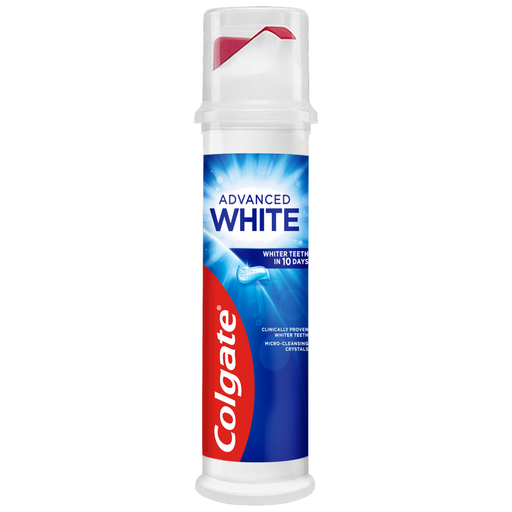
Why This Fits Their Persona: A 100ml choice for shoppers who regularly drink tea or coffee and want a toothpaste focused on surface-stain removal as part of daily brushing.
Its description refers to surface stains and regular brushing, helping distinguish cosmetic cleaning from a promise to alter natural tooth colour.
Contains 1450 ppm fluoride and cleansing ingredients including hydrated silica and sodium bicarbonate; supplied in a 100ml tube.
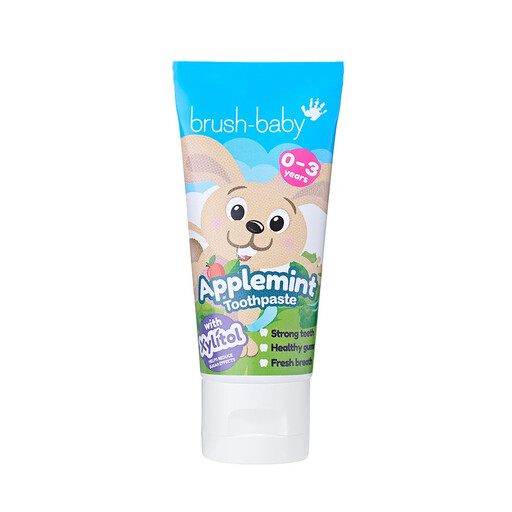
Why This Fits Their Persona: Designed for babies and toddlers aged 0–36 months, with a smear-use direction and adult supervision guidance for early brushing routines.
The age range, 1000 ppm fluoride content, non-foaming formula and smear guidance are stated clearly, reducing the risk of using an adult toothpaste for a young child.
SLS-free, non-foaming applemint formula with xylitol; supplied in a larger 150g format for regular family use.
We have compiled a complete, real-time list of products that fully satisfy these strict selection criteria and UK safety regulations.
Many adults choose a fluoride toothpaste containing around 1450 ppm fluoride for routine cavity protection. Check the packaging, use the recommended amount and brush twice daily. A sensitivity or whitening formula may be more appropriate if that is your primary concern.
Some people with sensitive teeth may find polishing-focused formulas uncomfortable. A sensitive teeth toothpaste may be a more suitable starting point, but ongoing or worsening symptoms should be assessed by a dentist before relying on a change of toothpaste.
Usage depends on tube size, brushing frequency and the amount used. A 75ml tube may suit one person or travel, while a 100ml or 150g product can be more practical for regular household use. Store toothpaste according to the label, replace the cap and check the packaging for batch and shelf-life information.