
24/7 Customer Support

Free returns

Same-day & Next-day Delivery

Quality Guaranteed

Unlock Your Welcome Offers: FREE Delivery | Up to 80% OFF | Free 30-day JoyPlus trial
Download the APP
Choosing toothpaste can seem straightforward until you compare fluoride levels, whitening claims, sensitivity formulas, flavours and age guidance. A low-priced tube may suit everyday brushing, while a specialist formula can be more appropriate for stained teeth or recurring sensitivity. The key is matching the product to your actual needs rather than paying for features you will not use.
Teeth whitening toothpaste generally works by removing some surface stains caused by foods, drinks and smoking. It does not replace professional whitening or necessarily change the natural shade of enamel. Claims such as “whiter in days” should therefore be read as stain-removal claims, not guaranteed results for every user.
A powerful cooling sensation can make your mouth feel fresh, but it does not automatically mean the toothpaste provides better cavity protection. Fresh breath toothpaste and mint toothpaste should still be checked for fluoride content and suitability for your age group.
A family-sized approach does not always work for every household member. Some adult products are not intended for younger children, while baby toothpaste may contain a lower fluoride concentration and use a non-foaming formula. Buyers who prefer SLS-free toothpaste should also inspect the ingredients rather than relying only on front-of-pack wording.
For everyday cavity protection, check the stated fluoride level in parts per million (ppm). Many adult formulas in the UK contain around 1,450 ppm fluoride, including several products listed below. A fluoride toothpaste can help protect enamel from acid attacks and support cavity protection when used as directed.
Children need age-appropriate amounts and supervision. A smear is commonly used for babies and children under three, while a pea-sized amount is generally used for children aged three to six. Always follow the packaging and advice from your dentist, particularly if your child uses fluoride supplements or has specific dental needs.
Look beyond the flavour and packaging:
A standard tube is easy to store and familiar to most households. A pump dispenser can reduce contact with the opening and make dispensing simpler, although it may offer less choice in pack sizes. Compare the net content—75ml, 100ml or a multipack—rather than judging value by the tube’s physical size.
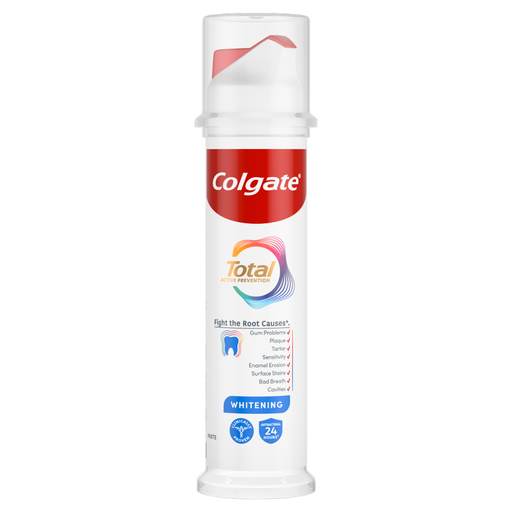
Why This Fits Their Persona: A practical option for shoppers wanting one everyday toothpaste for an adult or family bathroom, with a 100ml pump dispenser for controlled use.
The product details state cavity protection and a mint flavour, so its purpose is not limited to cosmetic stain removal. The label lists fluoride ingredients and gives a pea-sized brushing direction.
100ml content, pump dispensing and a refreshing mint flavour; the formula includes sodium fluoride and sodium monofluorophosphate.
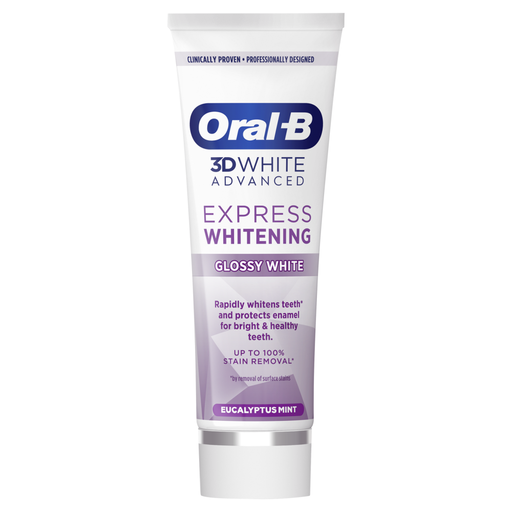
Why This Fits Their Persona: Suits adults prioritising surface-stain removal alongside regular brushing, particularly those who prefer a eucalyptus mint flavour.
Its product information specifically refers to surface-stain removal rather than promising a change to intrinsic tooth colour. The stated fluoride content is 1,450 ppm.
Hydrated silica and sodium hexametaphosphate are listed; the 75ml formula is designed for twice-daily brushing and includes enamel-care positioning.
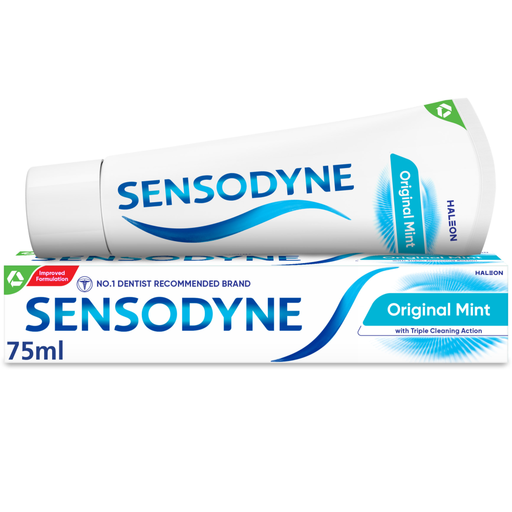
Why This Fits Their Persona: Designed for adults and children aged 12 and over who want a daily care toothpaste with sensitivity-focused ingredients and a gentle mint taste.
It is clearly age-labelled and positioned for sensitive teeth, helping shoppers avoid using an unsuitable children’s or strongly whitening-focused product as their main formula.
Contains potassium nitrate and sodium fluoride at 1,450 ppm; the product instructions recommend brushing twice daily and no more than three times daily.
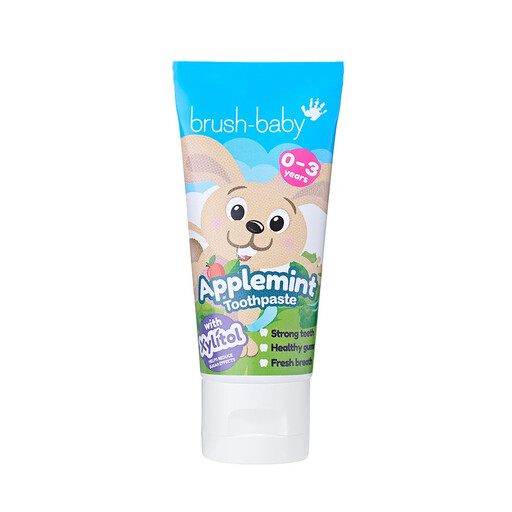
Why This Fits Their Persona: A family-focused choice for parents introducing brushing to babies and toddlers aged 0–36 months, especially where a non-foaming texture is preferred.
The age range, smear instruction and adult-supervision warning are clearly stated. Its SLS-free, non-foaming design is more appropriate for children still learning to spit.
150g content, 1,000 ppm fluoride and xylitol; the formula is listed as free from SLS, gluten, dairy, soya and parabens.
For fresh breath, Colgate Max Fresh with Cooling Crystals lists 1,450 ppm fluoride and a cool-mint flavour, but its guidance says it is not for children under seven. For a whitening toothpaste with a larger 100ml tube, Colgate Advanced White lists 1,450 ppm fluoride and hydrated silica.
If sensitivity and stain removal are both priorities, Sensodyne Rapid Relief Whitening and Sensodyne Clinical Repair Active White provide dedicated options. Check their age restrictions carefully: both are labelled for users over 12 unless advised otherwise by a dental professional.
We have compiled a complete, real-time list of products that fully satisfy these strict selection criteria and UK safety regulations.
Many adult daily care products contain around 1,450 ppm fluoride. Children’s formulas may use a lower concentration, such as the 1,000 ppm listed for Brush Baby Applemint Toothpaste. Follow the product label and ask a dentist if you are unsure, especially when other fluoride sources are involved.
Whitening toothpaste is generally intended to remove surface stains through cleaning and polishing ingredients. It should not be treated as a replacement for professional whitening. Brush gently, follow the directions and stop using a product if it causes irritation or discomfort.
This depends on household size, brushing frequency and the amount dispensed. A 75ml tube may suit one person for regular use, while a 100ml or 150g option can be more convenient for families. Use the recommended amount rather than applying a large strip, and replace the cap to keep the toothpaste clean and dry.