
24/7 Customer Support

Free returns

Same-day & Next-day Delivery

Quality Guaranteed

Unlock Your Welcome Offers: FREE Delivery | Up to 80% OFF | Free 30-day JoyPlus trial
Download the APP
A torque wrench set can prevent loose fasteners, damaged threads and uneven clamping, but only when its range and drive size match the job. Many UK buyers focus on the number of included sockets and overlook the details that affect everyday usability.
The most common purchasing traps are:
Start with the torque specifications provided by your bicycle, motorcycle or vehicle manufacturer. The required value should sit comfortably within the wrench’s working range rather than at its extreme limit.
For delicate components, a 1/4 inch torque wrench with a range such as 1.5–30 N·m or 2–26 N·m is more suitable. These ranges commonly cover bicycle stems, handlebars, brake fittings and smaller motorcycle fasteners.
A 3/8 inch torque wrench offers a useful middle ground for spark plugs, engine components and general motorcycle maintenance. A range of 4.2–85 N·m can cover many smaller automotive and mechanical jobs.
For wheel fasteners and heavier automotive work, a 1/2 inch torque wrench is more appropriate. Some models cover ranges such as 6.8–135 N·m, 17–340 N·m or 20–220 N·m.
Accuracy should be clearly stated. For example, a listed ±2% or ±3% deviation provides more useful buying information than vague wording such as “high precision”. For critical work, follow the vehicle or component manufacturer’s torque specification and observe the wrench’s stated direction of accuracy.
The square drive determines which sockets can be attached. A torque wrench kit with sockets may be convenient, but inspect the socket sizes and drive adapters before purchasing.
An extension rod can improve access, although adding accessories may affect how the tool is used. Follow the supplied instructions and avoid using a torque wrench as a breaker bar or striking tool.
A mechanical torque wrench usually uses an adjustable scale and provides a click when the preset value is reached. It does not require batteries and can be straightforward for occasional DIY use. Look for readable markings, a locking mechanism, a reversible ratchet and a stated calibration certificate where supplied.
A digital torque wrench displays the applied value and may provide sound, light and vibration alerts. Some models also offer real-time, peak and preset modes, multiple units and stored readings. These features can be useful in a busy workshop, but the electronic unit should be kept dry and stored according to the manufacturer’s instructions.
A digital torque adapter is another option if you already own a compatible ratchet or breaker bar. It sits between the drive tool and socket, allowing torque monitoring without replacing your existing handle. Confirm the adapter’s range, drive compatibility and whether calibration is recommended for your type of work.
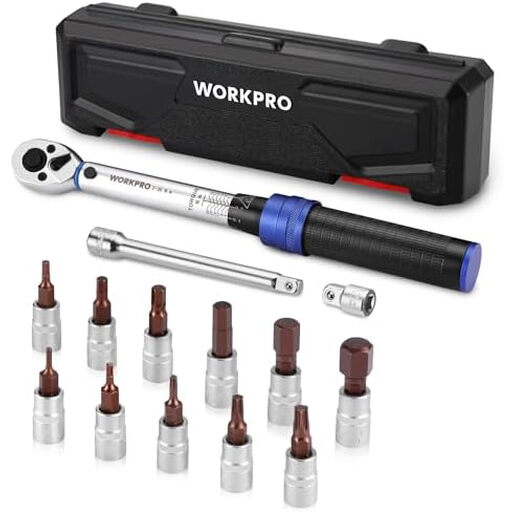
Why This Fits Their Persona: A practical starting point for UK bicycle owners and DIY users who need low-torque control without a large automotive tool.
Its 2-26 N·m range is targeted at smaller fasteners rather than pretending one wrench suits every vehicle and component.
±3% stated accuracy, 72-tooth ratchet, click alert and included hex, Torx, extension and socket adapters.
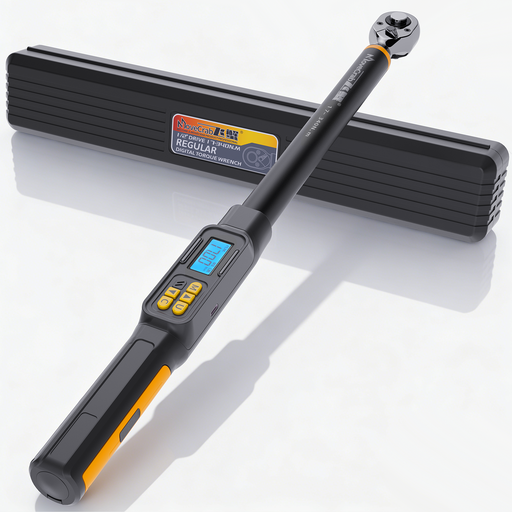
Why This Fits Their Persona: A suitable option for workshop users who regularly move between automotive, motorcycle and heavier mechanical tasks.
The specified 17-340 N·m range and ±2% clockwise accuracy make its intended heavier-duty use clearer than a generic all-purpose description.
LED, sound and vibration alerts; ten preset values; four torque units; peak mode with storage for up to 500 readings.
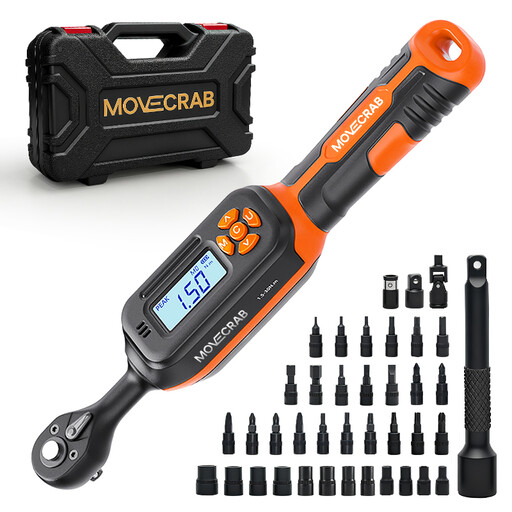
Why This Fits Their Persona: Designed for bicycle and motorcycle owners who want a compact digital tool with a wider selection of bits and sockets.
The low 1.5-30 N·m range is matched with a stated ±2% accuracy, avoiding the common mistake of using a high-range tool for delicate fasteners.
Includes 23 bits, 12 shallow sockets, adapters, LED display, audible alert and peak-data storage for up to 500 readings.
We have compiled a complete, real-time list of products that fully satisfy these strict selection criteria and UK safety regulations.
It can be useful if you need visible readings, preset values, multiple measurement units or audible, visual and vibration alerts. A mechanical torque wrench may be simpler for occasional jobs because it does not rely on batteries. The right choice depends on your working environment and whether recording readings is useful.
A 1/2 inch torque wrench is commonly suited to higher-torque automotive work such as wheel fasteners, but always check the required N·m value. A 3/8 inch model can be more practical for spark plugs and medium-sized engine components, while a 1/4 inch model is intended for smaller fasteners.
Service life depends on use, storage and maintenance. Avoid using the wrench as a breaker bar, protect it from moisture and overload, and follow its adjustment and calibration instructions. Sockets and spanners made from heat-treated chrome vanadium steel can be suitable for repeated workshop use, but inspect all tools for wear, cracks or damaged drive surfaces before use.