Hosts serving sharing plates
Mini wraps make sense when guests will assemble small filled bites or take warmed wraps with dips. Marks & Spencer describes its mini tortillas for both uses.


Choose tortilla wraps around the way you plan to serve dinner: mini wraps suit small filled bites and dips, 10-inch wraps suit individual fajitas, and large wraps suit more substantial filled mains. For a dinner party, a “premium” label matters less than the pack’s size, ingredients, allergen information and preparation instructions. Check the count before planning portions, and confirm each guest’s dietary requirements against the current pack.
Mini wraps make sense when guests will assemble small filled bites or take warmed wraps with dips. Marks & Spencer describes its mini tortillas for both uses.
Choose the diameter around the filling and serving style. Marks & Spencer describes its 10-inch wraps for fajitas, while Mission positions its XL wraps for 30 cm burritos.
Confirm what each guest needs before selecting a variant. Wholemeal, seeded and gluten-free are different product descriptions; none makes the other pack details or allergen label unnecessary.
Start with the serving format, then compare the pack details that affect your fillings, guests and preparation plans.
| Priority | What to check | Your needs |
|---|---|---|
| Serving format | Compare wrap diameter and pack count with the planned portions. Marks & Spencer lists 10-inch wraps for fajitas and mini wraps for fillings or dips; Mission markets XL wraps for 30 cm burritos. | For small bites, I want wraps guests can take in several portions. For a filled main, I need enough room for the intended filling. |
| Dietary suitability | Read each current pack’s ingredients and allergen statement. Check a separately labelled gluten-free variant rather than assuming a standard flour tortilla meets that requirement. | If a guest avoids a particular ingredient, I need to check the exact wrap I will serve, not just its flavour or appearance. |
| Ingredients and flavour | Compare plain wheat, wholemeal-blend and seeded ingredient lists. Marks & Spencer describes its wholemeal wraps as having a nuttier flavour and lists linseed and poppy seed in its seeded wraps. | A plain wrap may let the filling take centre stage; for another menu, I might prefer a listed wholemeal or seed blend. |
| Preparation and storage | Check the pack’s warming method, storage directions and instructions after opening. Count how many wraps you expect to serve before opening multiple packs. | I want to prepare fillings ahead of time without leaving warmed wraps waiting or opening more packs than the meal needs. |
A label does not tell you whether the wrap is the right size for your dish or whether its ingredients suit the filling.
Choose the serving format first, then compare ingredient lists and pack instructions for the options that fit your menu.
Standard flour tortillas and a separately labelled gluten-free variant are distinct products. A wrap’s appearance cannot establish its allergen suitability.
Ask guests about their requirements and check the ingredients and allergen statement on the exact pack before serving.
Opening packs early leaves you with unused wraps to store under their individual pack instructions.
Plan portions from the pack count, keep spare packs closed until needed and follow the label’s storage directions.
Unused opened wraps may go to waste if they cannot be used within the pack’s stated storage period.
A wrap intended for a substantial filled meal needs a different serving plan from small bites taken alongside drinks.
Use mini wraps or planned cut portions for small bites; keep large wraps for a more substantial course.
Mission offers an XL format positioned for large filled wraps.
The range includes large flour tortillas and a separately listed gluten-free wrap.
The cited range covers mini and 10-inch wraps alongside wholemeal and seeded variants.
Tesco lists its own plain wheat wraps as well as branded tortilla formats.
These two Old El Paso options address different dinner-party needs: flour tortillas for filled dishes and a separately labelled gluten-free wrap for guests who require one. Compare the current packs rather than assuming they have the same size or preparation method.
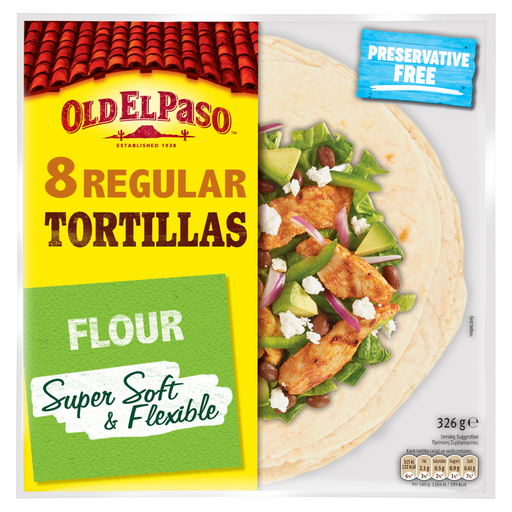 Image unavailable
Consider these flour tortillas for a menu of filled wraps. The pack is 326g; check its wrap count, allergen label and warming directions when planning servings.
 Image unavailable
This separately labelled gluten-free variant is an option to examine when a guest needs a gluten-free wrap. The pack is 216g; check its current allergen statement, wrap size and preparation directions against that guest’s requirements.
Match the size to the dish: mini wraps suit small filled bites and dips, 10-inch wraps suit individual fajitas, and large wraps suit substantial filled mains. Check the actual pack count before deciding how many to buy.
A “premium” label alone cannot establish how a wrap will taste with your filling. Compare the listed ingredients, size and intended serving format; treat descriptions such as “soft” or “flexible” as product claims rather than a guarantee of the result.
Use the method and timing printed on the exact pack you bought. Prepare the fillings first so you can warm wraps close to serving rather than leaving them waiting.
Follow that pack’s opened-storage and use-by instructions, which can differ between products. Keep unopened spare packs closed until you need them.
Ask about the guest’s specific requirement, then check the current ingredients and allergen statement of the wrap you intend to serve. Choose a specifically labelled gluten-free product where appropriate; do not infer suitability from the appearance of a flour wrap or from another variant in the same range.