Families comparing white and brown wraps
For a dinner with several diners, compare the flours listed, fibre per 100g and number of wraps in the pack. A blended name does not tell you the wrap’s fibre content.


Choose a white-and-wholemeal blend if you want both flours in one wrap, but check its ingredients and fibre figure rather than relying on the name or colour. A wholemeal or plain white wrap may better suit your household’s priorities; compare fibre and salt per 100g, wrap size and pack count for the dinner you are planning. If a diner needs gluten-free food, choose a separately labelled product instead of any of the wheat-based examples.
For a dinner with several diners, compare the flours listed, fibre per 100g and number of wraps in the pack. A blended name does not tell you the wrap’s fibre content.
Check the stated fibre and salt figures on the particular pack, then look at its per-wrap information to plan the portions you will serve.
The wheat-based wraps in this comparison are not suitable substitutes for a gluten-free wrap. Check a separately labelled product and its current packaging, as well as the fillings.
Start with the type of flour you want, then compare nutrition figures on the same basis and check whether the wraps will suit your planned portions.
| Priority | What to check | Your needs |
|---|---|---|
| Flour blend | Read the flour ingredients on the exact pack. Compare declared fibre per 100g; a blend’s name does not specify its flour proportions. | I want white and wholemeal flour in the same wrap, without assuming that every blend has the same composition or fibre figure. |
| Fibre and salt | Compare fibre and salt per 100g on like-for-like labels, then check the figures for the wrap you intend to serve. Tesco Groceries lists 8.3g fibre per 100g for its examined wholemeal eight-pack and 3.7g for its examined plain white eight-pack. | If fibre matters to my choice, I want the figure for this particular wrap rather than a judgement based on whether it looks brown or white. |
| Portions | Check both pack count and individual wrap weight or serving information. Follow the chosen pack’s directions if serving the wraps warm. | I need enough wraps of a suitable size for the diners and fillings; an eight-pack does not, by count alone, tell me how much each person will be served. |
| Suitability and storage | Check current ingredients and allergen information for each diner. If wraps will remain, follow that pack’s after-opening, freezing and defrosting instructions. | Someone at dinner needs a suitable alternative to wheat-based wraps, or I need to keep the unused wraps for another meal. |
The examined blended wraps have different declared fibre figures, so the description alone cannot settle a fibre comparison.
Read the ingredients and compare fibre in grams per 100g on the exact packs. Check salt alongside it.
Pack count does not show the size of each wrap or whether it suits the intended fillings and portions.
Check the individual wrap weight or serving information as well as the count.
If the wraps are too small for the portions planned, another pack may be needed.
The examined Mission and M&S blends contain wheat, so they do not meet a need to avoid wheat-containing wraps.
Choose a separately labelled gluten-free product for that diner and check its current packaging and the fillings.
These examples show why the name of a wrap is a starting point, not a substitute for comparing the particular pack’s label.
Mission Deli Wheat & White is a six-pack of wheat-flour wraps with wholemeal flour listed in the Tesco Groceries product description.
M&S describes its Wholemeal Tortilla Wraps as a blend of white and wholemeal flour.
The examined Tesco own-label products include separate wholemeal and plain white eight-packs.
The examined Sainsbury's Wholemeal Tortilla Wraps come in an eight-wrap pack.
The examined ASDA own-label products include wholemeal and Classico plain flour eight-packs.
Old El Paso Whole Wheat Tortillas are an eight-pack whole-wheat option, rather than a stated white-and-wholemeal blend.
This listed option is for a diner who needs a gluten-free tortilla alongside the wheat-based choices discussed above. Check the current pack and fillings for that diner’s requirements.
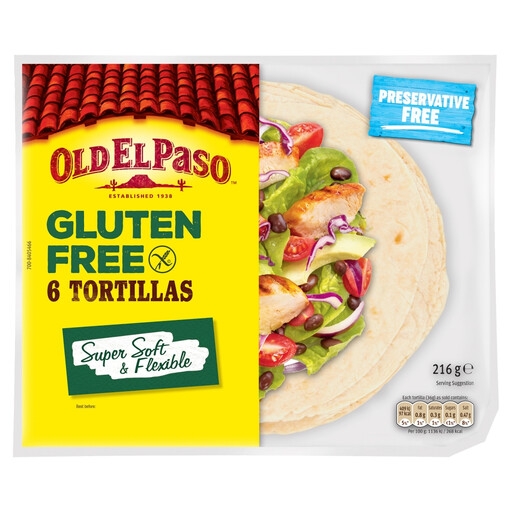 Image unavailable
A gluten-free wrap option for a family dinner with a diner who needs to avoid the wheat-based wraps in this comparison. The pack is labelled 216g; check its current ingredients and allergen information before serving.
No fixed proportion follows from “Wheat & White” or a general description of a blend. Read the ingredients on the exact pack and compare its declared fibre figure rather than assigning it an unstated wholemeal percentage.
Check the chosen pack: Tesco says its examined wholemeal wraps can be eaten hot or cold, while the examined Mission Wheat & White pack gives pan, grill and microwave directions. Use the instructions for the product you serve.
Follow the particular pack’s instructions. The examined Mission Wheat & White listing says to re-close the pack and use the wraps within two days; the examined Tesco wholemeal listing says to refrigerate after opening and consume within two days. Check that product’s directions before freezing or defrosting wraps.
Do not substitute the wheat-based white, blended or wholemeal examples for a suitable alternative. Check a separately labelled product’s current ingredients and allergen information for the person concerned, and check the fillings as well.
No. UK government guidance says best-before dates concern quality, whereas use-by dates concern safety. Follow the wrap pack’s storage instructions and check any filling separately.