Hosts serving older guests
Small portions may suit an afternoon-tea spread, but age alone does not determine which ingredients or textures a guest can eat. Ask about individual preferences and requirements before choosing the wraps and fillings.


Choose tortilla wraps around the guests and fillings, not a ‘premium’ label. A plain wrap can work for small portions when guests eat ordinary textures; wholemeal offers a different fibre content, while a labelled gluten-free wrap addresses a specific dietary requirement. Check the pack’s allergens, salt and storage instructions, and do not assume that a wrap described as soft suits someone with a prescribed modified texture.
Small portions may suit an afternoon-tea spread, but age alone does not determine which ingredients or textures a guest can eat. Ask about individual preferences and requirements before choosing the wraps and fillings.
If ordinary wraps suit you and fibre matters to your choice, compare labels on the same per-wrap or per-100 g basis. Tesco lists 5.1 g of fibre in its 61 g wholemeal tortilla and 2.3 g in its 61 g plain tortilla; those figures describe the two named products, not every wholemeal and plain wrap.
A gluten-free requirement calls for checks on the wrap, fillings and preparation. A prescribed swallowing texture is a separate consideration: a wrap described as soft is not thereby suitable for someone who needs modified-texture food.
Start with each guest’s dietary requirements and ability to eat ordinary textures, then compare the packs and plan how the filled portions will be served.
| Priority | What to check | Your needs |
|---|---|---|
| Texture and portions | Check whether the guest eats ordinary textures before planning folded or cut wraps. For a prescribed modified texture, follow the person’s individual instructions rather than a pack’s softness description. | I want portions guests can manage, but I would not serve an ordinary wrap on the strength of a ‘soft’ claim if someone has swallowing difficulties. Oxford Health NHS Foundation Trust warns that dry bread and chewy textures pose risks for adults who need Level 6 soft and bite-sized food. |
| Fibre and salt | Compare fibre and salt using the same serving size or per-100 g figures, and consider the fillings too. Tesco lists 5.1 g fibre and 0.48 g salt per 61 g wholemeal tortilla, against 2.3 g fibre and 0.60 g salt per 61 g plain tortilla in its named packs. | If I am choosing between those two Tesco wraps, the wholemeal one has a different fibre and salt profile. I still need a texture and flavour that suit the guest. |
| Allergens and gluten | Read the current wrap and filling labels for the relevant ingredients and allergens. For a guest who must avoid gluten, choose an explicitly labelled gluten-free wrap and avoid cross-contact during preparation and serving, as the NHS advises for coeliac disease. | A guest needs food without gluten, so I cannot treat a wholemeal wheat wrap or a wheat-free-sounding product name as enough to make the choice. |
| Storage and serving | Check the opened-pack instructions and the storage needs of the fillings. The Food Standards Agency advises keeping prepared sandwiches, dairy products and dips cold and taking out portions as needed. | I want to prepare ahead without leaving the whole platter of perishable filled wraps out throughout afternoon tea. |
A manufacturer’s texture description does not establish that a wrap meets someone’s prescribed food texture. Oxford Health NHS Foundation Trust specifically warns against dry bread and chewy textures for adults who need Level 6 soft and bite-sized food.
If a guest has swallowing difficulties, follow their individual clinical instructions when deciding whether to serve a wrap at all.
Wholemeal wheat wraps and gluten-free wraps address different requirements. Fibre and salt also vary by product, so neither label settles the nutritional comparison.
Establish the guest’s requirement first, then compare the current pack labels using a consistent per-wrap or per-100 g basis.
Prepared portions containing perishable fillings need attention to storage, even when the unfilled wraps have different pack instructions. The Food Standards Agency includes prepared sandwiches, dairy products and dips among foods to keep cold.
Keep perishable filled portions chilled and bring them out as needed for serving.
These brand examples illustrate different wrap types; compare the particular pack rather than assuming a brand name establishes texture or dietary suitability.
Mission lists an Original six-pack of wheat-flour wraps for guests who eat ordinary wheat-based tortillas.
Its regular flour tortillas and separate gluten-free six-pack serve different dietary requirements.
Tesco’s named plain and wholemeal eight-packs provide figures for tortillas of the same listed weight.
Its listed wholemeal tortillas are a wheat-based option for shoppers comparing ingredients and fibre information.
M&S lists separate wholemeal and seeded tortilla products for guests who prefer those ingredients.
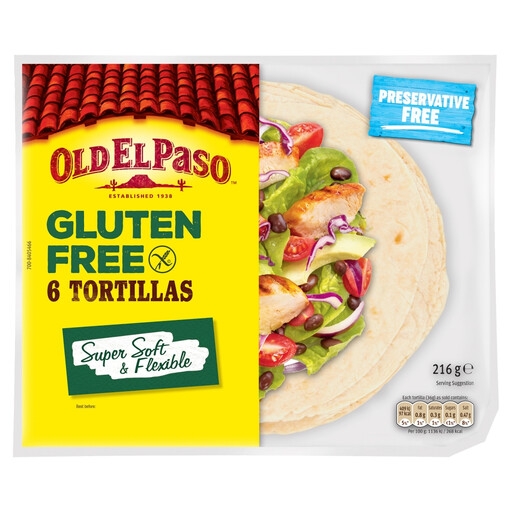
This tortilla option is relevant when an afternoon-tea guest needs a gluten-free wrap; check the fillings and preparation as well as the wrap itself.
 No image available
For a guest who needs a gluten-free wrap, this six-tortilla pack is made with tapioca starch and corn flour. Check the current label and fillings for other allergens; a soft texture description does not establish suitability for a prescribed modified-texture diet.
A ‘soft’ description alone cannot answer that question. Follow the person’s prescribed texture instructions when deciding whether to serve a wrap; Oxford Health NHS Foundation Trust warns against dry bread and chewy textures for adults who need Level 6 soft and bite-sized food.
Not necessarily: Old El Paso says its named regular flour tortillas can be eaten cold. Check the preparation instructions on the particular pack you buy.
Keep portions with perishable fillings chilled and take them out as needed. The Food Standards Agency gives that approach for prepared sandwiches, dairy products and dips in its picnic food-safety guidance.
Compare the pack count with the number and size of portions you intend to serve, allowing for the fillings and any wraps left after opening. Follow the chosen pack’s storage instructions: Tesco says its named plain wraps should be refrigerated and used within two days once opened.