What matters when choosing
Decide where the fan can stand and how far its airflow needs to reach, then compare its low-speed sound and controls for the way you use your desk.
| Concern |
What to check |
Who this matters to |
| Quiet desk airflow |
Check the conditions behind any noise figure and whether several speeds give you a useful setting at your seat. |
During calls or focused work, I want enough airflow without a distracting sound; around 29% of consumers put quiet desk use first. |
| Directed or wider airflow |
Look for adjustable oscillation or a way to stop and aim the sweep. |
When my desk shares a room with another seating area, I want to change where the breeze goes. Roughly 29% of consumers prioritise that airflow control. |
| Footprint and placement |
Compare the base dimensions with the available space and plan a cable route clear of walkways. |
Beside a compact desk, I need the fan to stand securely without obstructing my chair; about 24% of consumers place fit and placement first. |
| Electrical safety and support |
Check the seller, relevant plug or charging arrangement, safety instructions and available support. |
With equipment and cables close together, I want a dependable supply and a clear route for help if something goes wrong; around 18% of consumers make safety and support their primary concern. |
Joybuy products for desk airflow
This compact, rechargeable tower fan is presented for personal airflow at a desk. Check its dimensions and airflow controls against your space and preferred seating position.
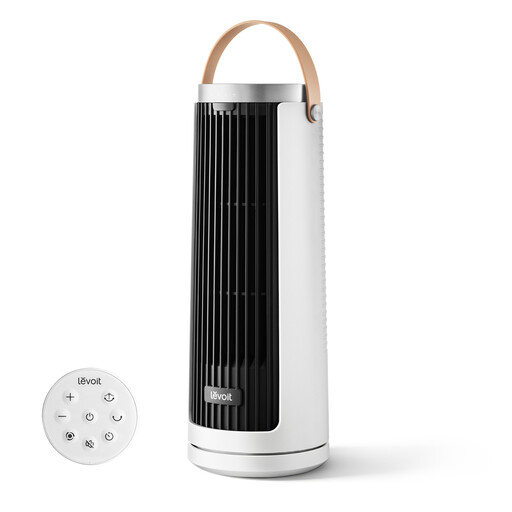 Image unavailable
Levoit Windi Mini Plus Tower Fan
Its stated desktop and home-office uses make it a candidate for personal airflow where you sit. The product information describes rechargeable, cordless operation, USB Type-C charging and multiple airflow modes.
Before choosing it for quiet work, check noise measurements at the settings you would use. Confirm whether its airflow can be aimed or oscillated, measure its base against your available space, and check the supplied charging equipment and support details.
View on Joybuy
Common questions
Will a tower fan cool the air in my small flat?
No: a tower fan moves air and can make you feel cooler, but it does not lower the room’s air temperature. For desk use, aim the airflow near your seat; widen the sweep if you also want air movement elsewhere in the room.
Should I use narrow or wide oscillation at a desk?
A narrower sweep suits airflow aimed mainly at one seated person; a wider one makes more sense when the fan also serves another part of the room. Check the actual settings: Meaco lists 45°, 90°, 135° and 180° options for its Sefte 19-inch model, while DREO lists 120° oscillation for the 714S.
Where should I put a tower fan beside my desk?
Place it on a stable, level surface where a chair or passer-by is unlikely to knock it over, and keep its cable clear of walking routes. Do not use a damaged unit or cable; unplug a mains-powered fan before moving or cleaning it. Electrical Safety First also advises against leaving an electric fan running overnight or while you are out.
What electrical details should I check before buying?
Check the supplied power arrangement, safety instructions and an identifiable route to the seller or manufacturer for support. For mains-powered electric fans, Electrical Safety First advises a UK 3-pin fused plug and recommends buying from a reputable retailer or known manufacturer.
Does a DC motor tell me how much electricity a fan will use?
No: a motor description alone does not establish electricity use across the settings and hours you intend to run the fan. Compare the exact models’ stated electrical information and the relevant operating conditions rather than assuming one motor label settles the choice.


