Chair-side comfort seekers
If the breeze is mainly for one seat, you will want to check how the fan directs air and whether oscillation can be switched off. Maximum room coverage matters less when others do not want the airflow aimed their way.


For a breeze beside one chair, choose a tower fan whose airflow you can keep directed at that seat; use oscillation when others also want airflow. Check the sound level at the speed you expect to use and measure the space beside the chair before choosing a model. As Which? explains, a fan moves air rather than lowering the room-air temperature, so it cannot replace air conditioning when cooling the room itself is the goal.
If the breeze is mainly for one seat, you will want to check how the fan directs air and whether oscillation can be switched off. Maximum room coverage matters less when others do not want the airflow aimed their way.
If several seats need airflow at different times, adjustable oscillation and speeds can help you change where the breeze goes. Check the controls on the exact model rather than assuming every fan offers the same range.
A fan close to conversation or the television needs a suitable low setting and a place where its base will not obstruct the room. Compare sound figures by operating mode, then measure the available floor space.
Start with where you want the breeze to land. Then check how the fan will sound and fit beside the chair, bearing in mind that airflow and room-temperature reduction are different needs.
| Concern | What to check | Who this matters to |
|---|---|---|
| Airflow direction | Check whether oscillation switches off, its stated range and any separate outlet adjustment. | I want the breeze to stay near my chair without repeatedly reaching someone else. Around 31% of consumers would put directing the airflow first. |
| Sound in shared use | Look for low-speed or mode-specific dB(A) figures; do not compare one fan’s quiet mode with another’s maximum setting. | Conversation and television matter more to me than maximum airflow. Roughly 31% of consumers would make quiet shared use their primary concern. |
| Chair-side fit and controls | Measure the base area and cable route, and check whether a remote is included. | I need the fan to sit clear of the seating area and be convenient to adjust while seated. Around 23% of consumers would prioritise that fit and convenience. |
| Function and power use | Decide whether moving air meets your goal; compare rated power alongside your expected hours of use. | I want airflow, but I do not want to mistake it for a lower room temperature. About 15% of consumers would put that distinction and power use first. |
Which? explains that a fan moves air; it does not cool the room air as an air conditioner does.
Choose a fan for a breeze beside the chair. If lowering the room temperature is essential, assess air conditioning separately.
Extra adjustment may help with changing seating positions, but the base still has to fit. Shark lists an approximate 75 cm base diameter for the TF200SUK in horizontal mode.
Mark out the proposed position beside the chair, including a clear cable route, before ordering.
A quiet-mode figure does not describe sound at maximum output. Dimplex quotes a 40.4–48.5 dB(A) range for the EasyBreeze DXACF, while Dyson lists separate quiet-mode and maximum figures for the AM07.
Check which speed or mode each figure describes, particularly if you expect to use the fan during conversation or television.
Instructions can differ by model: an electriQ tower-fan manual specifically rules out connecting that appliance with an extension cord.
Read the instructions for the fan you choose and check that its required socket and placement work beside your chair.
The EasyBreeze DXACF illustrates a conventional tower-fan option for a chair-side position with occasional shared airflow.
The TF200SUK is worth considering where seating positions change and adjustable airflow direction is important.
The AM07 offers a slim tower format for buyers comparing several airflow settings and stated sound levels.
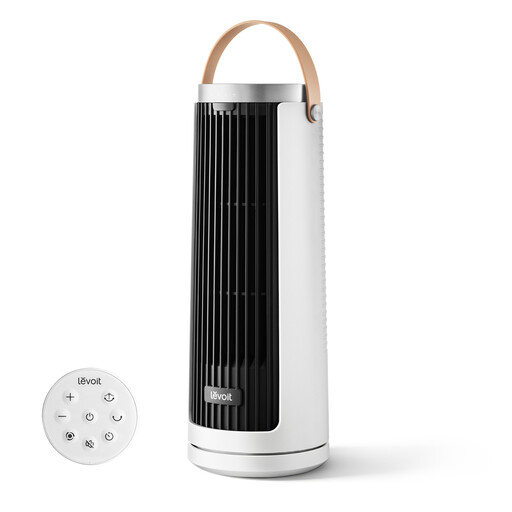
This portable tower fan is a choice to consider for personal airflow near one seat. If the breeze needs to reach other people in the lounge, check its oscillation and directional controls before choosing it for that purpose.
 No image available
For airflow near one seat, this portable, USB Type-C rechargeable fan has multiple airflow modes.
Before choosing it for a shared lounge, check whether oscillation can be switched off and whether the airflow can be aimed. Check its dimensions, battery runtime and sound level at the setting you expect to use beside the chair.
No. As Which? explains, a fan moves air rather than lowering the room-air temperature. Choose one for a breeze beside the chair, not for the room-temperature reduction you would expect from air conditioning.
Use oscillation when other people also want airflow; switch it off when you want a steadier breeze at one seat, if the model allows it. Check the actual controls as well as the stated oscillation angle before buying.
Follow the instructions for your exact fan rather than assuming extension-lead use is permitted. An electriQ tower-fan manual prohibits connecting that particular appliance with an extension cord, so check the socket position and cable route before placing any model beside your chair.