
24/7 Customer Support

Free returns

Same-day & Next-day Delivery

Quality Guaranteed

Unlock Your Welcome Offers: FREE Delivery | Up to 80% OFF | Free 30-day JoyPlus trial
Download the APP
A tower fan can be a practical choice for a bedroom, home office, student room or living space where floor area is limited. However, slim styling alone does not guarantee comfortable airflow, low noise or economical running costs. The right model depends on how much coverage you need, whether you require cordless use and how much control you want over speed and direction.
Before buying, watch for three common pitfalls.
For personal cooling, a portable tower fan placed on a desk or bedside table may be sufficient. For a larger room, look for a taller design, oscillation or an air circulation fan that moves air across a wider area.
A quiet tower fan with several speed settings gives you more flexibility: a lower setting can be suitable for reading or sleeping, while a stronger mode may be more useful in a warm living room. Remember that a manufacturer’s airflow-distance figure is a product specification rather than a guarantee of equal comfort throughout the room.
An oscillating tower fan can distribute air from side to side. Adjustable tilt, where available, helps direct airflow towards a bed, sofa or desk rather than leaving the breeze at one fixed height.
A mains-powered fan is generally intended to remain in one location. If you want to move it between rooms, check the cable length, base stability and overall weight.
A portable tower fan with a rechargeable battery can be more convenient for desks, bedside tables and travel. Models using a USB-C fan connection may be easier to recharge with compatible adapters and power banks, but confirm the charging requirements before use. Battery runtime, charging time and whether the fan can operate while charging are important details to check on the product page.
A rechargeable fan is not automatically more economical for every household. Its suitability depends on how often you move it and whether cordless operation is valuable to you.
A remote-controlled tower fan can be useful when the fan is beside a bed or across a room. Timers may help avoid leaving the fan running unnecessarily. An LED display can make settings easier to see, although some users may prefer dimmer controls in a bedroom.
A bladeless tower fan usually has an enclosed airflow outlet rather than exposed rotating blades. This can make the exterior simpler to wipe, but all fans still require care. Follow the supplied instructions, disconnect power before cleaning and keep the unit away from water and excessive moisture.
For UK homes, place the fan on a stable, flat surface and keep cables away from walkways. Do not insert fingers or objects into an outlet or grille. If a plug, cable or fan housing is damaged, stop using it and contact the appropriate support channel.
The following options suit different room sizes, routines and power requirements. Review the current listing for availability, pricing and detailed operating information before ordering.
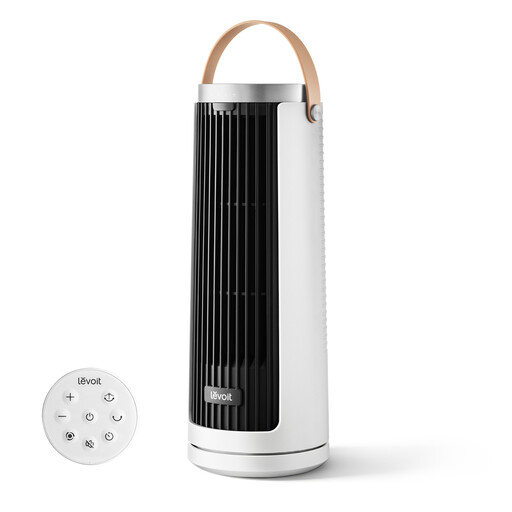
Why This Fits Their Persona: Its compact white tower format suits students, renters and office workers who need personal airflow without giving up much desk or bedside space.
The listing identifies multiple airflow modes and low-noise operation, making the key settings clearer than relying on slim styling alone. It is designed for personal rather than whole-room airflow.
Rechargeable battery, USB Type-C charging, cordless operation and a lightweight portable design.
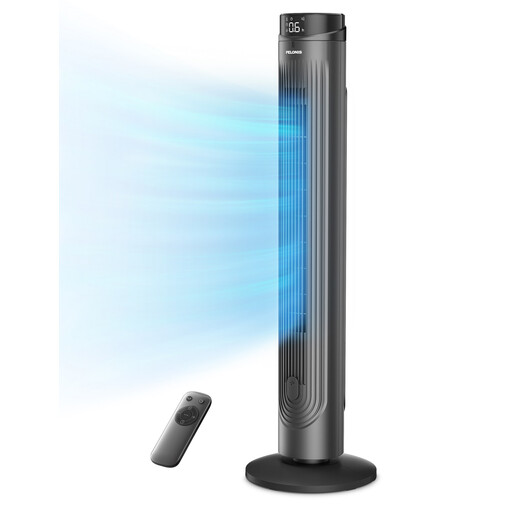
Why This Fits Their Persona: A taller floor-standing format with detailed controls suits users who want a dedicated bedroom or living-room fan rather than a small personal unit.
Its listed 12 speed settings allow finer adjustment than a basic three-speed fan. The product description also specifies a timer, oscillation, remote and LED display.
42-inch height, DC motor, 24-hour timer, 12 speeds, remote control and a bladeless airflow outlet.
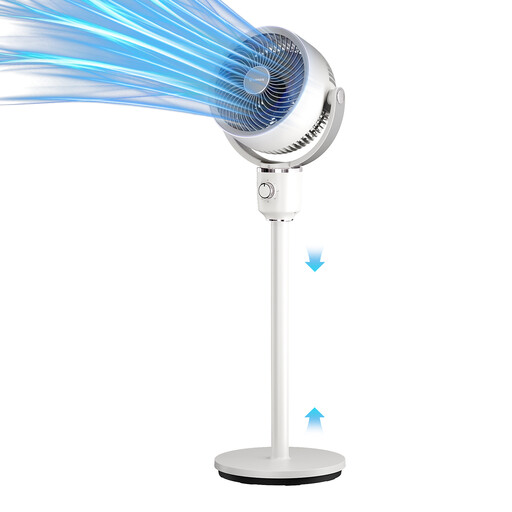
Why This Fits Their Persona: Users needing broader room circulation can alter its height and use it as a floor or table fan, making it suitable for changing spaces and larger indoor areas.
The listing provides specific airflow controls: three modes, 60-degree automatic oscillation, manual tilt from -10 to 90 degrees and an adjustable height from 0.45 to 1.08 metres.
Three-blade design, detachable construction, knob control, removable front grille and stated 10-metre airflow distance.
We have compiled a complete, real-time list of products that fully satisfy these strict selection criteria and UK safety regulations.
An energy-efficient fan generally uses less electricity than air conditioning, but actual cost depends on wattage, speed and daily operating time. Check the power rating on the product listing and avoid running a fan in an empty room.
For a simple estimate:
Electricity cost = wattage ÷ 1,000 × hours used × your electricity tariff
A timer can help limit overnight or unattended operation. Lower speed settings may also use less power, although the exact consumption varies by model. A fan circulates air; it does not lower the room temperature in the same way as a cooling appliance, so close windows and blinds during the hottest part of the day where appropriate.
Yes, many are designed for bedroom use, particularly models with low-noise operation, adjustable speeds, oscillation and a timer. Place the fan on a stable surface with clear space around the air outlet. If indicator lights disturb sleep, check whether the display can be dimmed or switched off.
Lifespan depends on construction, frequency of use, dust levels, storage and maintenance. Keep air inlets and outlets clear, clean only as instructed and do not operate a fan with a damaged cable or housing. Rechargeable models also depend on battery care and charging conditions.