
24/7 Customer Support

Free returns

Same-day & Next-day Delivery

Quality Guaranteed

Unlock Your Welcome Offers: FREE Delivery | Up to 80% OFF | Free 30-day JoyPlus trial
Download the APP
Choosing toy cars for kids can look straightforward until you compare ride-on vehicles, remote-control models, die-cast toys and racing sets. Product photos may show exciting lights, fast movement and impressive accessories, but the details that affect everyday use are often found in the small print.
Parents, grandparents and gift buyers should pay particular attention to age suitability, power type, floor space, battery requirements and safety warnings. The right choice depends less on the most eye-catching feature and more on how, where and by whom the toy will be used.
A non-electric toddler ride-on is powered by the child pushing with their feet. This can be suitable for early movement practice, but it will not provide motorised driving. By contrast, electric ride-on cars need charging, have a defined speed and require battery care.
Always check whether the listing says “no power”, “foot-to-floor” or “electric” before ordering. A foot-to-floor model may be easier to store and prepare, while a battery-powered vehicle creates a more vehicle-like experience but needs charging time between uses.
Battery claims can be misleading when read without the full specification. For example, a ride-on may offer around 45 minutes of use but require 8–12 hours of charging. Remote-control cars for kids may also have different play times depending on speed, surface, lighting and stunt use.
Check whether batteries are included, how long a full charge takes and whether the remote requires separate AA or AAA batteries.
A large ride-on may not turn comfortably in a small hallway or garden path. A racing toy designed for smooth floors may struggle on thick carpet, while an off-road-style vehicle still needs a level, controlled area.
For children’s ride-on products, check the maximum load, seat height, wheel width and recommended age. Direct adult supervision is particularly important for powered vehicles, outdoor use, slopes and toys with small detachable parts.
The recommended age is a starting point, not a substitute for checking the child’s size and ability. Toddler ride-on cars commonly use low seats, broad wheels and simple steering. A model for 18–36 months may have a maximum load of 20–25kg, but the child should still be able to sit securely and reach the floor or controls comfortably.
For RC stunt cars and RC drift cars, the age guidance often reflects control complexity as well as small parts. Models listed for ages 6+ or 8+ may require hand-eye coordination and enough space to operate safely.
Compare these categories carefully:
A lower purchase price may not be the only cost. Replacement batteries, AA or AAA cells, charging accessories and storage space can affect long-term value.
Look for clear information about PP, ABS, metal or die-cast construction, as well as wheel design and assembly requirements. Broad tyres and a low centre of gravity can help a toddler vehicle remain stable, but they do not remove the need for supervision.
For electric ride-ons, check whether the listing references EN 71-1-2-3 and EN 62115. These standards relate to toy safety and electrically operated toys. For products containing small parts, read the choking-hazard warning and follow the stated minimum age. UK buyers should also review the supplied instructions, manufacturer information and responsible-person details where provided.
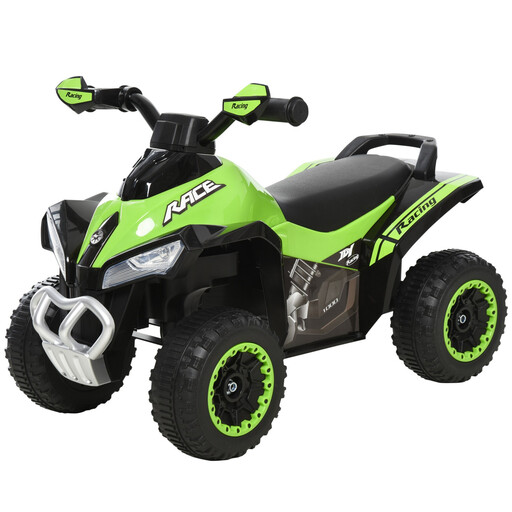
Why This Fits Their Persona: A practical first car for toddlers aged 18–36 months, particularly where families want to avoid charging and keep running costs simple.
Its no-power, foot-to-floor design is clearly stated, so buyers are not expecting a battery-powered vehicle.
Four large tyres, two handlebars, working lights and three music choices; maximum load is 20kg.
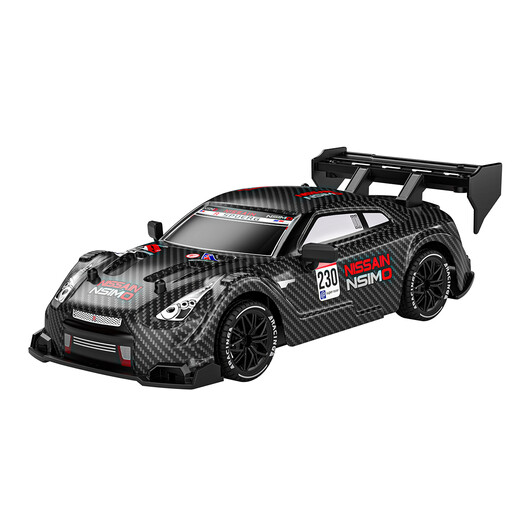
Why This Fits Their Persona: Suits older children who want a more controllable indoor racing toy with different driving modes.
The listing gives an age guide of 8+, identifies the rechargeable battery and explains the intended flat-floor surfaces.
4WD drive, interchangeable drift and racing tyres, LED lighting and approximately 20–40 minutes of play per use.
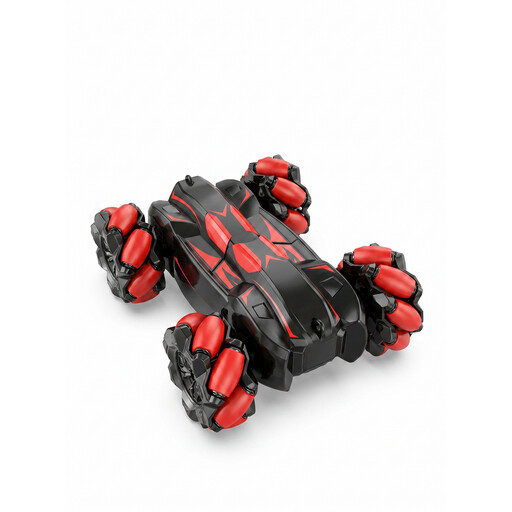
Why This Fits Their Persona: Designed for children aged 6+ who want flips, sideways movement and repeatable stunt play indoors or outdoors.
Its stated dual-sided design means it can continue moving after a flip, reducing the need to reset the car manually.
Mecanum wheels support lateral drifting, while 4WD, LED wheel lights and gesture or handheld control add variety.
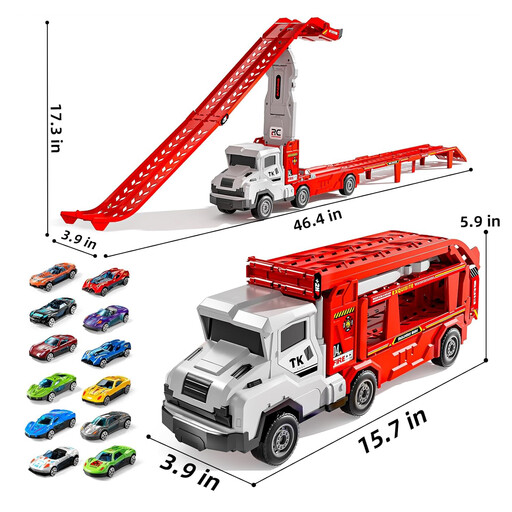
Why This Fits Their Persona: A useful option for siblings or friends who enjoy shared racing play rather than individual electronic control.
The set states that it includes one truck, 12 cars and two foldable tracks, making the contents clearer than a picture-only listing.
The carrier doubles as storage and a two-lane race track; listed suitable ages are 3–8 years.
We have compiled a complete, real-time list of products that fully satisfy these strict selection criteria and UK safety regulations.
It depends on the design. Foot-to-floor cars and smaller remote-control cars can work indoors where there is clear floor space and no fragile objects nearby. Check the manufacturer’s recommended surfaces, turning radius and dimensions. Fast RC drift cars may be more suitable for hard floors, garages or supervised outdoor areas.
Charging times vary by model. One listed 6V ride-on requires approximately 8–12 hours for a full charge and offers around 45 minutes of play. A 12V quad bike has a similar stated charging period. Follow the supplied instructions, keep the charger away from children and do not use a damaged battery or charger.
Choose by age, play style and practical features, rather than colour or gender. Toddlers may prefer a stable push car, while older children may enjoy RC stunt cars, RC drift cars, die-cast model cars or a transport truck toy. For shared play, a toy car set with multiple vehicles and a foldable track can provide a straightforward screen-free activity.