
24/7 Customer Support

Free returns

Same-day & Next-day Delivery

Quality Guaranteed

Unlock Your Welcome Offers: FREE Delivery | Up to 80% OFF | Free 30-day JoyPlus trial
Download the APP
Choosing toy racing cars can look straightforward until you compare age labels, battery systems, materials and intended use. A small die-cast model may suit a collector but create a choking risk for a younger child, while an RC car advertised for “all-terrain” play may perform poorly on thick carpet or wet ground.
Joybuy’s Product Recommendation Officer approach is simple: filter out vague marketing language and focus on the details that affect everyday play, durability and gift suitability.
Many die-cast racing cars feature opening doors, detailed interiors and realistic paintwork. These details can make them appealing racing car models, but they do not automatically make them suitable for rough play. Some replicas are intended mainly for display and may have small detachable components or delicate mirrors and spoilers.
Check whether the listing describes the item as a collectable, static model or play vehicle. A 1:24 replica is generally more appropriate for older children, teenagers or adult collectors than toddlers.
Terms such as “high speed”, “stunt” and “all-terrain” need context. Remote control racing cars designed for smooth floors may struggle on deep carpet, gravel or grass. Drift tyres can slide effectively on flat indoor flooring, while rubber rally-style tyres may provide more useful traction over low-pile carpet.
Before buying, check the recommended surface, wheel design and whether the car has suspension. For UK homes, indoor compatibility is particularly useful during wet or cold weather.
Rechargeable RC cars reduce the need for disposable batteries in the vehicle, but the controller may still require AA or AAA batteries. Also check the stated play time, charging method and whether a USB cable or battery is included.
A quoted runtime is not a guarantee of identical performance in every household. Continuous high-speed driving, LED lights and repeated stunts can affect how long a charge lasts.
Use the manufacturer’s stated age guidance as a starting point, not a suggestion to ignore safety warnings. Toys with small wheels, accessories or detachable parts should be kept away from children under three. Adult supervision may be recommended for younger users or products with high-speed movement.
Look for clear safety information and relevant toy compliance markings, such as CE or UKCA marking where applicable. These markings do not indicate that a toy is indestructible or suitable for every age; they support the legal compliance process for products placed on the market.
Scale affects both appearance and handling. 1:64 die-cast cars are compact and easy to collect, while 1:24 models offer more visible detailing but need more shelf or storage space. RC cars in 1:24 scale can be easier for children to see and control, although their speed may require an open area.
For indoor play, measure the available floor space and consider furniture, pets and breakable objects. A small rally car may be more practical for a bedroom than a larger stunt vehicle.
For RC products, 4WD remote control cars usually distribute power across all four wheels, which can help with traction and cornering. Proportional controls allow more gradual steering and throttle input than simple forward-and-back controls. This can be useful for older children learning to drive accurately.
If drifting is the main attraction, look for replaceable drift and racing tyres. If the child is new to RC play, a simpler controller and a durable roll cage may be more valuable than a higher top-speed specification.
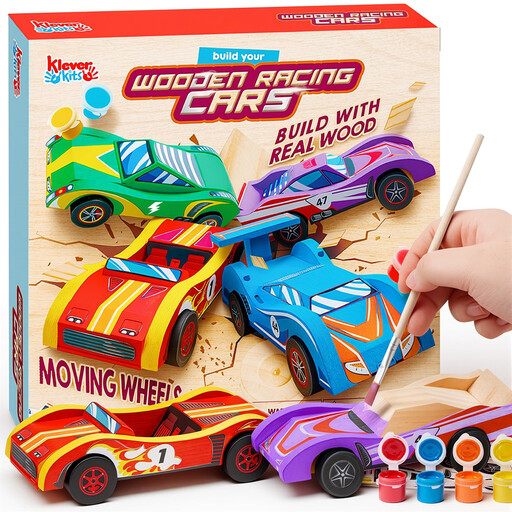
Why This Fits Their Persona: A screen-free option for children who enjoy making and decorating rather than operating a powered vehicle. It suits rainy-day activities, birthday presents and shared family crafts.
It does not rely on speed or battery claims. The set clearly provides pre-cut wooden pieces, instructions, paints, brushes, glue and stickers for four cars.
Includes 44 pre-cut pieces and 12 paint tubs; designed for children aged 8+ according to the product description.
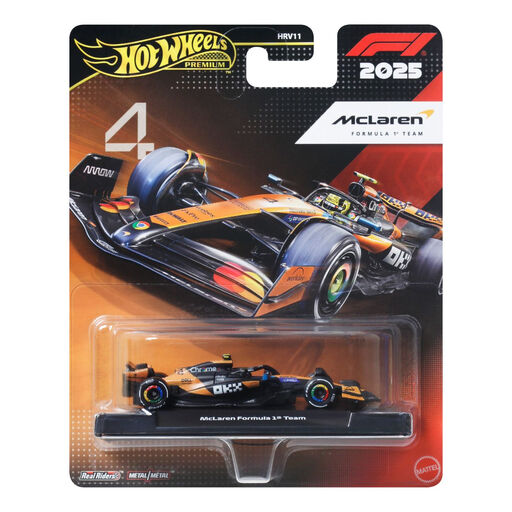
Why This Fits Their Persona: A compact display piece for Formula 1 followers and adult collectors who value team-themed presentation rather than high-impact play.
The listing identifies it as an 18+ collectable, helping prevent it being purchased as a general toy for a younger child.
Uses a 1:64 scale, Metal/Metal body and chassis, Real Riders tyres, a display plinth and collector packaging.
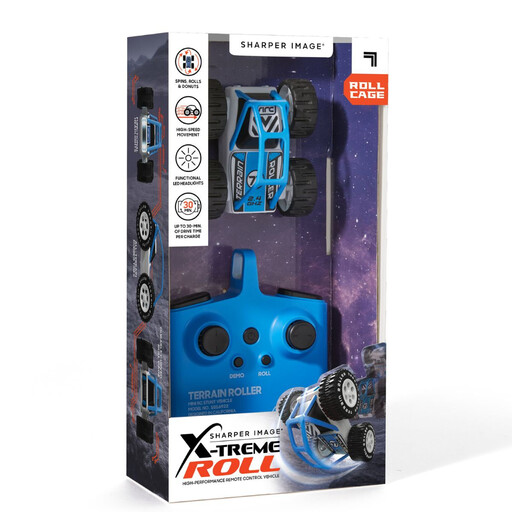
Why This Fits Their Persona: Suitable for children aged 6+ who want repeated stunt play, including spins, flips and doughnuts in a clear indoor or outdoor area.
The curved roll cage is designed to self-correct after stunts, so the vehicle does not need to be manually turned over after every flip.
Features all-terrain rubber tyres, LED headlights and up to 30 minutes of action per USB-C charge; the controller needs 3 AAA batteries.
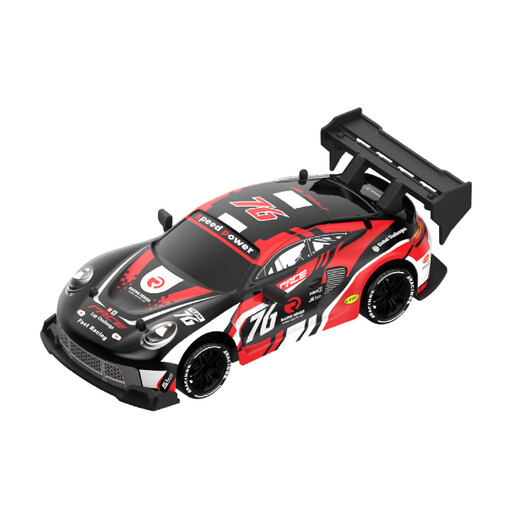
Why This Fits Their Persona: A match for children aged 8+ and teenagers who want racing and drifting in an indoor-friendly format, particularly on tile or other flat flooring.
It offers two interchangeable tyre sets, allowing users to switch between drift play and flatter-surface racing instead of relying on one tyre type.
Includes 4WD drive, LED lights, USB charging, a stated 20–40-minute runtime and a 50-metre control range.
We have compiled a complete, real-time list of products that fully satisfy these strict selection criteria and UK safety regulations.
Some are. Compact vehicles designed for tile, laminate or low-pile carpet are generally more practical indoors than large, fast models. Clear a safe area before use, keep the car away from stairs and fragile objects, and follow the product’s age and supervision guidance.
The answer depends on the model, driving style and surface. The listed products include stated runtimes ranging from up to 30 minutes or approximately 20–40 minutes per charge. Allow the battery to cool and follow the supplied charging instructions rather than leaving it connected unnecessarily.
Not always. Small parts and detachable components can present a choking hazard, particularly on 1:64 and detailed 1:24 models. Check the age label and warning information. For children under three, choose only products specifically designed and labelled for that age group.