
24/7 Customer Support

Free returns

Same-day & Next-day Delivery

Quality Guaranteed

Unlock Your Welcome Offers: FREE Delivery | Up to 80% OFF | Free 30-day JoyPlus trial
Download the APP
Choosing toys for babies and toddlers can be more complicated than it looks. A colourful box may promise sensory discovery, learning and hours of play, but the useful details are often hidden in the small print. The right choice depends on a child’s age, abilities, available space and tolerance for sound and mess.
Whether you are shopping for baby sensory toys, interactive toddler toys, character playsets or birthday gifts for toddlers, check the practical details before focusing on appearance.
A product marked “1 to 5 years” may not be equally suitable for every child in that range. A younger toddler may struggle with small accessories, while an older child may lose interest in a toy with limited functions. Always read the specific age recommendation and warning rather than relying on a broad marketing description.
For example, some playsets are suitable from age three because they contain small figures and accessories, even though the theme may appeal to younger children.
Musical toys for toddlers and talking character toys often require batteries, but they may not always be included. Check:
For toys containing button or coin batteries, safe storage and prompt disposal are especially important. Keep new and used batteries away from children and follow the product instructions.
Educational toys for young children can encourage pressing, sorting, listening or pretend play, but this does not remove the need for supervision. A crawling toy needs clear floor space, while a small playset may require an adult to help assemble the pieces and explain how they work.
Look for toys that match the child’s current interests and motor skills, rather than buying the item with the longest feature list.
The age label is a safety guide, not simply a suggested difficulty level. Toys with small parts may present a choking hazard and should not be given below the stated age. Remove all packaging, plastic ties and fasteners before use.
For babies under three, soft toys should be checked regularly for loose stitching, loose threads, detachable features or damage. A plush toy designed for babies may still require supervision during play.
Look for clear information about materials, care instructions and the manufacturer or seller. Product listings may state features such as ABS plastic, rounded edges or BPA-free materials. Where a listing refers to CE or EN71 compliance, treat this as product information provided by the seller and retain the instructions and packaging for reference.
For active toddlers, consider stability and floor space. A wide base, removable legs or a compact design can make a noticeable difference in a typical UK home. For soft toys, surface-washable fabric may be more practical than a toy that cannot be cleaned.
Match the toy to how it will be used:
A volume control can be useful in flats, shared homes or during quieter parts of the day. Battery-free toys may also be preferable for travel or bedtime routines.
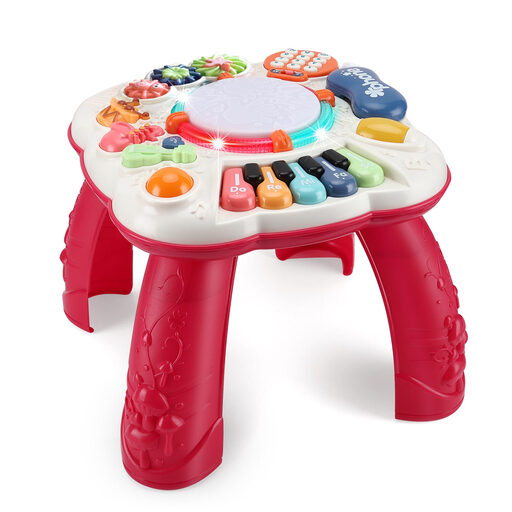
Why This Fits Their Persona: A multi-function option for families wanting several play activities in one compact table for children aged 6 to 36 months.
It lists six play zones and removable legs, allowing floor play for younger babies and table play as children begin standing. Batteries are not included, so this cost is clear before purchase.
Piano keys, a drum, gears and sound buttons provide varied interaction. The listing also specifies a volume control and flat-play configuration.
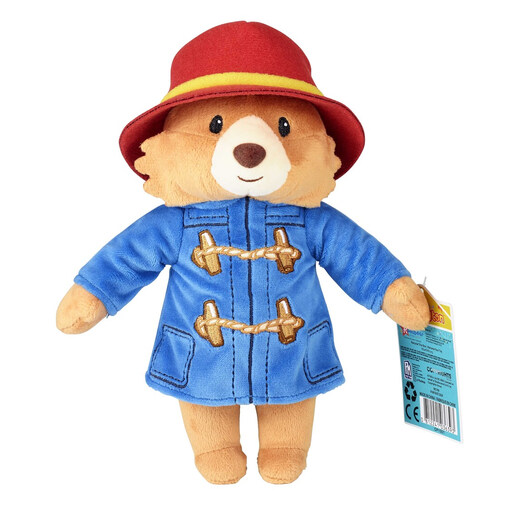
Why This Fits Their Persona: A character-led keepsake for families seeking a soft, screen-inspired companion suitable from birth.
The listing gives a specific 22cm size, material information and hand-wash care guidance, making everyday maintenance easier to plan.
Soft plush construction and embroidered or printed details are designed for carrying, cuddling and imaginative play. It requires no batteries.
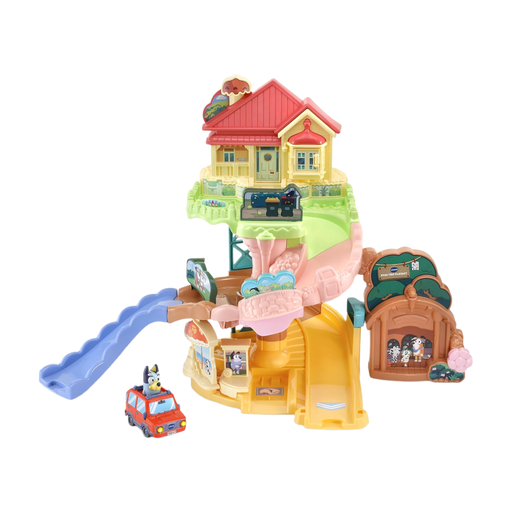
Why This Fits Their Persona: Suits households looking for repeatable, character-based floor play for children from 12 months.
The set has defined locations, four activation points and a stated battery requirement, rather than relying only on character appeal.
The playset includes a family car, themed locations, light-up headlights and phrases or melodies activated through play.
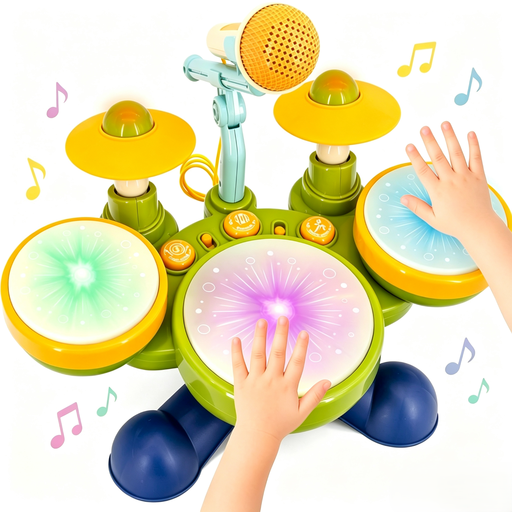
Why This Fits Their Persona: A practical choice for energetic musical play where adults need control over volume and setup.
It specifies adjustable volume, a removable stand and an age range of 1 to 3 years. Batteries are not included, so running requirements are clear.
Three light-up drum pads, liftable cymbals and a working microphone offer several ways to play. The stand can be removed for floor use.
We have compiled a complete, real-time list of products that fully satisfy these strict selection criteria and UK safety regulations.
Choose toys with a clear age recommendation, sturdy construction and no accessible small parts. Activity tables, simple musical toys, push-along toys and large-piece sensory toys can suit this stage, provided they are used as directed and supervised.
The cost depends on battery type, usage frequency and whether the toy has lights, sound or movement. Check whether batteries are included and look for adjustable volume or a mute function. Switch toys off after play and remove batteries before long-term storage.
Lifespan varies according to materials, construction and how frequently the toy is used. Inspect toys regularly for cracks, loose parts, damaged seams or exposed battery compartments. Clean them according to the care label and retire any item that no longer meets the manufacturer’s safety guidance.