What matters when choosing?
Decide whether the speaker’s main job is recorded-music listening, a movable dance setup or handling live sources. Then check how your equipment connects and where the speaker can be placed.
| Concern |
What to check |
Who this matters to |
| Musical detail and stereo presentation |
Consider the intended listening and dancing positions, and whether the exact model supports the stereo arrangement you want. |
If recorded tunes are the main event, I want the instruments to remain distinct across my listening area; around 36% of consumers put this recorded-music need first. |
| Live-source inputs |
Confirm the number and type of microphone or instrument inputs and the controls available for each source. |
When a caller or musician joins the playlist, I need to connect and manage their sound directly; around 29% of consumers prioritise live-input flexibility. |
| Portability and power |
Check whether the speaker needs a socket, how it will be moved and how the stated battery life relates to your planned session. |
If the dance space changes or a socket is inconvenient, I need a setup I can position and power appropriately; for around 21% of consumers, that flexibility comes first. |
| Existing music sources |
Match your source’s output to the exact speaker’s Bluetooth, Wi-Fi or physical inputs; check any turntable preamplifier requirement. |
I want to use the player or turntable I already own without discovering that it needs another connection component; around 14% of consumers put source compatibility first. |
Brands and speaker approaches
These brands illustrate different approaches through the named models; the features of one model should not be assumed to apply to every speaker from that brand.
Sonos
The Five represents a fixed, Wi-Fi-based home-listening approach to recorded music.
- Sonos lists Wi-Fi, AirPlay 2, a 3.5 mm line-in and stereo pairing for Five.
- If a caller or musician needs to connect directly, check the required live-input arrangement rather than treating line-in as a mixer channel.
Bose
The S1 Pro+ represents a compact portable PA approach for sessions mixing playback with a live voice or instrument.
- Bose lists a three-channel mixer, Bluetooth streaming and four positioning options for the S1 Pro+.
- Its stated battery life of up to 11 hours is a manufacturer figure; check the power and input needs of your particular session.
JBL
The PartyBox Club 120 represents a movable, event-oriented speaker approach.
- JBL lists a folding handle, microphone and guitar inputs, and pairing options for the PartyBox Club 120.
- Its stated play time is up to 12 hours, and a replacement battery is sold separately; check whether that arrangement suits your session.
Marshall
The Woburn III represents a fixed living-room speaker with Bluetooth and several physical connection options.
- Marshall lists 3.5 mm AUX, RCA and HDMI inputs alongside Bluetooth and on-speaker bass and treble controls.
- It uses mains power. Marshall says an RCA-connected turntable requires an RIAA amplifier or separate preamplifier.
Joybuy products to consider
These choices include party speakers for movable dance sessions and home-listening speakers for recorded music. They are different setups: check each product’s power, connections and room placement against the way you plan to use it.
 No image available
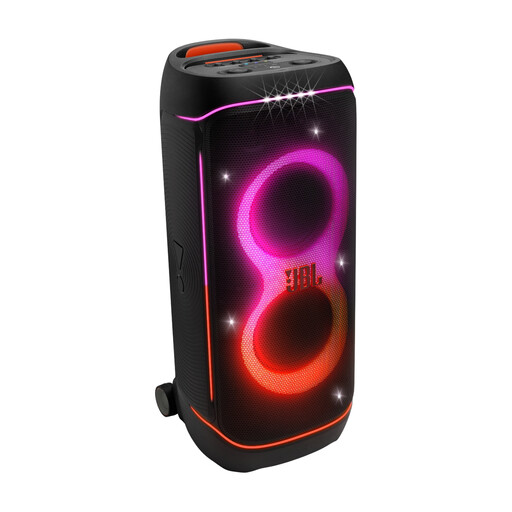
JBL PartyBox 720 Party Speaker – Black, batteries not included
Consider this party-speaker format if the dance setup may need repositioning or you plan to connect live sources. The listed version is intended for mains use and does not include batteries; check its inputs against your sources and plan how you will move and position it.
Check whether its output suits your intended listening level and room layout rather than relying on the speaker’s size alone.
View on Joybuy
 No image available
HiVi-Swans D3.1MKII 2-Way Passive Bookshelf Speakers
Consider these for a fixed, recorded-music setup if you want to build a system around passive speakers. They require a suitable amplifier or receiver; check that equipment and your music-source connections before buying.
The stated speaker details include a 6.5-inch mid-bass driver, 28 mm tweeter, 8-ohm impedance and 10–120 W power-handling range. Confirm that the complete system suits the room and intended listening level.
View on Joybuy
 No image available
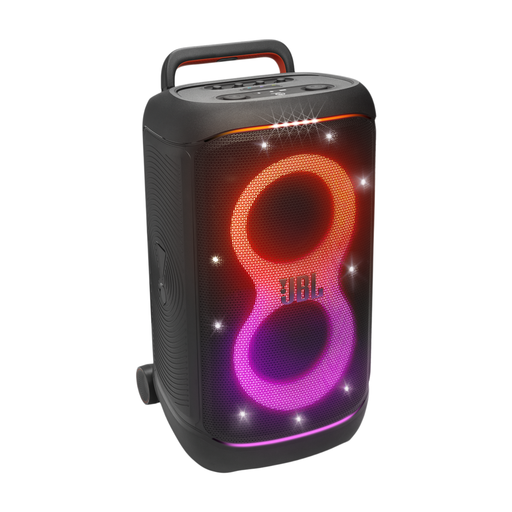
JBL PartyBox 520 Portable Battery-Powered Party Speaker – Black
Consider this portable party speaker when moving the music setup or playing away from a socket matters. Allow for charging and treat its stated battery play time as a maximum rather than a guaranteed session length.
If a caller or musician will join in, confirm that the exact inputs and controls meet their needs. Check suitability for your room and intended volume.
View on Joybuy
 No image available
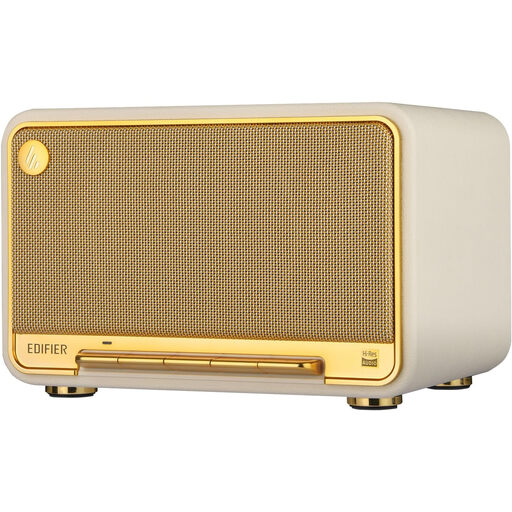
Edifier D32 Tabletop Wireless Speaker
Consider this tabletop speaker for recorded music when a choice of wired and wireless source connections matters. Its stated connections include Bluetooth 5.3, AirPlay 2, USB-C and AUX.
The title specifies a 2.1 acoustic architecture and 60 W RMS. Those figures do not establish how it will sound across your dancing area, so check its suitability for the room and intended volume.
View on Joybuy
Frequently asked questions
Should I choose a home speaker, party speaker or compact PA?
Choose according to what happens during the dance session: a home-speaker setup centres on recorded-music listening, a party speaker suits a more movable setup, and a compact PA suits live sources needing their own inputs and controls. Check the exact model’s connections and power arrangements before committing to a route.
Can I connect a turntable or CD player?
Yes, if the player’s output is compatible with the chosen speaker’s input and any required equipment is in place. Sonos describes using a device with an audio output through line-in; for the Marshall Woburn III, Marshall says an RCA-connected turntable needs an RIAA amplifier built in or a separate preamplifier.
Will a quoted battery life cover a whole dance session?
Do not assume that a manufacturer’s maximum play-time figure will match your session. Plan for the length and listening level you need, as well as charging or access to mains power; Which? cautions that manufacturer battery claims can be misleading.
How should I connect a mains-powered speaker safely?
Use a mains lead, plug and wall socket compatible with the speaker and your supply. Marshall gives that instruction for the Woburn III and says to unplug the lead from the wall before disconnecting it from the speaker.
Could loud music at home cause a noise complaint?
Yes. In England, GOV.UK says councils must investigate complaints about noise that could be a statutory nuisance, so consider placement, volume and neighbours when planning a session. Noise rules are devolved; check your local authority’s guidance rather than assuming the same arrangements apply throughout the UK.


