Shared-lounge dance hosts
You want the rhythm and instruments to remain clear for a small group, while keeping bass and volume considerate for other people at home.


Choose a portable Bluetooth speaker if the setup moves between rooms or playback mainly comes from a phone. If it will stay in the lounge, a home speaker or powered stereo pair may suit a fixed listening position and wired music sources better. In a shared space, check how easily you can control volume and bass, and whether you have room for two speakers before paying for stereo expansion.
You want the rhythm and instruments to remain clear for a small group, while keeping bass and volume considerate for other people at home.
You mainly play music from a phone or tablet and want a rechargeable speaker you can move or put away after a session.
You also use a turntable, CD player or computer, so the speaker’s inputs and any required adapter matter as much as its wireless connection.
Start with where the speaker will live and what will play through it. Those decisions help narrow the format before you compare controls, connections and battery claims.
Choose it when: Sessions move around the home and a phone or tablet is the main source.
Trade-off: A single portable unit does not provide the left/right placement of a separate stereo pair, and battery runtime varies with use.
Choose it when: The speaker will stay in the lounge and app-controlled listening or later expansion appeals to you.
Trade-off: Check its power and setup requirements. Sonos says an Era 100 stereo pair requires two speakers of the same model.
Choose them when: You have a permanent place for two speakers and want separate left and right channels, particularly for compatible wired sources.
Trade-off: A pair needs space, mains power and the right connection for each source.
| Concern | What to check | Who this matters to |
|---|---|---|
| Clear rhythm and instruments | Look for usable tone controls and, if you have room for two units, check the exact stereo-pairing rules. Independent sound assessments can help you judge clarity at ordinary listening levels. | I want the beat, melody and accompaniment to be easy to follow without turning the music up for everyone else; around 27% of consumers put clarity first. |
| Considerate room use | Check that volume is easy to adjust and whether bass can be reduced. Consider placement away from shared walls where practical. | If sound carries into another room, I need to bring it under control without stopping the session; roughly 33% of consumers make considerate playback their primary concern. |
| Moveable phone playback | Compare size, weight, charging and the stated battery runtime. Confirm whether a second compatible unit could be paired later if that matters to you. | I want to start music from my phone and move the speaker when the lounge is needed for something else; about 20% of consumers prioritise that flexibility. |
| Wired-source compatibility | Identify your player’s output, then check the exact speaker input and any required cable, adapter or phono preamp. | My turntable, CD player or computer needs a connection that actually matches the speaker; around 20% of consumers put source compatibility first. |
More output does not tell you whether instruments will remain clear at a comfortable lounge level. GOV.UK notes that loud music can be reported to a local council as a noise nuisance.
Look for accessible volume and tone controls. Begin at a moderate level and listen from adjacent rooms before a group session.
Pairing rules depend on the system: Sonos requires the same model for its stereo pairs, while JBL describes stereo pairing specifically for two Charge 6 speakers.
Check the exact models before buying a second unit and make sure the lounge can accommodate both speakers. Sonos recommends 8–10 feet between its paired speakers.
A wired player cannot connect merely because a speaker offers Bluetooth. Sonos Era 100 line-in, for example, requires the Sonos Line-In Adapter.
List your players and their outputs, then match them to the speaker’s stated inputs. Check whether a turntable needs a phono preamp to provide a line-level signal.
A compatible cable, adapter or phono preamp may also be needed.
Quoted runtime depends on playback conditions. Sony lists approximately 25 hours for the SRS-XG300, while JBL lists up to 28 hours for the Charge 6; neither figure promises that duration at every volume or setting.
If long unplugged sessions matter, look for an independent assessment of the exact model and plan how you will charge it.
The Charge 6 illustrates a portable Bluetooth route for phone-led sessions and possible later expansion.
The SRS-XG300 is an example of a portable speaker with tone adjustment and a wired input.
The Era 100 illustrates a fixed lounge setup with Wi-Fi, Bluetooth and a route to a matching stereo pair.
These portable and tabletop speakers relate to moveable phone playback or a more settled lounge position. Check each model’s controls and connections against your room and music sources rather than treating the formats as interchangeable.
 No image available
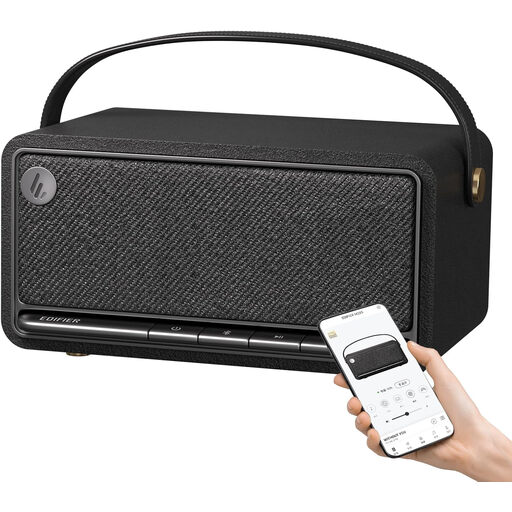
Consider this portable model when lounge sessions move around and you want to adjust the sound or consider a second speaker later.
The product title lists 40 W RMS, dual stereo pairing and 19 hours of playtime. Its Bluetooth version is described inconsistently in the product information, so confirm it if version compatibility matters to you.
 No image available
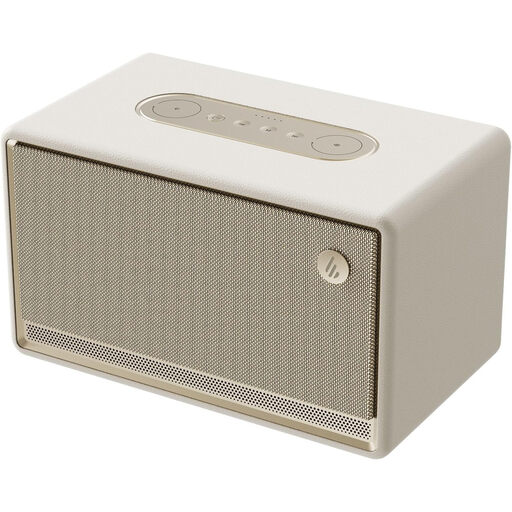
Consider this tabletop model if the speaker will usually sit in the lounge but you also want the option of battery playback.
The product title lists Bluetooth 5.3 and 12 hours of playtime. If adjusting bass is important in your shared room, check the available controls before buying.
 No image available
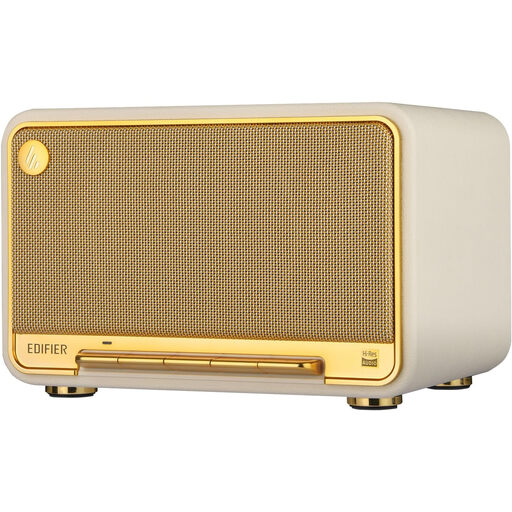
This tabletop option may suit a regular lounge position where both wireless playback and compatible wired sources matter.
The product title lists 60 W RMS, Bluetooth 5.3, AirPlay 2, USB-C and AUX inputs, and 11 hours of playtime. Check its tone controls if you need to moderate bass in the room.
 No image available
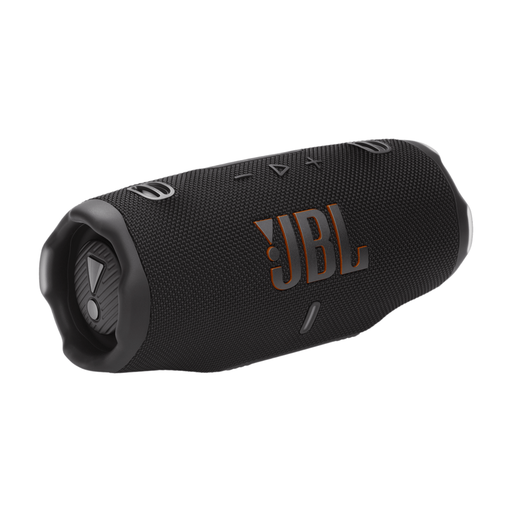
Consider the Charge 6 for moveable, phone-first playback if you might later add a matching speaker.
JBL lists up to 28 hours of playtime and stereo pairing between two Charge 6 speakers. The stated runtime depends on use; check the available tone controls if bass adjustment is important in your lounge.
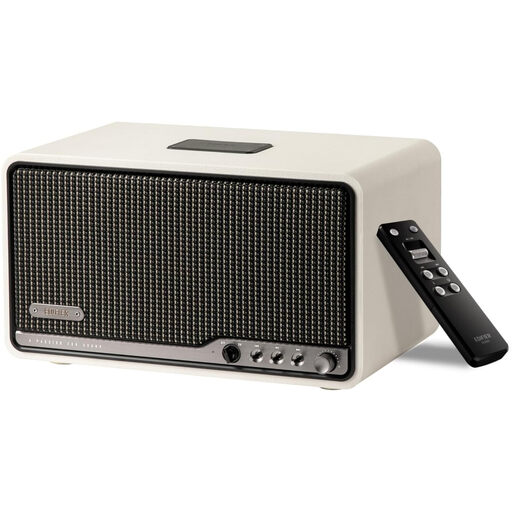 No image available
This tabletop model is a consideration for a settled lounge position if you may later set up a matching S300 stereo pair.
Check the exact pairing setup and the space it needs before buying a second unit. If considerate bass adjustment is a priority, confirm which tone controls are available.
Choose one speaker if moving and storing the setup easily matters most; consider a compatible pair if you have a stable listening area and want separate left and right placement. Check the model rules and available space before buying two: Sonos requires matching models and recommends 8–10 feet between its paired speakers.
You can connect one when its output matches the speaker’s input, with any necessary equipment in between. Sony lists a stereo mini-jack input on the SRS-XG300, while Sonos Era 100 line-in needs the Sonos Line-In Adapter; check whether your turntable also needs a phono preamp.
Start at a moderate volume, adjust bass if your speaker permits it and listen from adjacent rooms to judge how far sound carries. GOV.UK notes that loud music can be reported to a local council as a noise nuisance, so maximum output is a poor substitute for controllable playback.