Calorie-conscious commuters
For a short or routine journey, the calories in the bar you will eat may matter more than getting a larger portion. Compare the per-bar figure alongside the bar’s weight.


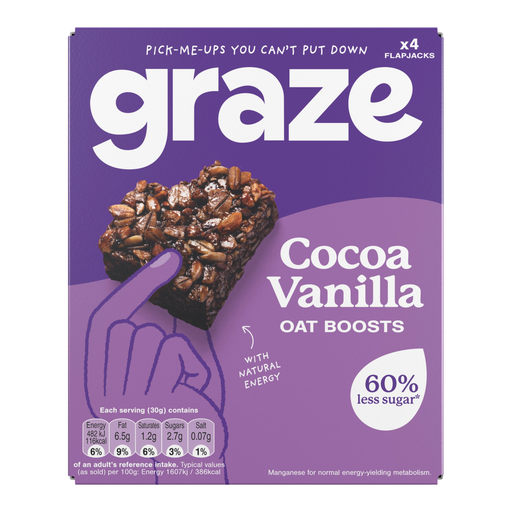
For a train snack chosen primarily on calories, compare the figure for one bar and its serving weight before relying on claims about protein, fibre or ingredients. Tesco lists Graze Cocoa & Vanilla Oat Boosts at 116 kcal per 30 g boost; a larger bar may suit a different preference, but check its calories and the exact pack’s ingredients and allergens before choosing.
For a short or routine journey, the calories in the bar you will eat may matter more than getting a larger portion. Compare the per-bar figure alongside the bar’s weight.
If you are choosing a bar for a longer gap between meals, you may want to compare protein and fibre as well as calories. Nature Valley UK lists around 10 g protein and 4 g fibre per 40 g Protein Peanut & Chocolate bar; check the calories for the exact flavour you choose.
Check the exact bar’s ingredients, allergen statement and any gluten-free, dairy-free or vegan claim before travelling. Suitability cannot be assumed from an oat, nut or protein-bar description.
Start with the portion you plan to eat on the train, then compare nutrition and dietary suitability on that same basis.
| Priority | What to check | Your needs |
|---|---|---|
| Calories and portion | Read kcal per bar and the bar’s weight in grams. Use the per 100 g figure for a like-for-like comparison when bar sizes differ. | For a short journey, I want to know what one bar adds to my food for the day, not just what the pack says per 100 g. |
| Protein and fibre | Compare grams per bar alongside kcal for that bar. Nature Valley UK states around 10 g protein and 4 g fibre per 40 g Protein Peanut & Chocolate bar; its Chocolate & Coffee version is listed at 197 kcal per 40 g bar. | On a longer journey, I may prioritise a bar’s protein or fibre content even if its calorie figure is higher than that of a smaller snack. |
| Dietary suitability | Read the current ingredient and allergen statements for the exact flavour. Check for an explicit gluten-free or vegan claim where either matters to you. | If I need to avoid an ingredient, the wording on the bar I take matters more than a claim about the brand or a different flavour. |
| Pack size | Check the number of bars and whether nutrition is stated per bar, per pack or per 100 g. | I want a portion that fits the journey without mistaking the whole multipack for one serving. |
Protein and calories answer different questions. Tesco lists Graze Cocoa & Vanilla Oat Boosts at 116 kcal per 30 g boost, while Nature Valley UK lists its Protein Chocolate & Coffee bar at 197 kcal per 40 g bar. Nutracheck lists TREK Smooth Lemon Protein Flapjack at 230 kcal per 50 g serving.
Compare the calories and weight of each bar first, then decide whether its protein or fibre content matters for your journey.
“No added sugar” does not state how many calories are in a serving. Tesco describes Nakd Peanut Delight as having no added sugar, but that claim cannot replace its nutrition information.
Read kcal per bar and the serving weight alongside front-of-pack claims.
Ingredients and precautionary allergen statements differ between products. Eat Natural UK, for example, states that its Dark Chocolate & Peanut Protein Bar may also contain milk and several tree nuts.
Check the current pack for the exact flavour before eating, even if you have bought a different bar from the range before.
A multipack contains several bars, while its nutrition information may use a per-bar, per-pack or per 100 g basis.
Confirm how many bars you intend to take and use the matching serving figure when comparing options.
These examples show why the exact product and flavour matter more than a brand-wide description.
Graze’s oat flapjacks include Cocoa & Vanilla Oat Boosts, which Tesco lists at 116 kcal per 30 g boost.
Nature Valley UK lists oat and protein-bar varieties with different serving sizes and nutrition.
Nakd Peanut Delight is a fruit-and-nut bar that Tesco describes as gluten free, with no added sugar and suitable for vegans.
Tesco describes TREK Smooth Lemon Protein Flapjack as a 50 g vegan, gluten-free product with 9 g plant-based protein.
Eat Natural UK lists nut-based protein bars, including Maple Syrup, Pecan & Peanut and Dark Chocolate & Peanut varieties.
These options include smaller cereal and oat bars and a fruit-and-nut bar for train journeys. Compare each exact bar’s pack nutrition before choosing on calories or dietary requirements.
 No image available
The four 30 g oat squares offer a defined bar size for planning a train snack. Check this product’s own calorie, ingredient and allergen information rather than using figures for a different Graze Cocoa & Vanilla product.
 No image available
This four-pack has 30 g bars, a useful portion reference when comparing train snacks. Check the Lemon Blueberry pack for its own kcal per bar and any dietary or allergen information you need.
 No image available
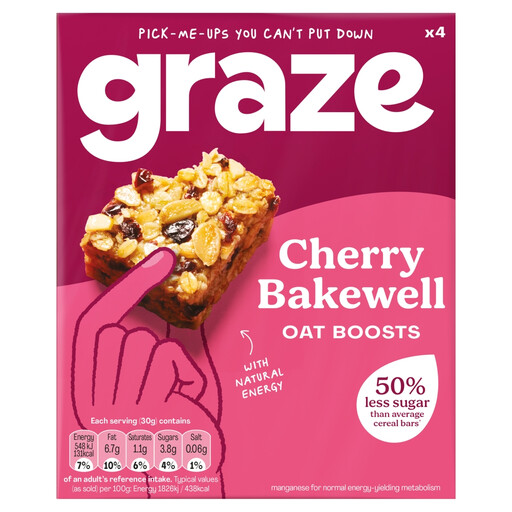
The 30 g bar size makes portion-by-portion comparison straightforward for a journey. Use the Cherry Bakewell pack’s own calorie and allergen statements rather than figures for another Oat Boost flavour.
 No image available
Each bar’s stated weight is 21.5 g, so compare its kcal per bar with larger options rather than assuming similar portions. Check the exact pack for ingredients and allergens.
 No image available
This is a 35 g fruit-and-nut bar containing peanuts. Tesco describes Peanut Delight as gluten free and suitable for vegans, while Nutracheck lists 155 kcal per 35 g bar; confirm nutrition and allergens on the current pack.
Use kcal per bar or per pack to understand the portion you plan to eat on the train. Then compare kcal per 100 g if the bars have different weights; Nature Valley UK’s label guidance distinguishes these two uses.
No. The claim does not state the bar’s calorie total. Read the kcal figure for the actual serving alongside its weight, even when a fruit-and-nut bar carries a no-added-sugar claim.
No. If you require a gluten-free product, check the claim on the exact bar rather than assuming oats make it suitable. The Food Standards Agency defines “gluten-free” as no more than 20 mg/kg gluten in the food as sold.
Read the current ingredients and allergen statement for the exact flavour before eating it. For example, Eat Natural UK states that its Dark Chocolate & Peanut Protein Bar may also contain milk and several tree nuts; another bar’s label cannot establish suitability for this one.
Use it to compare possible options, then check the pack you buy. Nature Valley UK advises checking pack ingredients and nutrition because products can be reformulated.