
24/7 Customer Support

Free returns

Same-day & Next-day Delivery

Quality Guaranteed

Unlock Your Welcome Offers: FREE Delivery | Up to 80% OFF | Free 30-day JoyPlus trial
Download the APP
A trampoline can provide active play for children or a compact way for adults to exercise at home. However, choosing between a mini trampoline, rebounder trampoline, garden model or inflatable play centre requires more than comparing prices and photographs.
Several common buying traps can lead to an unsuitable purchase:
The right choice depends on who will use it, where it will be placed and how frequently it will be used.
Start with the manufacturer’s stated maximum user weight, not an estimated age range. A children’s mini trampoline with a 25kg capacity may suit a toddler or lighter child, but it should not be used by multiple children simultaneously unless the product specifically allows it.
For an outdoor garden trampoline, check the rated capacity and follow the one-user-at-a-time instruction where specified. Inflatable products may state both a total maximum load and a separate jumping-area limit. For example, a bouncy castle may support several children overall while restricting the trampoline section to a lower weight.
Age guidance is also important. Some inflatable play equipment is intended for children aged 3–8, while a fitness trampoline or adult rebounder is designed around a different body size and movement pattern.
A spring trampoline uses metal springs to create the bounce. It can provide a responsive rebound, but the springs must be covered by a properly fitted safety pad and checked regularly for damage or displacement.
A bungee trampoline uses elastic cords or resistance bands. These systems are often selected for quieter operation and a softer-feeling rebound, which can be useful in flats, home gyms or rooms above occupied spaces. Elastic materials still wear over time, so inspect them for fraying, stretching or loosened attachment points.
For children, a full-coverage spring pad or foam-protected frame can help reduce access to hard components. For adults using a fitness trampoline, an adjustable handlebar can offer additional balance support, but it must be securely fixed before each session.
An indoor trampoline should sit on a level, stable, non-slip surface with sufficient overhead clearance. Keep it away from walls, furniture, radiators and sharp edges. A foldable model can be practical where floor space is limited, but storage convenience should not replace a stable setup during use.
An outdoor garden trampoline needs a clear position away from fences, trees and other structures. A trampoline with safety net should have the net properly attached and closed before use. Outdoor products should also be protected from prolonged exposure to severe weather when not in use.
For inflatable equipment, measure the full footprint rather than just the product’s jumping area. The listed dimensions for some bounce houses exceed three metres in length, and the blower may produce noticeable noise while operating. Use the supplied ground stakes and leave room for safe entry and exit.
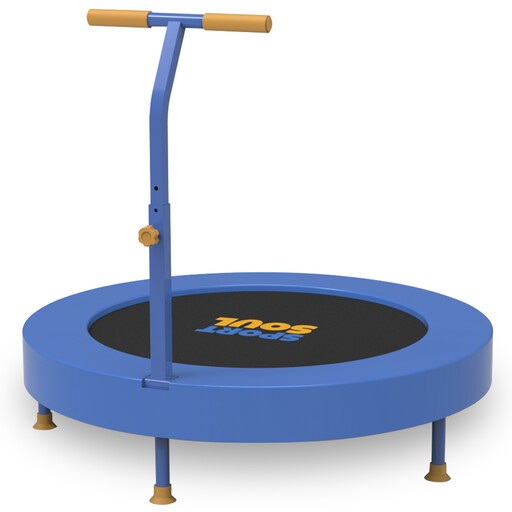
Why This Fits Their Persona: Its compact footprint and foldable design suit families introducing a younger child to indoor active play without committing to a large garden trampoline.
The 25kg maximum weight is clearly defined, while 24 elastic resistance bands avoid exposed steel springs. This remains a one-child, supervised product rather than a multi-user model.
36-inch size, adjustable T-shaped bar, pre-assembled mat and foldable storage design.
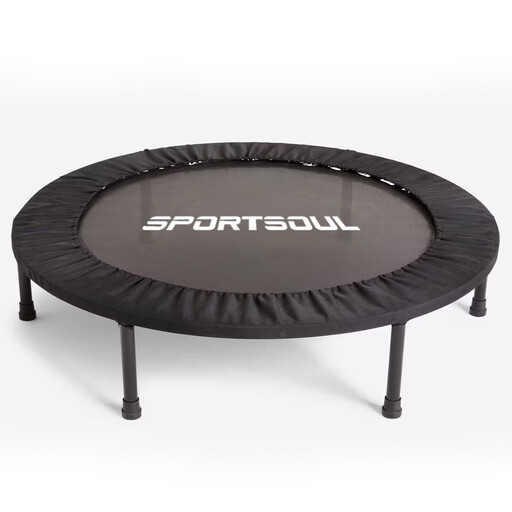
Why This Fits Their Persona: Adults wanting a compact home cardio option can use this low-profile design in a dedicated exercise area and store it when the room is needed for another purpose.
The stated 100kg capacity avoids ambiguity for adult use, while the 36-spring layout is specified rather than described only with promotional language.
100kg maximum user weight, silent non-slip feet and fold-and-store construction. The listing states EN ISO 20957-1, GB 17498.1-2008 and ASTM F2276-10(2015) compliance.
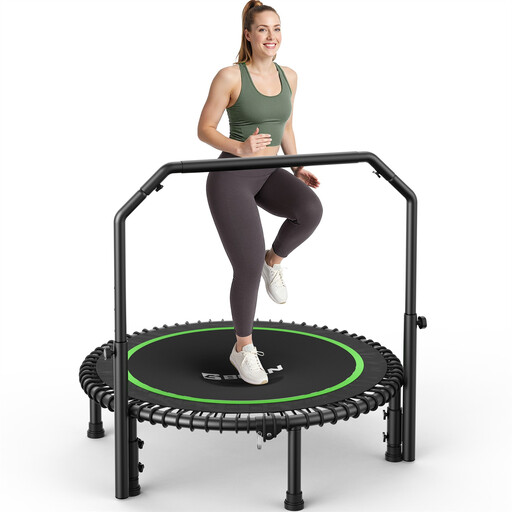
Why This Fits Their Persona: Adults seeking a quieter, adjustable home fitness option can select either the 102cm or 122cm version for indoor or outdoor use, subject to the chosen model’s capacity.
The bungee suspension avoids relying on a conventional exposed spring system, and the adjustable handle supports different heights. The specific load capacity varies by size, so check the selected version before ordering.
Bungee cord suspension, adjustable handlebar and stated capacities of 204kg or 250kg depending on size.
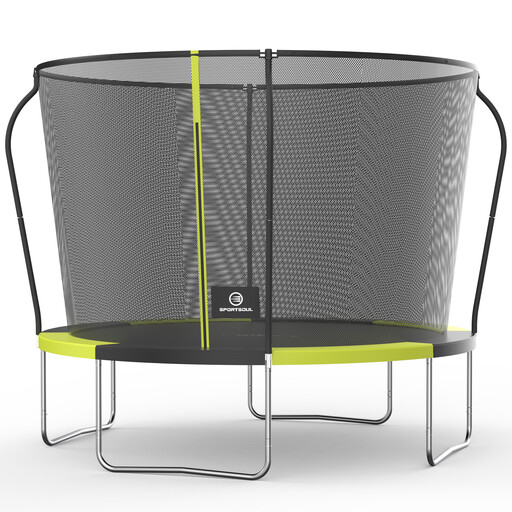
Why This Fits Their Persona: Families with suitable garden space can choose a full-size outdoor setup with an enclosure net for supervised recreational use.
The inside-attached net, foam spring pad and stated ASTM F381 and ASTM F2225 standards provide identifiable construction details to compare.
10-foot round frame, 56 steel springs, four-leg configuration and approximately 1.8-metre enclosure net height.
A trampoline is not the only option for children. An inflatable bouncy castle or bounce house with slide can combine bouncing with climbing, sliding and ball games. The Outsunny five-in-one model includes a slide, pool, climbing wall, trampoline and basketball hoop, with a stated recommended age of 3–8 years and a 90kg maximum load.
A smaller HOMCOM inflatable bouncer measures 300 x 180 x 160cm and includes a slide, mesh surround and blower. Its listing states suitability for up to three children, with a 45kg jumping-area capacity. These products require a power supply while inflated, secure ground anchoring and adequate clearance. Never use an inflatable play product in unsuitable weather or without following its instructions.
We have compiled a complete, real-time list of products that fully satisfy these strict selection criteria and UK safety regulations.
Allow a clear area around the entire frame, away from walls, fences, trees and garden furniture. Check the product manual for the required clearance and ensure there is adequate space above the user. A 10-foot garden trampoline needs considerably more room than a 36-inch mini trampoline.
Lifespan depends on frequency of use, user weight, weather exposure and maintenance. Inspect the mat, frame, springs or bungee cords, padding and safety net before each use. Store indoor rebounders in a dry place and protect outdoor models from prolonged severe weather. Replace damaged components rather than continuing to use the trampoline.
The blower must normally remain on while the inflatable is in use. Running cost depends on the blower’s wattage, electricity tariff and duration. For example, a 450W blower uses 0.45kWh for each hour of operation at full rated power. Check the appliance label and your current tariff for a more accurate estimate.