
24/7 Customer Support

Free returns

Same-day & Next-day Delivery

Quality Guaranteed

Unlock Your Welcome Offers: FREE Delivery | Up to 80% OFF | Free 30-day JoyPlus trial
Download the APP
Trampolines can provide active outdoor play or compact home exercise, but choosing by price or appearance alone can lead to an unsuitable purchase. UK households need to consider available space, weather exposure, user weight, storage and supervision requirements before ordering.
Common buying mistakes include:
Garden trampolines need a level outdoor surface, suitable overhead clearance and sufficient distance from fences, trees, sheds and other structures. A trampoline with safety net is designed for recreational use with an enclosure, but users should still be supervised and the net secured before every session.
A 10-foot outdoor model offers a larger jumping area than a mini trampoline, but it also requires a substantial garden footprint. Remember to allow room around the frame for safe access and maintenance. Seasonal disassembly may be useful if you have limited outdoor storage.
For flats, spare rooms and home gyms, an indoor fitness trampoline, rebounder trampoline or mini trampoline is generally more practical. However, measure doorways, ceilings and the area around furniture before buying. A folding fitness trampoline can be convenient, but confirm its folded dimensions and how securely it locks into its open position.
Trampolines may use steel springs or elastic bands. Steel springs can provide a responsive bounce, while elastic resistance bands are often selected for quieter indoor use. Neither system removes the need for regular inspection.
Look for clear information about:
The listed indoor models reference EN ISO 20957-1, GB 17498.1-2008 and ASTM F2276-10(2015). The outdoor models reference ASTM F381 and ASTM F2225. These are product specifications supplied for the relevant listings; buyers should still follow the manual and check that the product is appropriate for their intended use in the UK.
Compare the stated maximum user weight with the heaviest intended user, leaving a sensible margin rather than buying to the exact limit. Capacity varies considerably:
A trampoline with handle can provide a support point during controlled exercise, but it must be properly secured and should not be used to perform high-risk movements. Anyone beginning a new exercise routine or managing a health concern should seek appropriate medical advice first.
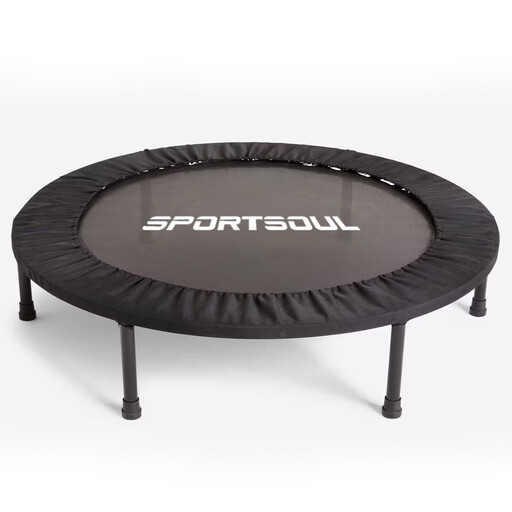
Why This Fits Their Persona: Its 40-inch footprint suits UK homes where floor space is limited, while the 100kg capacity covers a broad range of adult users.
The listing gives a clear 100kg maximum user weight and states that no assembly is required, reducing uncertainty around setup.
36 steel springs; silent, non-slip feet; fold-and-store design; 6.6kg net product weight.
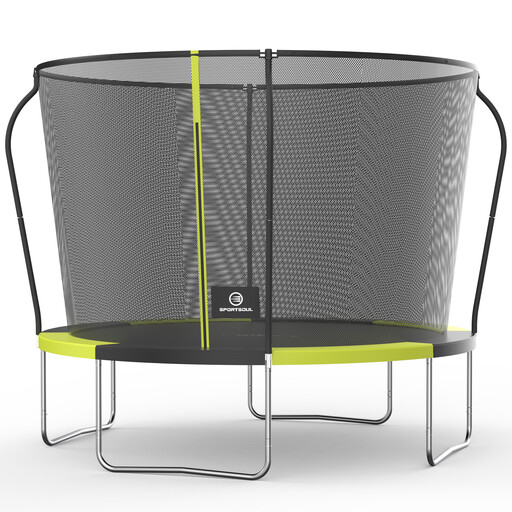
Why This Fits Their Persona: Families with suitable garden space may prefer a full outdoor set with a 10-foot frame, enclosure net and spring pad included.
The product includes an inside-attached mesh enclosure, foam spring pad and stated outdoor setup guidance rather than relying on a net alone.
64 steel springs; four-leg configuration; ASTM F381 and ASTM F2225 listed; seasonal enclosure reassembly design.
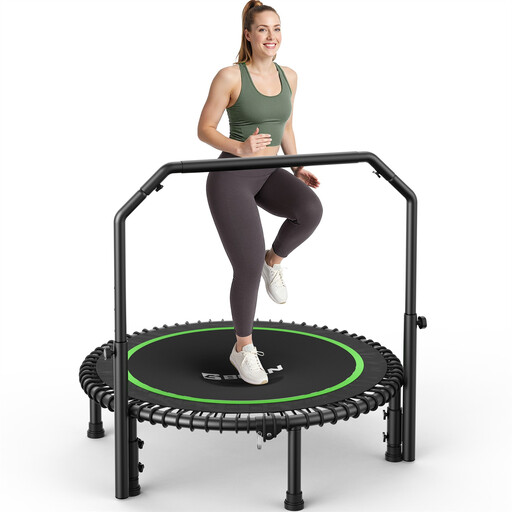
Why This Fits Their Persona: Adults prioritising a higher stated load capacity and quieter indoor or outdoor exercise can compare the two available sizes.
The listing separates capacities by size and specifies bungee cords and an adjustable handle, helping buyers compare practical details.
102cm and 122cm options; stated 204kg or 250kg load capacity; adjustable handlebar; bungee-cord suspension.
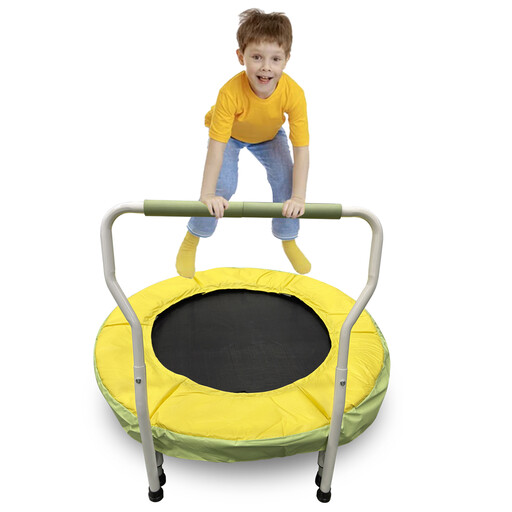
Why This Fits Their Persona: This compact children’s trampoline is sized for younger, lighter users and includes a foam handle bar and full-coverage spring pad.
Its clearly stated 25kg capacity prevents it being mistaken for an all-age trampoline, while the covered springs address exposed-component concerns.
36-inch diameter; 24 steel springs; adjustable handle; full-coverage foam safety pad.
We have compiled a complete, real-time list of products that fully satisfy these strict selection criteria and UK safety regulations.
Before each use:
Clean frames and mats with mild soap and water, then dry them fully. For indoor rebounders, storage inside can help limit exposure to damp conditions. Replace damaged components before use rather than attempting to continue with a compromised mat, spring, band or pad.
A mini trampoline or rebounder may fit indoors or in a compact garden, but the usable area must include clearance around the frame. For garden trampolines with safety nets, measure the complete footprint rather than only the jumping mat. Keep the unit away from fences, trees and overhead hazards.
Lifespan depends on frequency of use, user weight, weather exposure and maintenance. Regularly inspect springs, elastic bands, padding, nets and the frame. Outdoor models may need seasonal protection or partial disassembly, while indoor models should be kept dry and checked for loose components.
Trampolines do not normally require mains electricity, so their direct running cost is limited. The main ongoing expenses may include replacement mats, springs, elastic bands, padding or enclosure parts. Choosing a correctly rated model and storing it appropriately can help reduce avoidable wear.