
24/7 Customer Support

Free returns

Same-day & Next-day Delivery

Quality Guaranteed

Unlock Your Welcome Offers: FREE Delivery | Up to 80% OFF | Free 30-day JoyPlus trial
Download the APP
As a crafter, precision is paramount. Whether you are a quilter aligning fabric pieces, a sewist tracing a delicate pattern or a papercraft artist cutting intricate designs, accuracy can make all the difference. Many find that using a light box significantly improves visibility, but placing a standard, opaque cutting mat on top defeats the purpose. This is where a specialised tool comes in: the translucent cutting mat.
A translucent cutting mat is designed to work in harmony with your light box, allowing illumination to pass through while still providing a durable, protective surface for your blades. This guide is designed to help you understand the key features to look for and to highlight a couple of dependable options available for UK crafters.
Choosing the right mat can feel overwhelming with all the options on the market. To simplify your decision, focus on these practical features that directly impact performance and longevity.
A crucial feature for any serious crafter is a self-healing cutting mat. These mats are typically constructed from composite materials that allow the surface to reseal after being cut with a rotary cutter or craft knife. This "healing" process prevents deep grooves from forming, ensuring a consistently smooth surface for accurate cuts time after time. It also helps prolong the life of your cutting blades, as they are less likely to get stuck in old incisions.
The size of your mat should correspond to the scale of your typical projects. An A4 cutting mat is compact, portable and ideal for smaller tasks like card making or detailed appliqué work. For larger projects, such as dressmaking or creating quilt blocks, an A3 cutting mat provides more generous workspace.
Beyond size, look for a gridded cutting mat. A clear grid with centimetre or inch markings is essential for measuring and making straight cuts without a separate ruler. For more complex designs, mats that include angle lines (such as 30°, 45° and 60°) are invaluable for patchwork, geometric patterns and ensuring your components are perfectly aligned.
The primary reason for choosing this type of mat is its compatibility as a cutting mat for light box use. The material must be translucent enough to allow light to shine through clearly, illuminating your pattern from beneath. This makes it far easier to trace and cut with precision. The mat should also be thick enough—a thickness of around 3mm is a good standard—to protect your work surface and withstand repeated use without warping.
Based on the features that matter most to crafters, here are our recommendations for those seeking a reliable mat for their light box.
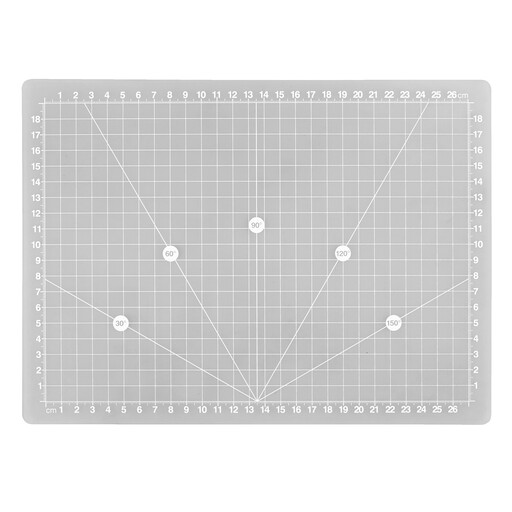
Why It Stands Out: This A4 mat is an excellent choice for crafters who value precision in a compact format. Its translucent quality is specifically designed for use with a light box, making it a practical tool for detailed tracing and cutting tasks.
Pros:
Who is it for? This mat is well-suited for hobbyists working on smaller-scale projects, such as card makers, scrapbookers and those doing intricate appliqué or miniature quilting. Its portability also makes it a great sewing cutting mat for classes or craft groups.
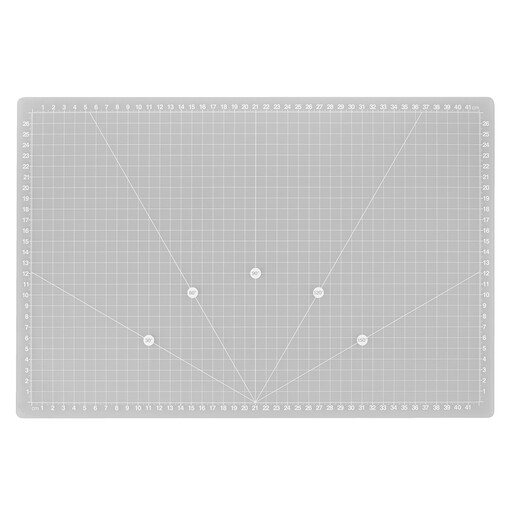
Why It Stands Out: For those who need more room to work, the A3 version of the PURElite mat offers the same translucent and self-healing properties but with a significantly larger surface area. This makes it a versatile workhorse for a broader range of crafting disciplines.
Pros:
Who is it for? This is an excellent quilting cutting mat for piecing together blocks and a practical tool for dressmakers cutting pattern pieces. Any crafter who regularly works with materials larger than A4 paper will appreciate the extra space this mat provides.
While a translucent mat is a specialised tool, your project might call for something different. Perhaps you need an even larger size, a non-slip backing or a heavy-duty mat for workshop use. To see a wider variety of surfaces tailored to different needs, explore our full collection of crafting mats to find the perfect foundation for your next creation.
Can you use a regular cutting mat on a light box? While you can physically place a standard opaque mat on a light box, it will block the light, rendering the light box ineffective. A translucent cutting mat is specifically manufactured to be semi-transparent, allowing the light to pass through and illuminate your work from below.
What is a self-healing cutting mat made of? Self-healing mats are typically made from layers of composite PVC (polyvinyl chloride). When a blade cuts into the surface, the flexible material displaces and then closes back together, which helps to minimise the appearance of cut marks and maintain a smooth surface for longer.
How do I care for my gridded cutting mat? To prolong the life of your mat, always store it flat to prevent warping. Keep it away from direct sunlight and heat sources, which can damage the surface. To clean it, wipe it down with a soft cloth and lukewarm water with a small amount of mild soap, then let it air dry. Avoid using harsh chemical cleaners, as they can degrade the material and fade the grid lines.