Light-packing city-break travellers
If you want a camera to carry through streets, museums and family days out, a fixed-lens compact avoids packing a separate lens. Check that its built-in focal range covers the scenes you expect to photograph.


Choose a fixed-lens compact if carrying the camera all day matters most, a travel zoom for distant subjects without lens changes, or a mirrorless camera if you will use its lens options despite the larger kit. For water or mounted activity footage, consider an action camera instead; for rain or dust, check protection across the camera and lens you plan to carry.
If you want a camera to carry through streets, museums and family days out, a fixed-lens compact avoids packing a separate lens. Check that its built-in focal range covers the scenes you expect to photograph.
If distant landmarks, viewpoints or wildlife keep falling outside your frame, a travel zoom offers a longer built-in lens without requiring a lens bag. Panasonic lists a 24–720 mm equivalent lens on the LUMIX TZ99 as one example of this route.
Rain, dust, cold, water and mounted filming call for different kinds of protection. Check the stated conditions for the particular camera, lens and accessories rather than treating a weather-sealed body and an underwater action camera as interchangeable.
Start with the shot or activity your phone and current equipment cannot readily cover, then decide what you would carry for a full day. A long lens, interchangeable lenses and water-ready filming solve different problems.
| Concern | What to check | Who this matters to |
|---|---|---|
| All-day carry | Compare ready-to-shoot size and weight, including the lens you would normally use. | If I am walking around a city all day, I need a camera I will keep with me rather than leave behind; around 31% of consumers put easy everyday carry first. |
| Distant subjects | Check the equivalent focal-length range and whether reaching it requires another lens. | When I cannot get closer to a landmark or wildlife, framing it matters more than having the smallest camera; roughly 31% of consumers prioritise distant-subject reach. |
| Photo and video control | Match lens options, stabilisation and recording modes to the shots you plan; check conditions for longer takes. | For planned evening photographs or travel video, I want the controls and lens choices I would actually use; about 23% of consumers make that flexibility their primary need. |
| Exposure and activity | Check the stated protection for the body, lens or housing and the requirements for mounting. | If the trip involves water, rough weather or hands-free filming, I need equipment suited to that exposure; around 15% of consumers put protected or activity-focused capture first. |
The camera you carry may also include a second lens, charger and protective storage. Nikon’s Z50II two-lens kit, for example, pairs a 16–50 mm lens with a 50–250 mm lens.
Lay out the complete kit before choosing it for a walking-heavy trip. If you would leave the extra lens behind, compare what a fixed-lens camera could cover instead.
A second lens may also call for more room and protection in your day bag.
OM SYSTEM describes the OM-5 Mark II body as IP53-certified, dustproof, splashproof and freezeproof to −10°C. That body claim is not an underwater rating and does not establish protection for every attached lens.
Match the stated protection to the expected rain, dust, cold or water exposure, and check the whole setup before travelling.
The UK Civil Aviation Authority directs passengers to carry spare batteries in the cabin. Its rules effective from 27 March 2026 also require spare lithium batteries and power banks to be individually protected against short circuits when not in use.
Protect the terminals, keep spares in cabin baggage and check your airline’s requirements before departure.
Zoom range does not tell you whether a camera suits indoor scenes or the way you handle it. Sony also notes that RX100 VII continuous recording time can vary with camera temperature and shooting conditions.
Identify the scenes you struggle to capture, then check focal range, handling and the recording conditions for the exact model.
Canon offers both a fixed-lens compact route and interchangeable-lens options relevant to travel.
The RX100 VII is a compact option for travellers who want a built-in zoom.
The TZ99 represents the self-contained travel-zoom route.
The OM-5 Mark II is relevant when an outdoor trip makes stated body protection a priority.
The HERO13 Black is an activity-camera option for trips involving water or mounted footage.
These choices cover a fixed-lens compact, an interchangeable-lens kit, a pocket video camera and action-camera setups. Choose by the scenes and activities you expect, rather than treating every camera as a substitute for a travel zoom.
 Image unavailable
Consider this fixed-lens compact for wide city scenes and short travel clips if you do not need to frame distant subjects.
The product title identifies a 1-inch sensor and an ultra-wide lens; check whether its fixed framing suits your trip.
 Image unavailable
Consider this interchangeable-lens kit if you intend to use lens choice for travel photographs or video and are willing to carry a larger setup.
The included lens is a 16–50 mm power zoom. Check the packed size and whether you would need another lens for distant subjects.
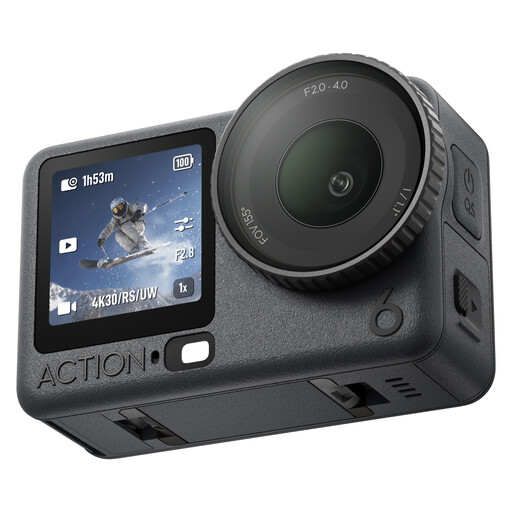 Image unavailable
Consider this action camera for an activity-led trip rather than for flexible framing of distant sights.
The title lists a 1/1.1-inch sensor, variable aperture and 4K video. Check the Standard Combo contents and the conditions for underwater use before travelling.
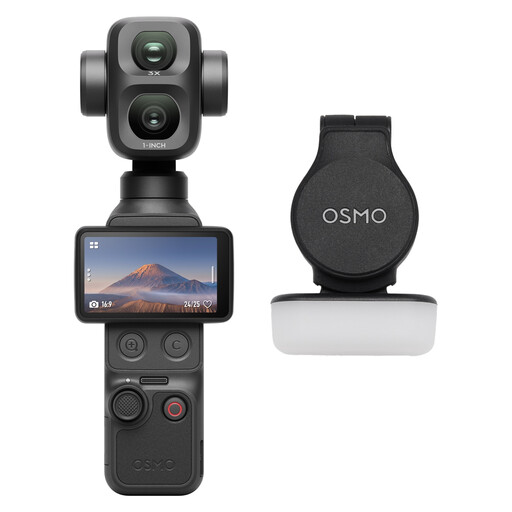 Image unavailable
Consider this pocket video-camera format for handheld travel clips if its handling suits how you film.
Check its dimensions and recording modes before relying on pocket carry or a particular video setting. The listing warns that the gimbal is not waterproof.
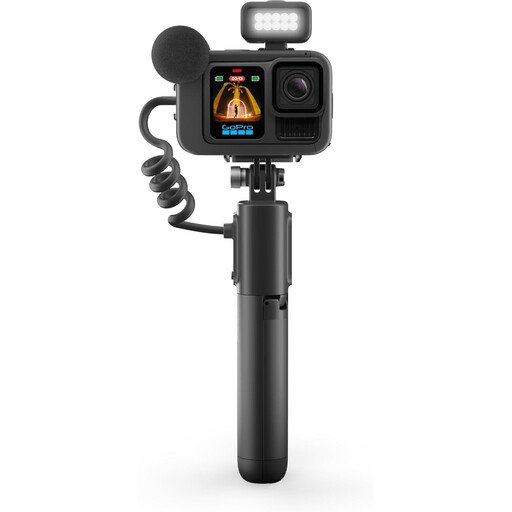 Image unavailable
Consider this action-camera bundle if activity footage and self-recording matter more than zoom reach.
GoPro describes the HERO13 Black camera as waterproof to 10 m; check protection for the Creator Edition accessories separately, along with the complete kit’s carry size.
Consider it when rain, dust or cold exposure is a realistic part of the trip. OM SYSTEM states that the OM-5 Mark II body is IP53-certified, dustproof, splashproof and freezeproof to −10°C; check the protection of the lens and accessories you would attach.
Choose a travel zoom if you want reach without changing lenses: Panasonic lists a 24–720 mm equivalent built-in lens on the TZ99. A mirrorless kit offers lens choice, but reaching distant subjects may mean packing another lens; Nikon’s cited Z50II kit includes separate 16–50 mm and 50–250 mm lenses.
Keep spare lithium camera batteries in cabin baggage, not checked baggage, according to the UK Civil Aviation Authority. Protect each spare against short circuits and check your airline’s baggage requirements before flying.
Check the included-items list for the exact kit rather than assuming it does. Nikon’s UK listing for the Z50II kit with 16–50 mm and 50–250 mm lenses states that a charger is not included; other kits may differ.