Choose a travel camera around the shots you most want beyond what your phone offers: a compact for light carry, a rugged or action model for exposed activities, a long-zoom camera for distant subjects, or a video-led camera for filming on the move. An interchangeable-lens camera offers a different kind of flexibility, but its lens and accessories add to what you must pack; check the exact model’s environmental limits, charging and storage needs before deciding.
Who is each camera route for?
One-bag holiday photographers
If a camera must fit into a small travel kit, a fixed-lens compact or one body-and-lens setup is easier to assess than a collection of lenses. Decide whether you need distant-subject reach or lens choice before accepting the extra bulk of either route.
Travellers facing water and rough conditions
For wet, sandy, snowy or fast-moving activities, look at a rugged compact or action camera and check its stated limits in the configuration you will use. Handling and care instructions matter as much as the category name.
Travel-video-first creators
Walking footage, self-filming, sound and switching between horizontal and vertical framing may matter more than a long zoom. Compare a pocket gimbal, action camera, fixed-lens vlogging camera or video-oriented mirrorless setup according to where and how you will film.
What matters when choosing?
Start with the shooting situation that is hardest for your phone to cover, then check what the camera and its complete travel kit require you to carry. A weather rating, lens range or video feature matters only if it fits that situation and the exact model’s conditions of use.
| Concern |
What to check |
Who this matters to |
| Carry and lens choice |
Compare the space needed for the camera, intended lens and essential accessories; check whether a fixed lens covers your usual framing. |
If I have room for just one small camera, I need to know whether its built-in lens will cover my trip without extra kit. Around 25% of consumers put compact, self-contained carry first. |
| Water and rough handling |
Check the exact model’s water rating, fitted accessories and instructions for closures and care. |
At the beach or during an active outing, I would rather plan around a camera’s stated exposure limits than assume any travel model can cope. Roughly 25% of consumers make exposure suitability their primary concern. |
| Travel video |
Check the stabilisation method, framing options, sound connections and card requirements for the video modes you intend to use. |
When I film myself or walk while recording, steady framing and a workable sound setup matter more to me than a long lens. Around 19% of consumers prioritise their video workflow. |
| Distant subjects |
Check the optical focal-length range, preferably in 35 mm-equivalent terms, and the size of the complete camera. |
If wildlife or far-off landmarks are recurring subjects, I need enough optical reach without assuming a zoom multiplier tells me everything. About 19% of consumers put distant-subject framing first. |
| Trip readiness |
Confirm charging equipment, compatible memory cards and your airline’s rules for spare batteries and power banks. |
On a multi-day trip, I need a charging and storage plan that still works after leaving home. Around 12% of consumers make power, cards and flight packing their leading concern. |
Buying mistakes to avoid
-
Treating the camera body as the whole travel kit
An interchangeable-lens body needs a lens, while included charging equipment varies by product. Panasonic Store UK states that the LUMIX TZ99 charges by USB-C but does not include a USB cable or AC adapter.
Check the contents of the exact bundle and plan what you will carry for a full shooting day.
Depending on the route, a lens, protective case, spare battery, charging equipment or memory card may add to the kit you need to pack.
-
Assuming a waterproof rating covers every accessory
GoPro states that HERO13 Black is waterproof to 10 m with its standard lens, but to 5 m with the Ultra Wide Lens Mod; the latter configuration is not intended for underwater use.
Check the maker’s limit for the camera as fitted, then follow its instructions for closures, seals and care.
-
Using the zoom number as a measure of overall image quality
Optical reach helps frame distant subjects, but it does not establish how a camera will meet unrelated needs such as water exposure, lens changes or handheld video.
Choose a long-zoom compact or bridge camera when distant subjects are a repeated priority; compare other routes against their own intended uses.
-
Leaving cards and battery packing until departure
Recording modes can depend on a suitable card. For flights, the UK Civil Aviation Authority says spare batteries and power banks belong in cabin baggage, while airline rules also need checking.
Check the exact camera’s card requirements, test recording before travelling and review your airline’s current battery and baggage instructions.
Relevant brands for reference
Canon
Canon’s EOS R50 V and PowerShot V1 illustrate two video-oriented routes: an interchangeable-lens camera and a fixed-lens compact.
- The EOS R50 V lets travellers choose lenses for a planned shooting setup.
- The fixed-lens PowerShot V1 avoids carrying another lens, but cannot offer interchangeable-lens flexibility. Neither route should be assumed suitable for use in water.
Panasonic LUMIX
Panasonic offers fixed-lens travel-zoom and bridge-camera options for photographers who regularly frame distant subjects.
- Panasonic specifies a 30x optical zoom for the compact LUMIX TZ99 and lists a bridge model with a 20–1200 mm lens.
- Compare the size of the complete camera before choosing greater reach for a trip with limited bag space.
OM SYSTEM
The Tough TG-7 represents a rugged compact route for outdoor and close-up photography.
- Its instruction manual provides dedicated water- and shock-resistance and underwater-use guidance.
- Check the TG-7’s precise limits and follow its preparation and care instructions for the intended activity.
GoPro
GoPro’s HERO13 Black represents the mounted, wide-angle action-video route.
- GoPro publishes configuration-specific waterproof limits that can be checked against a planned activity.
- The stated depth changes with the Ultra Wide Lens Mod; an action-camera format also does not provide long optical zoom or interchangeable lenses.
DJI
The Osmo Pocket 3 represents a pocket-sized, mechanically stabilised approach to handheld travel video.
- DJI specifies three-axis mechanical stabilisation and 4K/120fps video for the Osmo Pocket 3.
- Treat it as a video-led gimbal camera, not as a claim of waterproof action-camera capability or long optical reach.
Joybuy camera choices
These choices cover pocket-gimbal video, action footage, fixed-lens vlogging and an interchangeable-lens kit. If distant subjects are your main reason for buying a camera, check optical reach rather than assuming a video-led model will meet that need.
 No image available
DJI Osmo Pocket 3 Creator Combo
For travel video centred on walking shots or self-filming without an interchangeable-lens kit.
The named configuration has a 1-inch CMOS sensor, three-axis stabilisation, 4K/120fps video and a microphone. Check its environmental limits and compatible memory cards before travelling.
Joybuy
 No image available
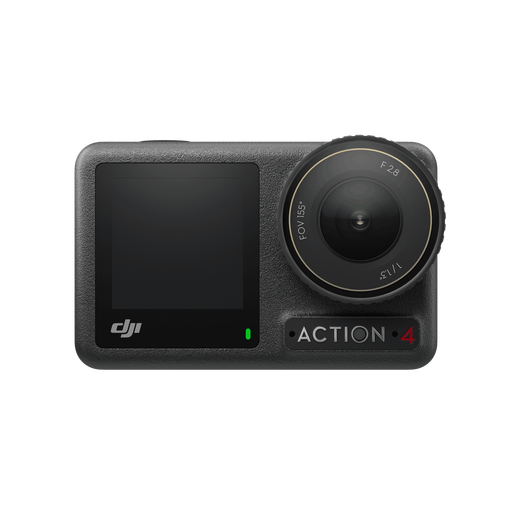
DJI Osmo Action 4 Adventure Combo
Consider this action-camera format when wide-angle footage of moving activities matters more than optical zoom.
The product name specifies a 1/1.3-inch sensor, 155° field of view, 4K/120fps video and three extra batteries. Confirm the exact camera-and-accessory water limit, care instructions and card requirements before exposed use.
Joybuy
 No image available
Sony ZV-1F Compact Vlog Camera
A fixed-lens option for travellers concentrating on self-framed video rather than distant-subject zoom.
The product name identifies a 1-inch sensor and ultra-wide lens. Check whether its framing, weather protection and supported memory cards suit your trip.
Joybuy
 No image available
Sony ZV-E10K with 16–50 mm Power Zoom Lens
Choose an interchangeable-lens kit if changing lenses is worth carrying a body-and-lens setup on holiday.
This variant names a 16–50 mm power-zoom lens. Check the packed size, battery and card requirements, and protection needed for your shooting conditions.
Joybuy
Travel camera questions
Can I take a camera in hand luggage when flying from the UK?
Usually, yes. GOV.UK says camera equipment can normally go in hand or hold luggage, but airlines may apply different restrictions, so check yours before travel.
Where should spare camera batteries and power banks go on a flight?
Carry them in cabin baggage. The UK Civil Aviation Authority instructs passengers to take spare batteries and power banks into the cabin; check your airline’s current rules as well, and do not recharge a power bank on board.
Do I need a particular memory card for travel video?
Check the card type and speed required by the exact camera and recording mode before buying. DJI lists microSD support up to 1 TB and recommends U3/V30-class cards for Osmo Pocket 3; GoPro specifies V30 or UHS-3 for HERO13 Black Creator Edition.
Will an action camera stay waterproof with a different lens fitted?
Not necessarily: the fitted accessory can change the limit. GoPro states that HERO13 Black is waterproof to 10 m with its standard lens, while its Ultra Wide Lens Mod configuration is rated to 5 m and is not intended for underwater use.


