Choose a dedicated camera for the shots your phone does not handle satisfactorily: a bridge camera for distant subjects, a mirrorless system for lens choice, a compact for a smaller fixed-lens kit, or an action camera for mounted activity footage. Before buying, check the actual lens or optical zoom, the complete kit you would carry, and any protection and battery requirements for your trip.
Who might need a dedicated camera?
A separate camera earns its place in your bag when it addresses a specific limitation you encounter with your phone, rather than simply duplicating everyday snapshots.
Travellers photographing distant subjects
If wildlife, field sports or aircraft are subjects you cannot approach, optical focal-length range matters more than an enlarged digital crop. The integrated zoom specified for Nikon’s COOLPIX P1100 illustrates one way to prioritise reach.
Travellers seeking low-light options and lens choice
If you photograph dim interiors or evening scenes and want to choose lenses for different subjects, consider the body and lens together. Which? identifies low light and creative flexibility as reasons to consider a dedicated camera, but the result still depends on the equipment and conditions.
Travellers recording active trips
If you need a camera that is easy to carry or mount while moving, decide whether a compact or an action camera fits the activity. For rain or water exposure, check the protection stated for the exact camera and fitted accessories.
What matters when choosing?
Decide which shot or activity is driving the purchase, then compare the equipment needed to make that route practical. A camera with the right headline feature may still be the wrong kit if its lens, carrying load or protection does not suit the trip.
Compact camera
Choose when: You want a smaller fixed-lens camera for travel and its actual focal-length range suits your subjects.
Trade-off: You cannot swap its lens for a specialist prime or longer wildlife lens; not every compact has optical zoom.
Mirrorless camera
Choose when: Selecting lenses for low light, portraits or telephoto subjects matters more than carrying the smallest kit.
Trade-off: The body alone is not the travel setup; every chosen lens adds to what you must carry and protect.
Long-zoom bridge camera
Choose when: Wildlife, aircraft or other distant subjects are the main reason to bring an integrated-lens camera.
Trade-off: Long reach does not prevent camera shake or subject movement, and the camera still has to fit your carrying plans.
Action camera
Choose when: Mounted, wide-angle footage during movement or water-exposed activities is the priority.
Trade-off: This route does not provide the optical telephoto reach or interchangeable lenses needed for other kinds of travel photography.
| Concern |
What to check |
Who this matters to |
| Optical reach |
Compare 35mm-equivalent optical focal-length ranges, not digital zoom figures; check stabilisation for handheld telephoto use. |
If wildlife or sport is too far away to approach, I need the lens to frame it without relying on a digital crop. Around 36% of consumers put optical reach first. |
| Low light and lens choice |
Check the sensor format and maximum aperture of the lens you would actually use, then assess body and lens as a kit. |
For dim interiors or evening streets, I want to choose equipment suited to those scenes rather than assume a camera body alone will solve them. Low-light and lens flexibility come first for around 29% of consumers. |
| All-day carry |
Compare ready-to-use camera weight, adding lenses and the accessories you plan to bring. |
If I am out sightseeing all day, the camera needs to be practical to take with me, not just appealing on paper. Around 21% of consumers make carrying convenience their primary concern. |
| Active-trip capture |
Check mounting options and the water rating for the exact lens or housing configuration. |
When I am cycling or filming around water, I need a secure setup with protection appropriate to the activity. That is the leading need for around 14% of consumers. |
Buying pitfalls to avoid
-
Comparing digital zoom with optical zoom
Digital extension is not additional optical reach. Nikon specifies both 125x optical zoom and 250x Dynamic Fine Zoom for the COOLPIX P1100; those figures describe different capabilities.
Use the optical focal-length range as your main point of comparison, particularly when distant subjects drive the purchase.
-
Comparing body weight with a complete fixed-lens camera
A mirrorless camera needs a compatible lens, which can make its travel load substantially different from the published body figure. Canon specifies approximately 461g for the EOS R8 with card and battery, excluding a lens.
List the lens or lenses, charger, battery, memory card and protection you would take, then compare complete kits.
Additional lenses and protective accessories also take up space in your bag.
-
Assuming every water-protection claim covers the same use
Weather-resistant construction is not a submersion rating, and an accessory can change an action camera’s stated limits. GoPro states that the HERO13 Black is waterproof to 10m with its standard lens and to 5m with the Ultra Wide Lens Mod; GoPro does not intend the latter configuration for underwater use.
Match the exact model and fitted configuration to the rain, splashes or water exposure you expect.
-
Packing spare batteries without checking flight rules
Where batteries travel and how they are protected matter when flying. The UK Civil Aviation Authority advises passengers to take spare batteries in cabin baggage.
Protect spare batteries from damage and check your airline’s current battery and baggage rules before departure.
Brands and product lines to consider
These examples illustrate different camera routes, not a judgement about every model from each brand.
Canon
The EOS R8 is a mirrorless-system example for travellers willing to select lenses for their subjects.
- Canon specifies a 24.2MP full-frame sensor and approximately 461g ready-to-use body weight with card and battery for the EOS R8.
- That weight excludes the compatible RF lens needed for photography; check protection for the body-and-lens combination.
Nikon
The COOLPIX P1100 illustrates an integrated long-zoom route for distant travel subjects.
- Nikon specifies a 24–3000mm equivalent range and 125x optical zoom for this model.
- Its separately quoted 250x Dynamic Fine Zoom is a digital extension, not another optical zoom range.
Sony
The RX100 VII is a fixed-lens compact example for travellers seeking a built-in zoom.
- Sony specifies a 24–200mm equivalent f/2.8–4.5 lens for the RX100 VII.
- Its fixed lens cannot be exchanged for a brighter specialist prime or a dedicated long wildlife telephoto.
GoPro
The HERO13 Black illustrates the mounted, wide-angle action-camera route.
- GoPro states that the HERO13 Black has built-in mounting fingers and 1/4-20 tripod threads.
- GoPro’s stated water limits differ by lens configuration: 10m with the standard lens and 5m with the Ultra Wide Lens Mod, which is not intended for underwater use.
Joybuy products for these routes
These choices cover a mirrorless kit, a wide-angle compact and two action cameras. Match their stated lenses and configurations to your main subject; the action cameras are not alternatives to a long-zoom bridge camera for distant wildlife.
 No image available
Sony Alpha ZV-E10 II K with 16–50mm f/3.5–5.6 Power Zoom lens
Consider this mirrorless kit if its included lens range suits your starting travel plans and you want the option to choose other lenses later.
The product name specifies an APS-C camera with 26MP, 4K60p video and real-time eye autofocus. Check the complete camera-and-lens weight and the protection needed for your itinerary.
View on Joybuy
 No image available
Sony ZV-1F compact camera
Consider this compact for wide travel scenes or close-range video when a small fixed-lens setup matters more than telephoto reach.
The product name identifies a 1-inch sensor and an ultra-wide lens. Its fixed wide-angle view is not a substitute for optical zoom when photographing distant wildlife or sport; assess low-light results for the scenes you plan to shoot.
View on Joybuy
 No image available
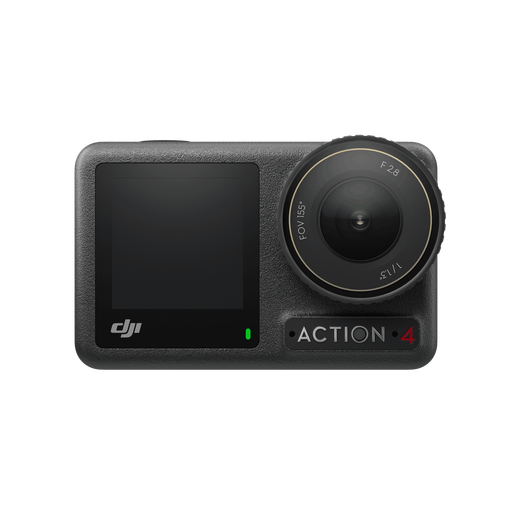
DJI Osmo Action 4 Adventure Combo
This action-camera bundle is relevant when wide footage during movement matters more than optical reach.
The product name specifies a 1/1.3-inch sensor, 155° field of view and 4K video at up to 120fps. Confirm the waterproof conditions, suitable mounting accessories and recording time for the mode you intend to use.
View on Joybuy
 No image available
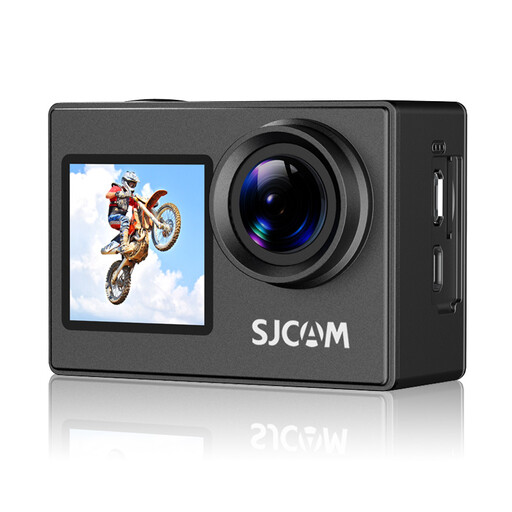
SJCAM SJ4000 Dual Screen action camera
Consider this camera for wide-angle activity footage if you are prepared to use its included case for the stated water protection.
The product name specifies a 170° lens, electronic image stabilisation and a 30m waterproof rating with the case. Its 4K video is described as interpolated; check whether that output suits your recording plans. The 30m rating should not be treated as a bare-camera rating.
View on Joybuy
Frequently asked questions
When is a dedicated camera worth carrying instead of a phone?
It is worth considering when a particular trip calls for optical reach, different lens choices or a mounted camera that your phone does not satisfactorily provide. Which? also identifies low-light photography and creative flexibility as reasons to consider a dedicated camera; weigh those needs against carrying another device.
Do I need interchangeable lenses for low-light travel photos?
Not necessarily: a fixed-lens compact may suit your framing and carrying needs, while a mirrorless camera lets you choose a lens for particular subjects and lighting. Assess the actual lens alongside the body rather than assuming that the camera category alone determines the result.
Can I take a camera and spare batteries on a flight from the UK?
GOV.UK says camera equipment can usually travel in hand or hold luggage, while the UK Civil Aviation Authority advises taking spare batteries in cabin baggage. Protect the batteries from damage and check your airline’s current rules for your equipment and journey.
Does an action camera keep the same waterproof rating with every lens accessory?
No: check the rating for the fitted configuration. GoPro states that the HERO13 Black is waterproof to 10m with its standard lens and to 5m with the Ultra Wide Lens Mod, which GoPro says is not intended for underwater use.


