What should you check before choosing?
Start with the photographs or footage you expect to make, then decide whether the extra equipment earns its place in your bag.
| Priority | What to check | Your needs |
|---|
| Phone or separate camera |
Compare your phone with the planned subjects and the controls you would actually use. Which? points to zoom and creative flexibility as potential reasons for a dedicated camera; the difference depends on the devices. |
My phone is convenient for everyday photos and sharing. I would carry another device if it addressed a particular limitation on this trip. |
| Distant subjects |
Check the lens’s optical focal-length range, not just a digital zoom figure. A fixed-lens compact and a mirrorless camera with a chosen lens offer different ways to get reach. |
For wildlife or distant architectural details, I want to frame the subject without relying mainly on cropping. |
| Creative control |
Check available controls and the lens fitted to the camera. If considering mirrorless, assess the lenses you would carry as well as the body. |
I expect to spend time on portraits, difficult light or deliberate compositions, so lens choice and handling matter more to me than quick sharing. |
| Carry size |
Count the camera, lens, charger, batteries, cards and protective gear. Canon UK lists the EOS R50 at about 375g with card and battery; that body figure excludes a lens. |
I want the camera close at hand throughout the day, not a kit that only looks manageable before its accessories are packed. |
| Activity footage |
Check mounts, recording mode, battery plan and the water rating in the configuration you will use. Match the card type and speed class to the camera’s stated requirements. |
For cycling or water activities, I care more about a usable mounted setup than a long zoom lens. |
| Flight preparation |
Check the booked baggage allowance and airline battery instructions. The UK Civil Aviation Authority says spare batteries and power banks belong in cabin baggage and notes that allowances vary by airline, destination and class. |
I need to know whether my complete kit fits my booked bags and how to carry its spare power safely. |
Camera brands and model examples
These examples illustrate different camera routes; their stated features apply to the named models, not every camera from each brand.
Sony
The RX100 VII illustrates a fixed-lens compact route for travellers who want optical reach without packing interchangeable lenses.
- Sony describes the RX100 VII’s lens as covering 24–200mm equivalent in a compact body.
- Check the lens range of the specific Sony compact you are considering; the RX100 VII’s range does not apply to the whole line.
Canon
The EOS R50 illustrates the mirrorless route for travellers willing to choose and carry a lens.
- Canon UK lists the EOS R50 body at about 375g with card and battery.
- That figure excludes the lens, so assess the complete kit before judging its travel burden.
GoPro
The HERO13 Black illustrates an action-camera route for activity footage rather than long optical reach.
- GoPro lists a 1900mAh Enduro battery for the HERO13 Black.
- GoPro states a 10m waterproof rating with the standard lens; check the applicable rating and underwater guidance if you change its lens configuration.
Joybuy cameras for different travel plans
These Joybuy options cover compact cameras for a dedicated stills-and-video setup, a mirrorless lens kit and action cameras for activity footage. Match the camera to your planned subjects rather than treating the list as a reason to leave a suitable phone behind.
 No image available
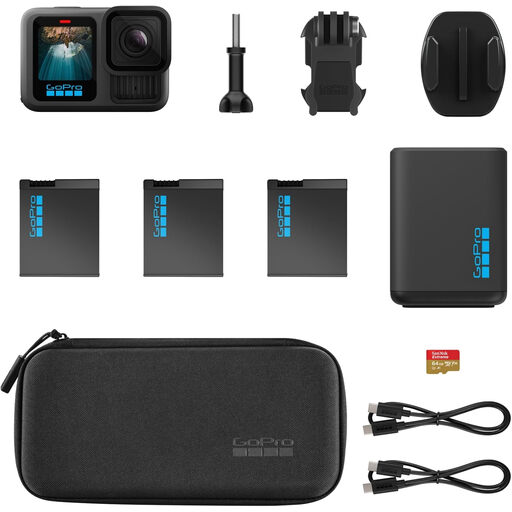
GoPro HERO13 Black Extended Power Bundle
Consider this bundle for mounted travel footage and days when spare batteries matter. The Joybuy listing describes mounting hardware, three Enduro batteries, a dual-battery charger, 5.3K/4K video and waterproofing to 10m without a housing. Check the complete bundle’s packed size and the rating for the lens configuration you will use; optical zoom is listed as N/A.
View on Joybuy
 No image available
Sony ZV-1 II compact camera
This fixed-lens compact is an option for wide travel scenes and video without carrying separate lenses. The Joybuy listing describes an 18–50mm lens, a 1-inch sensor, manual modes, RAW capture and 4K video. It states that the camera is not water-resistant; plan protection for wet conditions and check its battery, card and carry requirements before travelling.
View on Joybuy
 No image available
Sony ZV-E10K with 16–50mm power zoom lens
Choose this mirrorless kit if changing lenses is part of your travel plan. Its listing describes an included 16–50mm power zoom lens, Sony E-mount compatibility, a vari-angle screen and 4K video. Assess the body and lens together for your bag, and check the battery and memory-card requirements for the recording modes you intend to use.
View on Joybuy
 No image available
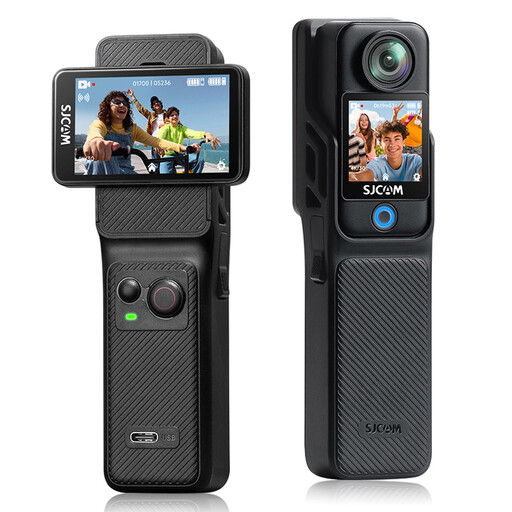
SJCAM C400 4K action camera
This action-camera option is aimed at cycling, hiking or wet-activity clips rather than distant-subject photography. The listing describes 4K/30fps video, a 154° lens, dual touchscreens and waterproofing to 30m with the included case. Fit and secure that case for water use; its stated 437-minute recording figure applies with the handle and auxiliary battery, not every configuration.
View on Joybuy
 No image available
Sony ZV-1F compact vlog camera
Consider this compact for wide views or self-framed clips when a long zoom is not the aim. The listing states a 229g weight, a fixed 20mm f/2.0 lens, a vari-angle screen and 4K video. The lens is a prime, not an optical zoom; check card compatibility before packing for the trip.
View on Joybuy
Travel-camera questions
When is a dedicated camera worth carrying instead of a phone?
Carry one when it addresses a subject you expect to photograph that your phone does not handle as you want. Which? identifies optical zoom and creative flexibility as potential advantages of dedicated cameras; compare your actual phone and planned subjects before adding another device.
Where should spare camera batteries go on a flight?
Take spare batteries and power banks in cabin baggage, as the UK Civil Aviation Authority instructs. Protect the spares from damage and check your airline’s instructions for the batteries you intend to carry.
How do I check whether a camera kit fits my flight allowance?
Check the allowance for your booked airline, destination and travel class, then measure the complete packed kit rather than the camera body alone. The UK Civil Aviation Authority says baggage allowances vary across those conditions.
Does an action camera keep the same water rating with every accessory?
Do not assume it does. GoPro states that the HERO13 Black with its standard lens is waterproof to 10m; check the instructions for the precise camera, fitted lens or case and intended water use before taking it underwater.
Which memory-card specification matters for travel video?
Start with the card type and speed class required by your camera for the recording mode you plan to use. The SD Association explains that speed classes indicate minimum sequential performance, which matters for continuous video; a capacity figure alone cannot establish suitability.


