What should you check before choosing?
Start with the pictures you would miss on a phone, then decide how much camera equipment you are prepared to carry.
Keep using your phone
Choose it when: Convenient snapshots and sharing matter more than additional optical reach or lens choice.
Trade-off: Check whether its results meet your needs in the low light or distant-subject situations you expect.
Compact camera
Choose it when: You want a separate camera for everyday sightseeing without carrying a lens system.
Trade-off: A small body alone does not establish that its zoom or low-light capability suits your trip.
Bridge camera
Choose it when: Distant subjects are a priority and you want a long optical zoom built into one camera.
Trade-off: You still need stable handling at the long end and cannot change lenses to suit a different use.
Mirrorless camera
Choose it when: Your plans justify selecting interchangeable lenses for particular scenes or framing needs.
Trade-off: Assess the body, chosen lenses and protection together before committing luggage space.
Action camera
Choose it when: Mounting, movement or water activity shapes what you need to record.
Trade-off: Its activity-focused features do not establish optical reach or suitability for low-light travel stills.
| Concern |
What to check |
Who this matters to |
| Low light and exposure control |
Check the lens’s maximum aperture, available exposure controls and stabilisation. A wider aperture can reduce how much of a scene appears sharp; stabilisation does not freeze a moving subject. |
If I photograph interiors or evening streets, I want control over the exposure without losing the detail I care about. About 33% of consumers put low-light and creative control first. |
| Distant-subject reach |
Check the stated optical zoom or focal-length range rather than digital zoom wording, and consider how you will steady the camera at longer focal lengths. |
When wildlife or sport is too far away to approach, I need framing that does not rely solely on cropping. Optical reach is the primary need for about 27% of consumers. |
| Carrying the complete kit |
Compare the body together with the lens, battery, charger and protection you intend to pack. For flights, check your airline’s current baggage and battery rules. |
If I am walking all day, a camera left in my accommodation is little use. About 27% of consumers prioritise a setup they can carry throughout the trip. |
| Weather and activity use |
Check protection for the exact camera, lens and accessories. For water use, check the stated depth and whether a housing is required. |
For a wet or movement-heavy activity, I need a camera configuration that suits those conditions. Activity-specific protection comes first for about 13% of consumers. |
Joybuy cameras for two travel needs
These Joybuy choices cover a compact camera for wide-angle shooting and an action camera for activity footage. Choose between their intended uses rather than treating either as a long-zoom camera.
 Image unavailable
Sony ZV-1F compact vlog camera, 1-inch sensor
Consider this compact camera if wide-angle framing and a small separate camera fit your sightseeing plans. Its listed 1-inch sensor and ultra-wide lens identify the configuration; if distant subjects matter, check whether its lens offers the optical reach you need. Confirm protection requirements for any exposed or wet conditions on your trip.
View on Joybuy
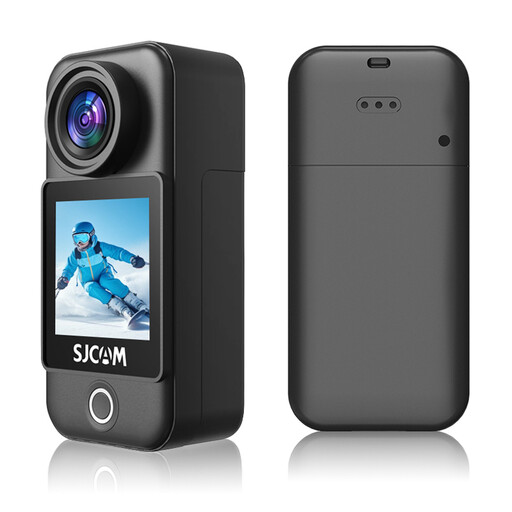 Image unavailable
SJCAM C300 Pocket 4K action camera, waterproof case bundle
This action-camera option suits a trip centred on movement or activity footage rather than distant-subject photography. Its listed features include 6-axis electronic image stabilisation, a 1.3-inch touch screen and 20MP photos. The stated 30 m waterproof use requires the case; check that the case and its conditions suit your planned activity.
View on Joybuy
Travel camera questions
When is a dedicated camera worth carrying instead of a phone?
It is worth considering when your planned travel pictures repeatedly call for low-light control, optical reach or lens choices that your phone does not provide. Which? identifies these as reasons to consider a dedicated camera; if convenient, well-lit snapshots meet your needs, carrying another device may offer little practical value.
Do I need weather resistance for travel?
Prioritise it if your itinerary involves exposed conditions, and check protection for the exact body-and-lens combination. Fujifilm advises looking for WR in relevant lens names for changing conditions, but a lens designation alone does not establish protection for the entire setup.
Can I take a camera and spare batteries on a UK flight?
GOV.UK says cameras can usually be taken in hand or hold luggage, while advising travellers to check airline restrictions. Check your airline’s current instructions for spare lithium batteries and your route before packing; easyJet, for example, instructs passengers to keep lithium camera batteries in cabin luggage.
Should I take a prime lens or a zoom on a mirrorless trip?
A prime makes sense if its fixed angle of view fits the pictures you plan to take; a zoom allows you to change framing as subjects vary. Fujifilm’s travel-lens guidance discusses that choice, so decide using your intended subjects and the complete kit you are willing to carry.
Does waterproof mean an action camera suits every water activity?
No. Check the stated depth and required configuration for the exact camera. GoPro states that its HERO is waterproof up to 16 ft; a different depth, model or accessory calls for checking that product’s guidance rather than assuming the same limit applies.


