Who might need a travel camera?
The reason to carry another device depends on what you plan to photograph, not simply on going away.
Light-packing travellers who need optical zoom
If distant landmarks, wildlife or sport matter but separate lenses do not appeal, a fixed-lens camera is worth considering. Which? identifies true optical zoom as a reason to use a dedicated camera rather than rely on phone cropping; check whether a particular camera’s range covers your subjects.
Travellers planning for landscapes and wildlife
Different subjects can call for different focal lengths. An interchangeable-lens camera makes that choice possible, provided you are willing to plan, carry and protect the lenses you will actually use.
Travellers filming activities
For mounted or hands-free footage, an action camera may fit the way you shoot. Check its mounting and recording options rather than assuming it can also frame distant wildlife or landmarks.
What should you check before choosing?
Start with the limitation you want to solve, then compare the lens or video setup and the full kit you would take. A camera type alone does not tell you its packed weight, weather resistance or suitability for every subject.
| Priority |
What to check |
Your needs |
| Phone or camera |
Identify the shots your phone cannot frame as you want. Which? points to optical zoom, low-light photography and creative flexibility as reasons to consider a dedicated camera; these are not guarantees for every model. |
If daylight snapshots already meet my needs, would another device earn its place in my bag? |
| Built-in optical zoom |
Compare optical focal-length coverage for distant subjects, not a digital-zoom figure alone. Sony specifies a 24–200mm equivalent fixed lens for the RX100 VII; Canon specifies 65x optical zoom for the fixed-lens PowerShot SX70 HS. These describe different ranges, not an overall camera ranking. |
For occasional distant landmarks, I may favour a compact built-in lens. If far-away wildlife or sport is central to the trip, long optical reach matters more to me. |
| Interchangeable lenses |
Check the mount, the supplied lens and the focal lengths you would actually pack. Canon specifies RF and RF-S lens support for the EOS R50; body weight alone does not describe the weight of a multi-lens kit. |
I want to choose lenses for landscapes and more distant subjects, and I am prepared to carry and change them. |
| Activity video |
Check mounting, video modes and required accessories. GoPro specifies magnetic mounting and compatible optional HB-Series Lens Mods for HERO13 Black. An action-camera setup does not replace a long optical-zoom lens for distant stills. |
Hands-free footage during an activity matters more to me than filling the frame with a far-away subject. |
| Complete kit |
Count the camera, chosen lenses or case, charger and batteries. Compare the configured kit’s dimensions and weight with your carrying plans and the operating airline’s baggage allowance. |
I will be walking with the kit or fitting it into cabin baggage, so the items I actually take matter more than the camera body alone. |
| Power and charging |
Check the included battery and charging equipment, plus runtime for the recording mode you intend to use. GoPro’s HERO13 Black figures, for example, differ between 1080p30 and 4K30; neither figure describes a whole day of mixed use. |
On long shooting days, I need a workable way to recharge or carry protected spare batteries. |
| Weather and flights |
Check the exact camera-and-lens combination for a weather-resistance statement. For flights, check the carrier’s current rules: the UK Civil Aviation Authority advises keeping spare batteries in the cabin, and IATA says spare lithium batteries need protection against short circuits. |
Rain, sand or air travel could change how I protect and pack my equipment. |
Brand and camera-type references
These examples illustrate different camera routes; a brand’s wider range should not be judged by one model.
Sony
Sony’s RX100 VII illustrates the fixed-lens compact route. Sony specifies a built-in 24–200mm equivalent zoom and continuous shooting at up to 20fps for this model.
- The built-in lens covers a stated range without packing separate lenses.
- A fixed lens cannot be exchanged if the trip calls for a different specialist lens.
Canon
Canon’s EOS R50 illustrates an RF/RF-S interchangeable-lens setup; its PowerShot SX70 HS illustrates a fixed-lens bridge camera with a stated 65x optical zoom.
- The two models offer different ways to plan for travel subjects: chosen lenses or one long-zoom lens.
- An interchangeable-lens kit adds lens-packing decisions; the bridge camera’s lens cannot be changed.
GoPro
GoPro’s HERO13 Black illustrates an activity-video setup. GoPro specifies magnetic mounting and compatibility with optional HB-Series Lens Mods.
- Its stated mounting options are relevant to hands-free filming.
- Optional Lens Mods add equipment, while this route does not provide the long optical reach sought for distant-subject stills.
Joybuy cameras for these travel needs
These options cover activity video, fixed-lens optical zoom and an interchangeable-lens kit. Match a model to your planned subjects and check the complete bundle or kit before buying.
 No image available
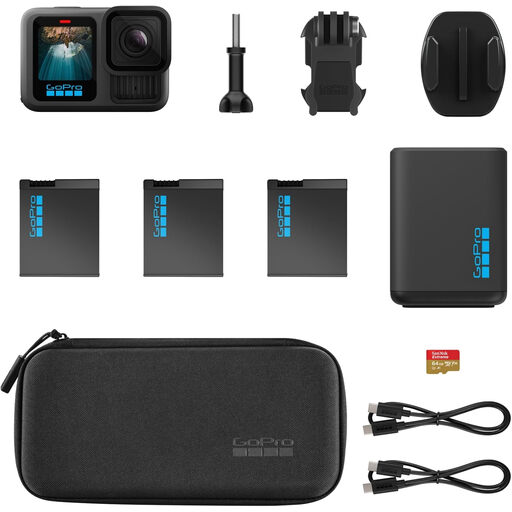
GoPro HERO13 Black Extended Power Bundle
Consider this activity-video bundle if mounting options and charging equipment matter more than long optical reach. GoPro specifies magnetic-mount compatibility for HERO13 Black; the bundle description includes batteries and charging accessories. Check the exact contents and the packed kit against your plans.
View on Joybuy
 No image available
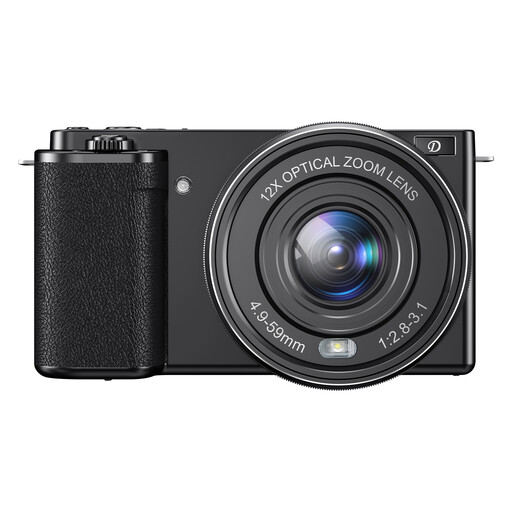
Komery W6, 12X optical zoom, 4K, WiFi, 64MP
The stated 12X optical zoom is relevant if you want a built-in lens for distant travel subjects rather than a separate lens kit. The product title also lists 4K video, WiFi and 64MP; check its carrying weight, battery arrangements and weather guidance for your trip.
View on Joybuy
 No image available
Sony Alpha ZV-E10 II K with 16–50 mm f/3.5–5.6 power zoom lens
This interchangeable-lens kit is relevant if you want to plan lens choices around the trip. Its title specifies an APS-C camera, a 16–50 mm kit lens, 26 Megapixels and 4K60p video. Check whether the supplied lens covers your subjects and compare the weight of any additional lenses and accessories you would carry.
View on Joybuy
 No image available
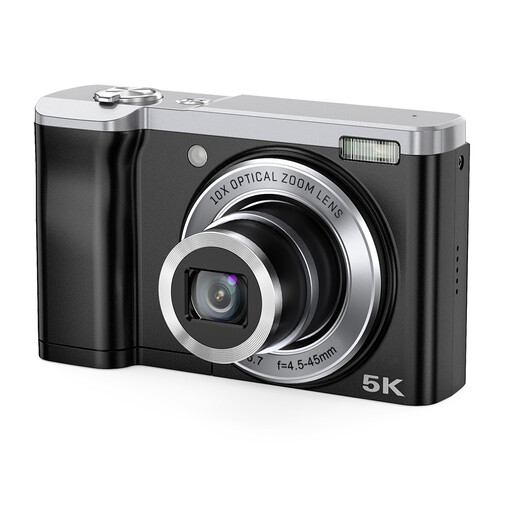
Songdian 5K 56MP camera, 10X optical zoom, black
The stated 10X optical zoom gives you a built-in-lens option to consider for distant landmarks or other subjects you cannot approach. Its title also specifies front and rear cameras. Check the camera’s weight, charging needs and weather guidance before deciding whether it suits your itinerary.
View on Joybuy
 No image available
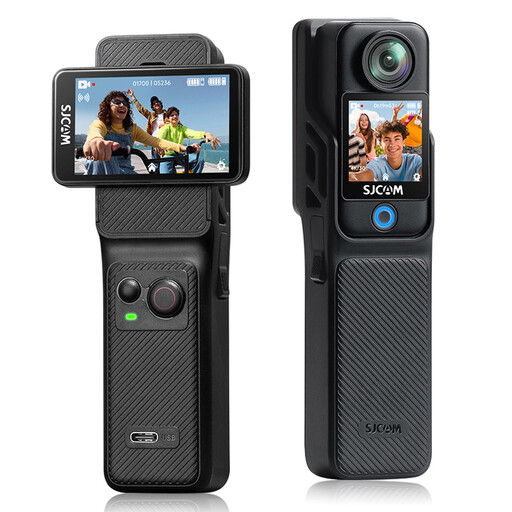
SJCAM C400 4K action camera with dual touchscreens
Consider this wide-angle action camera for activity footage rather than distant-subject framing. Its title specifies 6-axis EIS and waterproof use to 30 m with the case; that water-use condition depends on using the case. The stated 437-minute runtime depends on a handle and auxiliary battery, so confirm whether those items are included before planning around that figure.
View on Joybuy
Travel camera questions
Compact or bridge camera: which suits distant subjects?
Choose by the optical reach you need and the camera you are willing to carry. A compact with a built-in zoom suits travellers prioritising a smaller self-contained setup; a bridge camera suits trips where long optical reach is central. For scale, Sony specifies a 24–200mm equivalent lens for the compact RX100 VII, while Canon specifies 65x optical zoom for the bridge-style PowerShot SX70 HS.
When is a mirrorless camera worth carrying on a trip?
Mirrorless is worth considering when you will use the ability to choose lenses for different subjects. Canon specifies RF/RF-S lens support for the EOS R50, but the practical carrying burden depends on the lenses and accessories you take, not the body alone.
Can an action camera replace a travel zoom camera?
Not if framing distant subjects is a main aim. An action camera fits mounted or activity-led video; for far-away wildlife, sport or landmarks, compare cameras with a suitable stated optical-zoom range instead.
How should I pack spare camera batteries for a flight?
Keep spare batteries in cabin baggage and protect their terminals against short circuits. That follows UK Civil Aviation Authority advice on cabin carriage and IATA guidance for spare lithium batteries; also check the operating airline’s current limits for your batteries.
Does an operating-temperature range mean a camera is weatherproof?
No. A temperature or humidity specification is not a weather-sealing or waterproof rating. Check the exact camera, lens and any required case for a manufacturer statement before planning to use them in rain, sand or water.


