Travellers photographing distant details
If you often cannot move closer to landmarks, wildlife or activities, optical zoom is worth comparing with the framing your phone can provide. A fixed-lens camera avoids packing separate lenses.


A dedicated camera is worth considering if your phone cannot frame the distant subjects you photograph, or if low-light shooting and lens choice justify carrying another device. A fixed-lens compact avoids carrying separate lenses, a bridge camera offers a broad zoom in one device, and a mirrorless system lets you choose compatible lenses but requires you to assess the weight and protection of the whole kit.
A separate camera is most relevant when the scenes you regularly photograph expose a specific limitation of your phone, rather than simply because you are travelling.
If you often cannot move closer to landmarks, wildlife or activities, optical zoom is worth comparing with the framing your phone can provide. A fixed-lens camera avoids packing separate lenses.
Distant or moving subjects make lens reach and focusing behaviour important. If these are regular subjects, consider whether a compatible telephoto lens and the resulting kit weight suit how you travel.
For indoor, dusk or night scenes, assess the exact sensor, lens aperture and stabilisation arrangement together. Which? identifies low light as a reason to consider a dedicated camera, but results depend on the camera, lens and scene.
Start with the subjects your phone struggles to capture, then check the lens and carrying requirements of a camera that addresses them.
Consider it when: nearby daylight scenes, quick sharing and carrying one device matter most.
Trade-off: check whether your phone can frame distant subjects without relying on a crop you find unsuitable.
Consider it when: you want optical zoom without packing a separate lens.
Trade-off: its fixed lens cannot be exchanged if you later need a different focal range or aperture.
Consider it when: a wide-to-telephoto range in one camera matters more than changing lenses.
Trade-off: the integrated lens limits later lens changes; check the complete camera’s packed size.
Consider it when: you regularly photograph wildlife, sport or varied scenes and are willing to carry compatible lenses.
Trade-off: assess the body and lenses as one travel kit; lens mounts are not interchangeable across systems.
| Priority | What to check | Your needs |
|---|---|---|
| Distant subjects | Compare optical focal-length ranges, not just zoom multipliers. For interchangeable lenses, confirm the mount and the telephoto lens you would carry. | I want to frame wildlife, sport or distant travel details when I cannot move closer. |
| Low light | Check the exact sensor, lens aperture at the focal length you will use, and body-and-lens stabilisation pairing. Stabilisation cannot freeze a moving subject. | Indoor or dusk photographs matter to me, so I need to assess more than the camera’s zoom figure. |
| Carry load | Add up the body, chosen lenses and batteries; check packed dimensions. Confirm the charging method and what comes in the box. | If I will take it on walks or flights, the complete kit needs to fit the bag I actually use. |
| Weather exposure | Read protection statements for the exact body and each lens separately. Do not treat operating-environment specifications as proof of water resistance. | Rain, dust or humidity may be part of my trip, so I need to know the limits of the assembled kit. |
A zoom figure does not tell you the lens’s actual wide and telephoto endpoints, or establish low-light results and focusing behaviour.
Compare focal-length ranges for your usual subjects, then check the exact camera’s lens aperture, stabilisation and packed size.
The included lens may not provide the reach you need. The camera body and a compatible lens have to be considered together.
Check the lens mount, focal-length range, size and protection of the lens you intend to use.
A longer lens, spare battery or carrying bag may add to what you need to pack or buy.
Body and lens protection are separate specifications. Canon lists no dust or moisture resistance for its RF 100-400mm F5.6-8 IS USM lens, so do not infer protection from the camera system alone.
Check the exact body and every lens before planning to use the kit around rain or dust.
The UK Civil Aviation Authority advises carrying spare batteries in the cabin; restrictions also depend on their watt-hour rating.
Protect spare batteries against damage and short circuits, check their ratings, and confirm your airline’s requirements before flying.
These model and system examples illustrate different routes; a brand’s inclusion here does not mean that every camera it makes has the same features.
Canon’s EOS R7 is an interchangeable-lens option for photographers considering wildlife, action and travel.
Nikon’s Z50II two-lens kit offers a mirrorless route for travellers who want separate shorter and longer zoom lenses.
The fixed-lens TZ99 is an example for travellers who want optical zoom without carrying interchangeable lenses.
Sony’s RX10 V illustrates the bridge-camera route for travellers seeking broad focal-length coverage in one device.
These Joybuy digital cameras are options to examine if you want a separate camera for travel or distant subjects. Compare their stated optical reach carefully; this selection does not represent the bridge and interchangeable-lens routes discussed above.
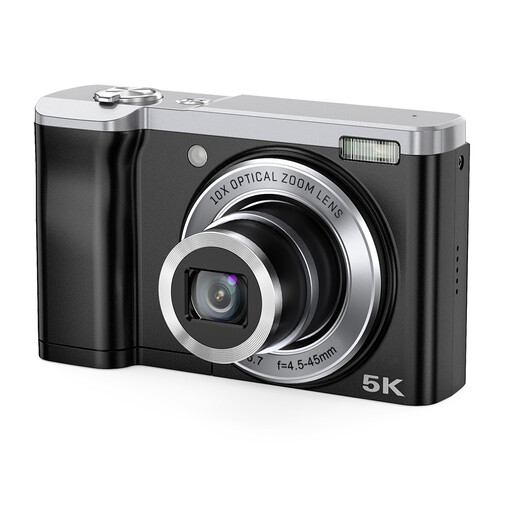 No image available
The stated 10x optical zoom is relevant if you need to frame distant subjects. The listing also names front and rear cameras; check the actual focal-length range and packed dimensions against your travel plans.
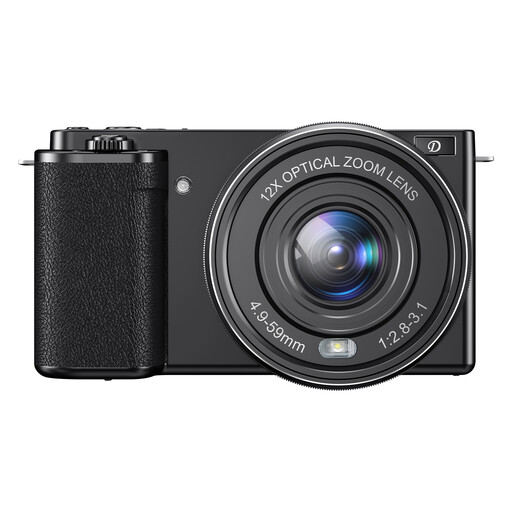 No image available
The stated 12x optical zoom addresses distant framing, though you should check its focal-length endpoints for your subjects. The product description says the camera is not waterproof and advises avoiding water and high humidity.
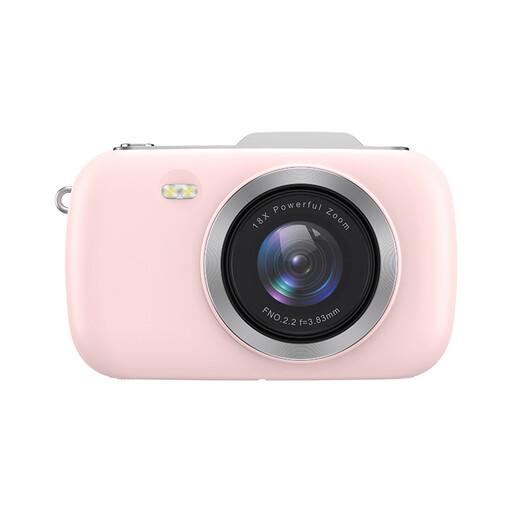 No image available
This point-and-shoot option is listed for travel use. Its stated 18x zoom combines optical and digital zoom, so check the optical lens range before choosing it for distant subjects. The description advises avoiding water and moisture.
Consider a dedicated camera if you regularly need optical zoom for distant subjects or want a camera-and-lens combination for low-light scenes. If most photographs are of nearby subjects in daylight, weigh those benefits against carrying another device; Which? identifies optical zoom and low light as reasons to consider switching.
No. Check the exact body’s lens mount and any adapter requirements. Canon specifies native RF and RF-S support for the EOS R7; other mounts should not be assumed to fit.
No. Check the protection specified for both parts of the kit. Canon explicitly lists no dust or moisture resistance for its RF 100-400mm F5.6-8 IS USM lens.
The UK Civil Aviation Authority says to carry spare batteries in cabin baggage and protect them from damage. Its guidance says batteries rated from 100Wh to 160Wh require airline approval, while those over 160Wh are prohibited in passenger baggage; check your airline’s rules for your batteries.
Check the charging method and contents of the exact package you plan to buy. Nikon says a charger is not included with its cited Z50II two-lens kit, while Panasonic states that the TZ99 supports USB Type-C battery charging; neither detail should be assumed for another package.