Long-session journal editors
If you write substantial entries, sort photos and navigate long pages at the same desk, consider hand fit and scrolling controls before travel size. Quiet clicks may also matter in a shared home workspace.


For long entries, photo folders and frequent scrolling at a fixed desk, start with a full-size productivity mouse; choose a compact mouse if you also edit away from home. A vertical mouse or thumb-operated trackball is worth comparing when hand fit or limited desk space drives the decision, but neither replaces a suitable workstation setup.
If you write substantial entries, sort photos and navigate long pages at the same desk, consider hand fit and scrolling controls before travel size. Quiet clicks may also matter in a shared home workspace.
If your laptop goes on trips with you or you edit across several devices, a compact shape and suitable connection options become more useful. Check that the mouse works with each device you intend to use.
If the desk leaves little room to move a mouse, compare a stationary trackball with conventional shapes. If a conventional grip feels uncomfortable, assess vertical designs alongside the whole workstation; the Health and Safety Executive advises positioning the mouse in line with your elbow.
Consider it: When you mainly edit at one desk and repeatedly scroll through entries, folders and photos.
Trade-off: A larger shape takes more desk and bag space; extra controls matter only if they fit your editing workflow.
Consider it: When the same mouse needs to travel with your laptop or connect to several devices.
Trade-off: The smaller shape may offer less palm support during lengthy sessions at a fixed desk.
Consider it: When you want to try a more upright grip and can check whether the shape fits your hand.
Trade-off: The grip takes getting used to, and an ergonomic shape cannot promise relief from discomfort.
Consider it: When a cramped desk leaves little room for a moving mouse.
Trade-off: Moving the pointer with your thumb feels different and still requires a suitable workstation position.
| Concern | What to check | Who this matters to |
|---|---|---|
| Comfort during long sessions | Check hand fit and whether the mouse can sit in line with your elbow; assess the rest of the workstation too. | If extended editing leaves my hand uncomfortable, I want a shape I can use at my desk without overlooking my posture. Roughly 42% of consumers put sustained-use comfort first. |
| Navigation and pointer control | Compare scroll-wheel behaviour and adjustable pointer settings; check software compatibility if shortcuts matter. | When I move between long entries and photo folders, I want navigation that suits the way I edit. Around 33% of consumers prioritise workflow control. |
| Portability and connections | Check size, Bluetooth support, receiver requirements and compatibility with your intended devices. | If I continue editing on a laptop while away, I want one mouse that is practical to carry and connect. For about 25% of consumers, portability and device switching are the main concern. |
Repeated activity and workstation position both matter. A different mouse shape cannot compensate for every aspect of a desk setup.
Follow the Health and Safety Executive's advice to keep the mouse in line with your elbow and assess the screen, keyboard and chair as well. Seek appropriate medical advice if symptoms persist or worsen.
A compact mouse is easier to carry, but its shape may give you less of the hand support you prefer for prolonged desk use.
If you rarely edit away from your home office, compare the fit of full-size, vertical and trackball designs before prioritising portability.
Manufacturer descriptions of grip position or reduced movement do not establish how a mouse will feel in your hand or address an underlying health issue.
Use those descriptions to identify shapes to assess, then check hand fit and your workstation. Get appropriate advice for ongoing pain, numbness, weakness or tingling.
Device switching and customisable controls may depend on your computer's connections, operating system and the manufacturer's software.
Before buying, check Bluetooth support, available USB ports, software compatibility and whether the connection option you want needs a receiver.
For the Logitech MX Anywhere 3S, Logitech says the compatible Logi Bolt receiver is not included; using that connection requires a separate receiver.
Logitech offers examples of the four shapes relevant here: MX Master for fixed-desk productivity, MX Anywhere for portability, Lift for a vertical grip and ERGO M575S for stationary thumb control.
Razer's Pro Click V2 range gives buyers another productivity-oriented shape to compare, including a dedicated vertical model.
These mice offer shapes and connection options to consider for travel-journal editing at a home-office desk. Compare each model against the amount of time you work at that desk, your hand fit and any need to edit elsewhere.
 No image available
Consider this full-size model if you mainly edit long entries and navigate photo folders at a fixed desk.
Logitech specifies an 8,000 DPI sensor and MagSpeed scrolling for the MX Master 3S. Check the shape against your hand and confirm the contents if you need a Logi Bolt receiver.
 No image available
Consider this office mouse if quieter clicks and connection choices matter while you write and navigate.
The product name specifies 2.4G and Bluetooth connection options, adjustable DPI and a 1xAA battery. Check the connection requirements for your devices and whether the shape fits your hand for longer sessions.
 No image available
Consider this model if you want to compare a different desk-mouse shape and the fit of a wrist rest.
Its product name specifies a detachable wrist rest. Check hand fit before choosing it for extended editing; the rest and ergonomic description do not establish pain relief.
 No image available
Consider this vertical model if you want to assess an upright grip for editing at your desk.
The product name lists Bluetooth and 2.4GHz modes, six buttons and an adjustable 1600 DPI sensor. Check hand fit and allow for a different grip before relying on it for long sessions.
 No image available
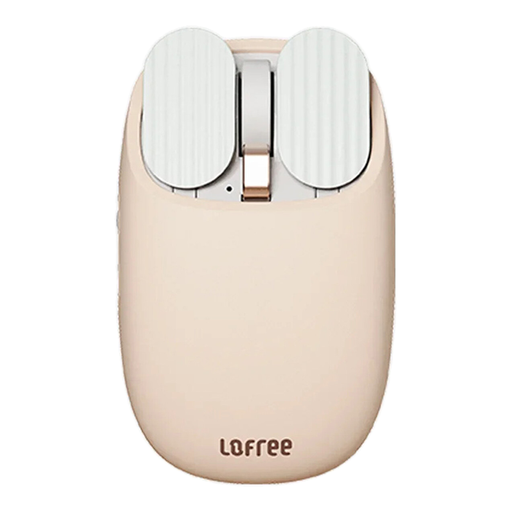
Consider this model if switching wireless connection modes is important to your editing setup.
The product name lists Bluetooth and 2.4G modes, five adjustable DPI levels and an 800mAh battery. Check its dimensions and hand fit if it will spend long sessions at your desk.
No: compact size matters most if you actually edit away from your home-office desk. For mainly fixed-desk work, compare hand fit, desk space and navigation needs before choosing between a full-size mouse, vertical mouse or trackball.
A different shape may be worth assessing, but a mouse alone is not a treatment. The NHS notes that repetitive strain injury can affect the wrist, hand, forearm, elbow or shoulder; review your working routine and workstation, and seek appropriate medical advice if symptoms persist or worsen.
Keep the mouse in line with your elbow, as the Health and Safety Executive advises. Assess its position alongside your screen, keyboard and chair rather than choosing a mouse shape in isolation.
Yes, they can apply to workers who work from home on a permanent or long-term basis, according to the Health and Safety Executive. Whether the rules apply to a particular working arrangement needs to be assessed under those conditions; buying a mouse for occasional personal journal editing does not itself establish that they apply.