For phone backup on a day out, start with a compact USB-C power bank rather than carrying laptop-sized capacity you may not use. If you need to charge a laptop, check its USB-C charging requirement against the bank’s single-port output and the cable’s power capability; choose magnetic wireless charging only if your phone and case are compatible. Before a flight, check the bank’s watt-hour marking and your airline’s current rules.
Who needs which setup?
Phone-first day travellers
If maps, tickets, messages and contacts are your main priorities on a rail journey or day out, look for phone backup that fits the bag you actually carry. A laptop-oriented bank may add capacity without meeting a need you have that day.
Laptop-carrying mobile workers
Charging a compatible USB-C laptop away from a socket calls for more than a large capacity figure. Match the laptop’s required input to the bank’s single-port output and a suitable cable, especially if you will charge other devices at the same time.
Magnetic-phone convenience users
If you want to attach a bank while using your phone, check both the phone and its case for Qi2 or MagSafe-compatible charging. Wireless convenience does not establish laptop suitability or remove the need to check wired output.
What matters when choosing?
Decide which device must keep working away from a socket, then check its charging connection and the amount of power you are willing to carry.
Compact USB-C bank
Choose it when: Your phone needs backup for maps, tickets and messages, and easy carrying matters more than charging a laptop.
Trade-off: A compact bank offers less reserve energy for repeated charging or several devices than a larger laptop-oriented model.
Higher-output USB-C PD bank
Choose it when: Your laptop accepts USB-C Power Delivery and the bank’s single-port output and cable meet its charging requirement.
Trade-off: The additional capacity and output can mean more to carry, while charging several devices may divide the available power.
Magnetic wireless bank
Choose it when: Your phone and case support the intended magnetic charging method and you value charging without a loose lead.
Trade-off: Compatibility is conditional, and a wireless output rating must not be mistaken for the bank’s wired output.
| Concern | What to check | Who this matters to |
|---|
| Energy for the day |
Compare capacity with your planned devices and charging frequency; check the watt-hour (Wh) marking if flying. A mAh figure is not a guarantee of energy delivered to a device. |
If I expect a long day of navigation or several devices to recharge, I need enough reserve energy rather than a capacity figure alone. Around 31% of consumers put that need first. |
| Laptop output and cable |
Match the laptop’s USB-C charging requirement to the bank’s single-port output and the cable’s stated power capability; check power sharing if using several ports. |
When I work away from a socket, my laptop must accept the bank’s available charging input. For around 31% of consumers, laptop charging compatibility is the primary concern. |
| Carrying and cable setup |
Check dimensions, weight, connectors and whether a built-in or separate cable suits your devices. |
On a rail day or city break, I want a charger I can carry and connect without fuss, even if that means accepting less reserve capacity. That practical setup comes first for around 25% of consumers. |
| Magnetic compatibility |
Confirm support for the intended Qi2 or MagSafe-compatible charging method on both phone and case; compare the bank’s wired and wireless ratings. |
If I want to charge while holding my phone, a secure, compatible magnetic connection matters more to me than extra ports. Around 13% of consumers prioritise that convenience. |
Mistakes to avoid
-
Choosing by mAh alone
Cell capacity does not tell you exactly how much energy will reach your phone. It also does not tell you whether the bank has enough output for a laptop or how much weight it adds to your bag.
Compare the Wh marking, output ratings and physical weight alongside capacity. Treat advertised charge counts as conditional.
-
Assuming a USB-C connector makes a bank laptop-ready
USB-C cables have different power capabilities, according to the USB Implementers Forum. A bank’s total output rating may also differ from what one port can supply.
Check the laptop’s charging requirement, the bank’s single-port rating and the cable’s rating before buying.
An unsuitable cable may mean carrying or obtaining another cable for laptop charging.
-
Buying magnetic charging without checking the case
The intended magnetic connection depends on a compatible phone and case. Belkin also advises against placing cards, passports, security badges or key fobs between a phone and its magnetic holder.
Confirm phone and case compatibility, and keep those items away from the charging surface.
-
Packing a power bank in checked luggage
The UK Civil Aviation Authority says power banks belong in the cabin, not checked luggage. Requirements for your particular flight still need checking with the airline.
Read the bank’s Wh marking and your airline’s current instructions before departure, and protect the bank from damage in transit.
Brands to consider
These brands illustrate different power-bank formats; compare the specifications of the particular model rather than assuming a feature applies across a brand’s range.
Anker
Relevant to compact USB-C and magnetic phone-charging setups.
- Anker lists its A1654 MagGo model at 10,000mAh, with Qi2-certified 15W wireless charging and up to 27W USB-C output.
- Those manufacturer-stated ratings describe that model, not laptop charging capability; check phone and case compatibility for magnetic use.
Belkin
Relevant to integrated-cable phone banks and higher-output USB-C laptop banks.
- Belkin’s UK range includes a 20,000mAh, 74Wh three-port laptop bank listed with 65W USB-C Power Delivery, as well as a separate 10,000mAh integrated-cable option.
- Check which specification belongs to the model you are considering and whether its available output meets your laptop’s requirement.
UGREEN
Relevant to USB-C banks combining laptop-oriented output with a built-in cable.
- UGREEN lists its 20,000mAh Nexode model at 72Wh, with a built-in USB-C cable and USB-C port each rated up to 67W.
- The manufacturer’s maximum rating does not establish the charging speed for every device or combination of connected devices.
Power banks on Joybuy
These options cover cable-integrated banks for phone-focused days, a higher-capacity bank aimed at laptop users and a Qi2 phone-charging option. Check the exact output and compatibility you need before choosing between them.
 No image available
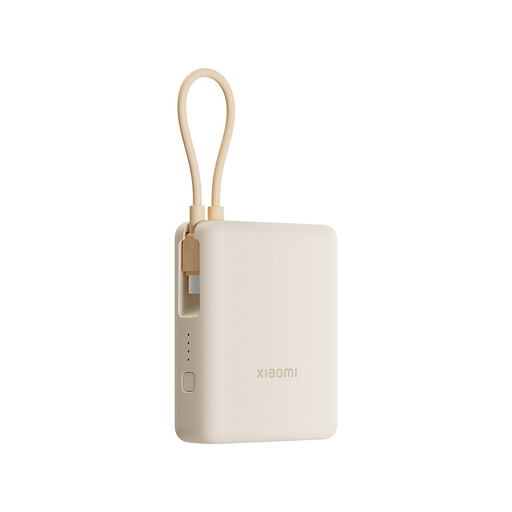
Xiaomi 33W Power Bank 10000mAh, integrated cable, Tan
Consider this integrated-cable format if you want phone backup without carrying a separate lead.
Stated capacity: 10000mAh; 33W appears in the product name. Check the cable connection and the output available to your device, particularly if charging more than one device.
For flights, check its Wh marking and your airline’s rules before packing.
Joybuy
 No image available
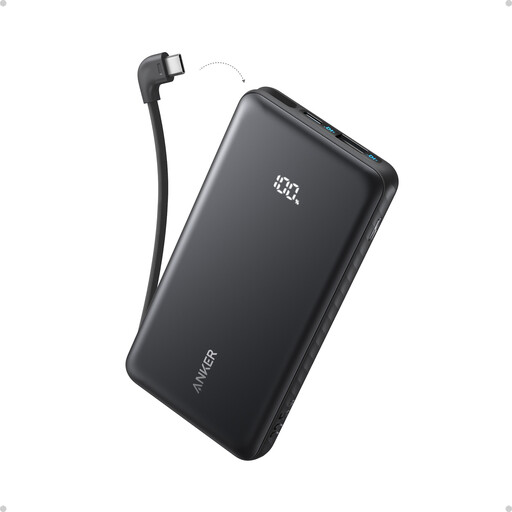
Anker Zolo Power Bank 10,000mAh 22.5W, built-in USB-C cable
The built-in USB-C cable suits a phone-focused travel day if it matches the device you need to charge.
Stated capacity is 10,000mAh and the named output is 22.5W; check the rate available to your particular device and whether it changes when another device is connected.
Check its weight if bag space matters and its Wh marking if you plan to fly.
Joybuy
 No image available
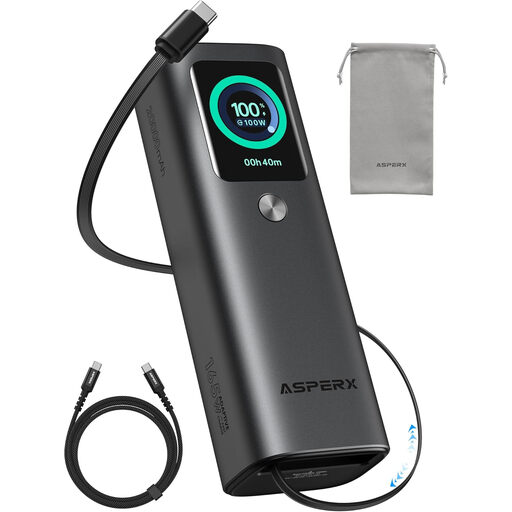
ASPERX Laptop Power Bank 165W 20000mAh, retractable cables
Consider this for mobile work only after confirming that its charging protocol, single-port output and cable path meet your laptop’s requirements.
The product name states 20000mAh and 165W and identifies retractable cables; the 165W figure alone does not establish the output available to one laptop.
Check its Wh marking and the airline’s current rules if taking it on a flight; do not rely on an approval claim in a product title.
Joybuy
 No image available
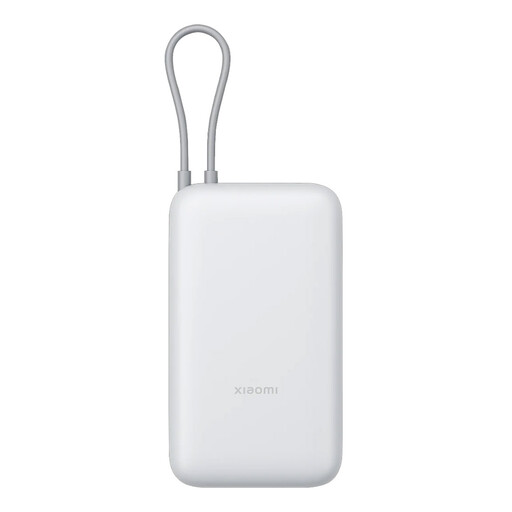
Xiaomi Power Bank 20000mAh, integrated cable, GL Light Gray
This higher-capacity, integrated-cable format is worth considering when a phone-focused day may involve repeated charging.
The product name states 20000mAh; do not use capacity alone to judge laptop suitability. Check the cable connector and available output for your devices.
Check its physical weight for all-day carrying and its Wh marking before air travel.
Joybuy
 No image available
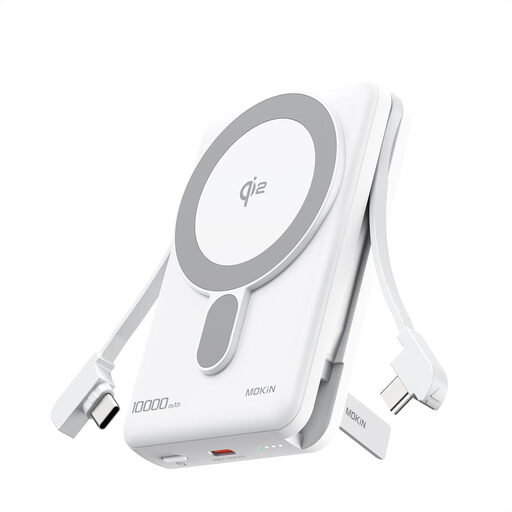
MOKiN Qi2 Power Bank, 10000 mAh, 20 W, White
Consider this phone-focused option if Qi2 compatibility matters to you, but confirm that your phone and case support the charging arrangement you intend to use.
The product name states 10000 mAh and 20 W; check which charging mode the 20 W rating describes rather than assuming it is the wireless rate.
For travel, check its weight and Wh marking as well as any applicable airline rules.
Joybuy
Frequently asked questions
Will any USB-C power bank charge my laptop?
No: a USB-C connector alone does not establish suitable laptop charging. Confirm that the laptop accepts USB-C charging, compare its required input with the bank’s single-port output and select a cable rated for the required power. The USB Implementers Forum notes that USB-C cables have different capabilities.
Do magnetic power banks work with every phone?
No: magnetic wireless charging depends on a compatible phone and case. Check the charging standard and case requirements for the particular bank and phone before buying.
Can I put a power bank in checked luggage?
No. The UK Civil Aviation Authority says to keep power banks with you in the cabin, not in checked luggage. Read the bank’s Wh marking and check your planned airline’s current conditions before flying.
How should I charge and store a power bank safely?
Use a suitable charger and stop using a power bank that swells, overheats or appears damaged. The London Fire Brigade warns that damage, water, short circuits and overcharging can create battery fire risks; keep the bank protected while carrying and storing it.


