Evening scenery viewers
You usually watch in a dim room and want to distinguish detail in night scenes without losing the sense of depth in darker landscapes.


For travel programmes watched mainly in a dim room, OLED is worth considering for its deep blacks and contrast; if daylight or screen reflections are the bigger concern, compare Mini LED and QLED models for bright-room viewing. Whichever route suits your room, check the exact TV’s HDR formats, streaming apps, dialogue clarity and independently assessed picture performance before choosing.
You usually watch in a dim room and want to distinguish detail in night scenes without losing the sense of depth in darker landscapes.
You watch during the day, with windows or lamps that may reflect on the screen. Visibility in your usual room matters more than a display label alone.
You plan to watch travel programmes through BBC iPlayer or other streaming services and need to check the exact TV’s apps and supported HDR formats.
Choose a display approach for the room where you watch, then check the sources and everyday features you will actually use. HDR compatibility is a separate check, not an alternative to choosing between OLED and a backlit TV.
Consider it when: Evening viewing and contrast in dark scenery take priority; OLED’s self-illuminating pixels can produce deep blacks, as Samsung UK explains.
Weigh against: A room with strong daylight or reflections, where the exact model’s screen treatment and brightness handling need closer scrutiny.
Consider it when: Daylight viewing is the priority; Samsung UK describes QLED as a brightness-focused approach and Mini LED as offering finer backlight control.
Weigh against: Backlighting works differently from OLED’s self-lit pixels, and the technology name alone cannot establish a particular model’s contrast or reflection handling.
| Concern | What to check | Who this matters to |
|---|---|---|
| Dark-scene contrast | Compare the exact model’s contrast and viewing angles, particularly if people sit across a wide sofa. | If I mostly watch evening journeys and night skies, I want dark scenery to retain depth and detail. Around 31% of consumers put dark-scene contrast first. |
| Daylight and reflections | Consider the screen’s position relative to windows and lamps, then check model-specific reflection and bright-room assessments. | With daylight falling across my living room, I need to see the picture without reflections getting in the way. Daylight visibility comes first for around 31% of consumers. |
| HDR and streaming | Confirm the exact TV’s apps and HDR formats, including HLG if BBC iPlayer UHD is important. | If I plan to stream UHD travel content through the TV, I need the app and programme format to work with my chosen model. Around 23% of consumers prioritise streaming and HDR compatibility. |
| Dialogue and daily use | Look for model-specific assessments of speech clarity, setup and navigation. | When narration carries the story, I want to hear it clearly and find programmes without a cumbersome setup. Clear dialogue and straightforward use matter most to around 15% of consumers. |
The display approach does not tell you how a particular TV handles reflections, dialogue, processing or streaming.
Use the label to narrow your options, then compare the exact model’s specifications and independent picture and sound assessments.
BBC Research & Development reported in December 2024 that BBC iPlayer UHD on-demand content was distributed in HDR-HLG. A 4K resolution label does not establish HLG support or app availability.
If BBC iPlayer UHD matters to you, check HLG support and the current iPlayer app availability for the exact UK model. The programme itself also needs to be available in UHD HDR.
A strong-looking picture specification does not establish whether speech will be clear. Which? assesses TV sound and ease of use separately from picture characteristics.
Check dialogue assessments for the exact model; if you are considering external audio, check its connection options first.
In the UK, TV Licensing says a TV Licence is needed to watch live TV or to watch or download programmes on BBC iPlayer. It says one is not needed solely for on-demand programmes on other services if you do not watch live TV.
Check how you intend to watch travel programmes, rather than deciding on the basis of the device or programme genre.
LG UK lists several OLED series and sizes, including 42-inch and 83-inch options, for buyers comparing TVs for evening viewing.
Samsung UK describes OLED, QLED and Neo QLED approaches within its TV guidance, making it relevant to a display-technology comparison.
Sony UK presents its BRAVIA 5 line as a Mini LED 4K HDR option with Google TV, including larger screen sizes.
Panasonic UK lists the TV-48Z90B as a 4K OLED model with HLG, HDR10, HDR10+ Adaptive and Dolby Vision IQ support.
These TVs offer Mini LED or Direct LED options for comparing screen size, display type and stated smart-TV features. For each model, check how it performs in your room and whether your preferred streaming apps are available.
 No image available
Consider this 55-inch model if you want to compare a Mini LED TV for travel programmes in a room with changing light. Its title specifies 4K HDR and VIDAA OS; check your preferred apps and independent reflection and dialogue assessments for this model.
 No image available
This is a larger-screen option to assess if a 75-inch TV fits your seating and room layout. The title specifies 4K HDR, Google TV and a 144Hz native refresh rate; check app availability, reflections and dialogue quality for the exact model.
 No image available
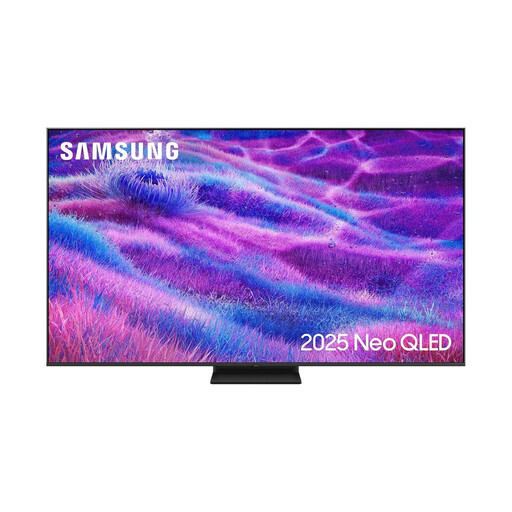
Consider this 75-inch model if you are comparing larger TVs for scenic programmes. Its title specifies 4K Ultra HD and smart-TV features; check the exact model’s HDR formats, apps and bright-room and sound assessments before deciding.
 No image available
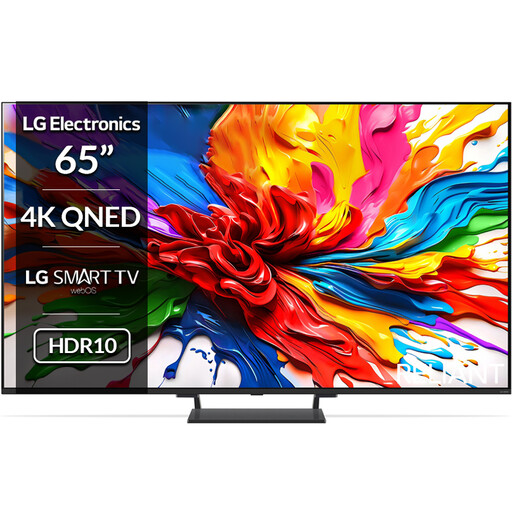
This 65-inch model is an option when comparing Mini LED TVs for mixed daylight and evening viewing. Its title specifies 4K smart-TV features; check model-specific reflection handling, HDR support, apps and narration clarity.
 No image available
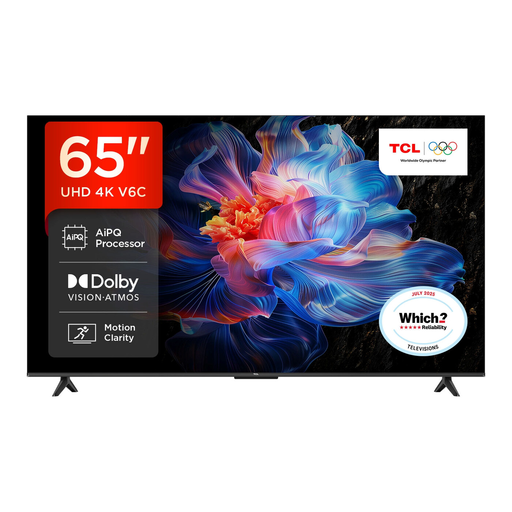
Consider this 65-inch Direct LED model if you are comparing a different display approach for streaming travel programmes. Its title specifies 4K HDR and Google TV; check the exact apps and HDR formats you need, along with daylight visibility and dialogue clarity.
Consider OLED if you mainly watch in a dim room and value deep blacks in night scenes; compare Mini LED models if daylight viewing is the greater concern. Samsung UK’s display guidance explains the technology differences, but check independent assessments of the exact TVs for reflections, sound and picture handling.
Yes, if BBC iPlayer UHD is a planned source. BBC Research & Development reported in December 2024 that iPlayer UHD on-demand content was distributed in HDR-HLG; check HLG support and current app availability on the exact TV, as well as whether the programme is offered in UHD HDR.
No. 4K describes resolution, not how a TV handles contrast, colour, reflections, motion or a particular stream. Compare model-specific results for the conditions in which you watch; Which? assesses several picture characteristics separately in its TV testing.
You need to be covered by a TV Licence if you watch live TV or watch or download programmes on BBC iPlayer, according to TV Licensing. Watching only on-demand programmes on other services does not itself require one, provided you do not watch live TV.