Multi-country device travellers
If your itinerary crosses socket systems, check each destination before choosing an adapter. Electrical Safety First notes that plug adaptation does not change the electrical supply.


Choose a travel adapter after checking your destination’s socket and supply against each device’s input label; the adapter changes plug fit, not voltage or frequency. If you need to charge several USB devices, match a charger’s outputs and cables to them. Add a power bank for time away from sockets only after checking its watt-hour rating and every operating airline’s current carriage rules.
If your itinerary crosses socket systems, check each destination before choosing an adapter. Electrical Safety First notes that plug adaptation does not change the electrical supply.
When a laptop shares your bag with several USB devices, check the laptop’s input requirement, the charger’s output and any earth connection needed by equipment plugged into an adapter.
If you rely on a power bank between sockets, its capacity label matters alongside how you pack and use it. Check the operating airline’s current conditions before departure.
Start with the destination socket and your devices’ input labels. Then choose charging ports and cables for the devices you carry, and check flight rules before choosing a power bank.
| Concern | What to check | Who this matters to |
|---|---|---|
| Plug and electrical compatibility | Match the destination socket and supply to the adapter and device input label; check earth support and the adapter’s maximum rating. | If my appliance needs an earth connection or a different supply, a plug that fits is not enough. Around 29% of consumers put destination and device compatibility first. |
| Charging several devices | Compare each device’s required input with the charger’s per-port and shared outputs; check the cable rating. | With a laptop and phone to charge, I need the ports to deliver suitable power when I use them together. Roughly 24% of consumers make multi-device charging their primary concern. |
| Portable power on flights | Read the power bank’s watt-hour (Wh) label and every operating airline’s current rules on carriage, placement and use. | When I need power away from sockets, I also need to know whether I can carry and use the bank on my flight. Around 29% of consumers prioritise flight-compatible portable power. |
| Electrical safety and packing | Choose an identifiable retailer and inspect adapter pins, casing and batteries for damage or overheating. | I want a manageable kit, but not at the expense of using a damaged or unsuitable electrical product. About 18% of consumers place safe, practical packing first. |
Electrical Safety First says travel adapters change plug fit but do not convert voltage or frequency. An appliance must be suitable for the destination supply.
Compare the destination supply with the appliance or power supply’s input label before choosing an adapter; check whether a suitable converter is needed.
Airline battery conditions can depend on watt-hours as well as quantity, packing location and onboard use. A capacity figure in mAh does not answer all of those questions.
Find the exact unit’s Wh rating and check every operating airline’s current battery rules before travelling.
The UK Office for Product Safety and Standards reported electric-shock risks from accessible live parts in one identified travel adapter. That finding does not describe all adapters.
Buy from an identifiable retailer, check the exact adapter’s rating and condition, and stop using it if its casing or pins are damaged or it shows signs of overheating.
A charger with several sockets is not necessarily suitable for a particular laptop, especially when output is shared between connected devices.
Compare the exact model’s individual and shared USB-C outputs, and the cable rating, with your devices’ charging requirements.
SKROSS offers country-specific and world travel-adapter lines, including models with USB ports.
EPICKA offers all-in-one adapters combining plug options, an AC outlet and USB ports.
Anker’s travel-charger range includes USB-C chargers and portable-power products.
Belkin offers USB-C chargers, including products it describes as suitable for travel.
These choices cover a multi-port wall charger and charging cables for compatible devices. Check the charger’s EU plug against your destination socket; cables do not replace a plug adapter or provide portable power on their own.
 No image available
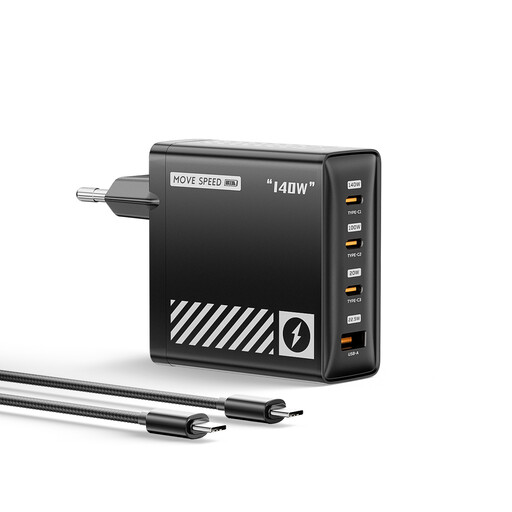
Consider this wall charger when you need ports for several compatible USB devices at a socket that accepts its EU plug.
The title specifies 140W, four ports, GaN and PD 3.1. Check the output available when several ports are in use, your devices’ requirements and whether the destination requires a plug adapter.
 No image available
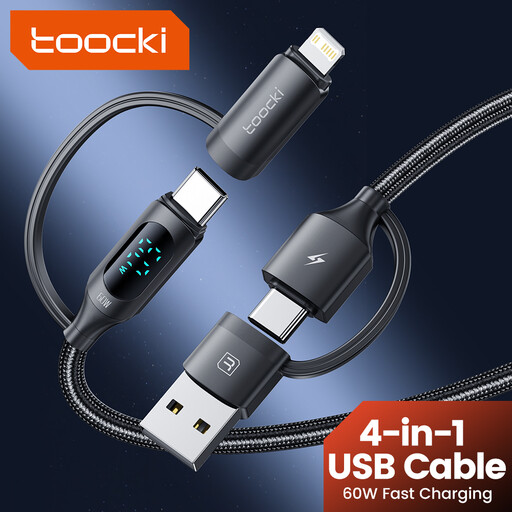
Consider a multi-connector cable if the devices you pack use the connector types named for this model.
The title identifies USB-C, USB-A and Lightning connections. Check the exact connector arrangement, power rating and support for your intended device-and-charger combination before relying on one cable.
 No image available
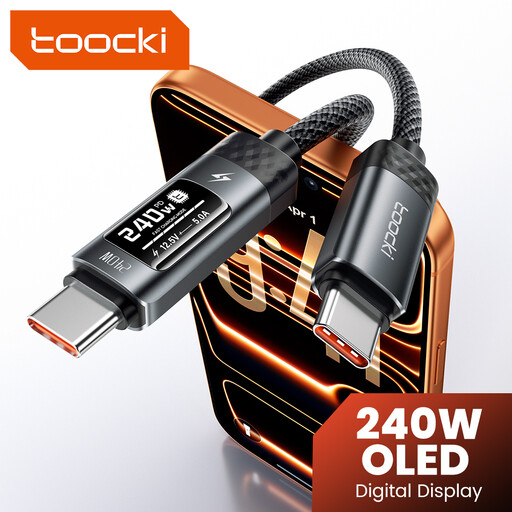
This is a cable choice for a compatible USB-C device and USB-C power source.
The title states a 3.3ft length, a 240W maximum and an LED display. The maximum is not the charging rate you will necessarily get; check the device and charger as well.
 No image available
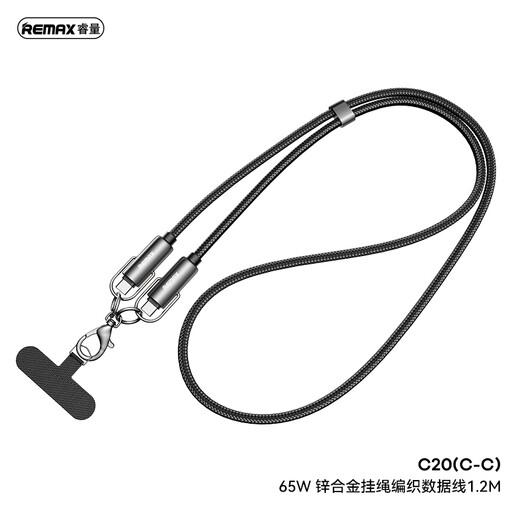
This cable suits a USB-C-to-USB-C connection when its stated rating meets your device-and-charger requirements.
The title specifies 65W, a 1.2M length and a braided data-cable design. Check a laptop’s required input before choosing it for laptop charging.
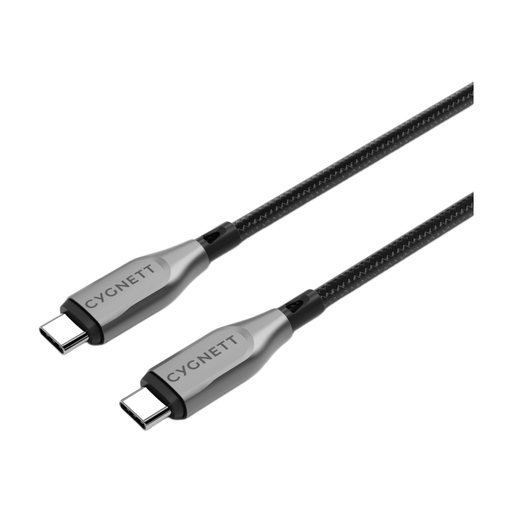 No image available
Consider this cable if you need a 1m USB-C-to-USB-C connection in your charging kit.
Check its charging and data specifications against the devices and charger you plan to connect; the cable title alone does not establish those capabilities.
No: UK Civil Aviation Authority passenger guidance says to keep power banks with you in the cabin, not in checked luggage. Check your operating airline’s current conditions for the rest of your journey.
Check the limit set by every operating airline before choosing how many to pack. Ryanair’s passenger guidance states a maximum of two per passenger, but its rule does not establish the conditions for a flight operated by another carrier.
Not on every flight: easyJet says power banks must not be used to charge other devices or be recharged on board. Check the current onboard-use rule of the airline operating your flight.
No. Electrical Safety First says a travel adapter does not convert voltage or frequency. Compare your device’s input label with the destination supply; a compatible input range, such as 110–240V, is a different matter from whether the plug fits.
Check the exact adapter’s rating, earth support and physical condition, and buy from an identifiable retailer. The UK Office for Product Safety and Standards reported accessible live parts in one identified international travel adapter; that product-specific finding is a reason to inspect what you buy, not a conclusion about every adapter.