
24/7 Customer Support

Free returns

Same-day & Next-day Delivery

Quality Guaranteed

Unlock Your Welcome Offers: FREE Delivery | Up to 80% OFF | Free 30-day JoyPlus trial
Download the APP
A well-maintained garden can be a source of immense pride, but keeping trees and shrubs in check requires the right equipment. Faced with a wall of different cutters, saws and pruners, it can be difficult to know which tool is right for the job. Using the wrong one can lead to a messy finish, damage to your plants or simply a lot of unnecessary effort.
This guide is designed to help you understand the main types of tree trimming tools available. We will outline key features to look for and provide some practical recommendations to help you tackle your garden tasks with confidence.
Before you make a decision, it is helpful to consider a few key factors. Matching the tool to your specific needs will ensure better results and a longer lifespan for your equipment.
The most common distinction you will encounter with garden pruning tools like loppers and secateurs is the blade type.
For general garden maintenance involving living trees and shrubs, a bypass tool is almost always the preferred choice.
The size and location of the branches you need to trim will determine the reach you require. For low-hanging branches and shrubs, handheld tools are sufficient. However, for higher limbs, attempting to use a ladder while wielding a sharp tool can be hazardous.
This is where an extendable tree pruner or a dedicated pole saw for tree trimming becomes essential. These tools allow you to stand safely on the ground while reaching branches several metres up. They often combine a saw for thicker limbs with a lopper mechanism for smaller ones, offering great versatility.
The durability and performance of a tool are largely dependent on its construction. Look for blades made from high-quality steel, such as SK5 carbon steel, which is known for holding a sharp edge and resisting wear.
Equally important are the handles. Lightweight materials like aluminium reduce fatigue during prolonged use, while ergonomic grips provide comfort and prevent slipping. For smaller tools, features like an adjustable hand sizer can make a significant difference in control and comfort.
As a Joybuy Product Recommendation Officer, my role is to highlight products that offer practical solutions for common household tasks. Based on their features and intended use, here are our recommendations for 2026.
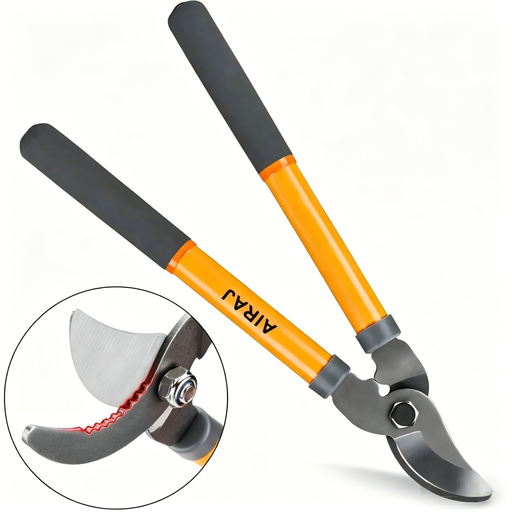
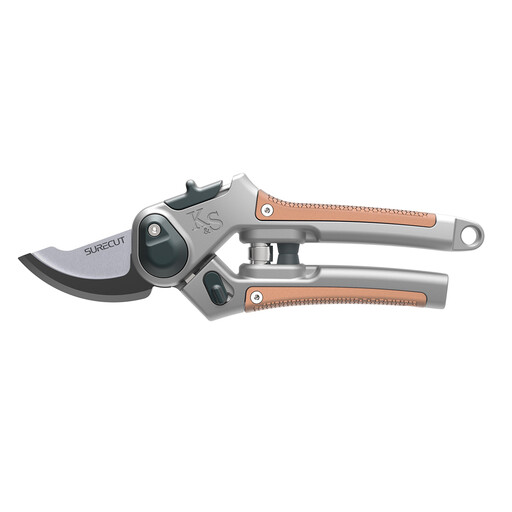
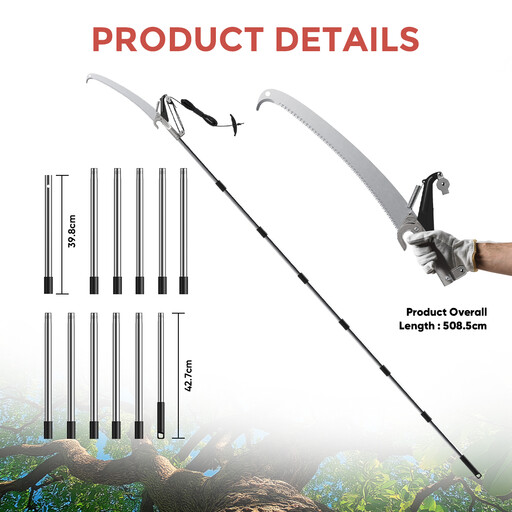
The tools highlighted here cover three of the most common pruning scenarios. However, every garden is unique, and you may require a different combination of tools. If you are looking for a more versatile solution or want to compare other specialised equipment, our broad selection of garden multitools offers a variety of options to suit any task.
1. What is the main difference between bypass and anvil loppers? Bypass loppers have two sharpened blades that glide past each other like scissors, making a clean cut that is ideal for live wood. Anvil loppers have one blade that closes onto a flat metal block (the anvil), which is better suited for chopping through hard, dead wood.
2. How often should I sharpen my garden pruning tools? This depends on usage. As a general rule, it is good practice to sharpen your tools at the beginning of the growing season. If you use them heavily, you may need to sharpen them more frequently. A good indicator is when you notice the tool is crushing stems rather than cutting them cleanly, or when you have to apply significantly more force than usual.
3. Can I use one tool for all my tree trimming needs? While some tools are very versatile, it is unlikely that a single tool will efficiently handle every task. A pair of hand pruners is perfect for small stems, bypass loppers are needed for medium branches and an extendable tree pruner is the correct choice for high limbs. Having a small, specialised kit is often the most effective approach.