
24/7 Customer Support

Free returns

Same-day & Next-day Delivery

Quality Guaranteed

Unlock Your Welcome Offers: FREE Delivery | Up to 80% OFF | Free 30-day JoyPlus trial
Download the APP
Navigating the world of cookware can feel overwhelming. You invest in a promising new frying pan, only for it to warp on your induction hob, or for its "miracle" non-stick surface to start flaking after a few months of use. For discerning home cooks in the UK, finding a pan that delivers consistent performance without hidden compromises is a common challenge.
Many shoppers fall into a few common traps. The first is the allure of heavily marketed non-stick coatings that promise effortless cooking but often degrade quickly, forcing a replacement sooner than expected. The second is purchasing pans with a thin, single-layer base that heats unevenly, creating frustrating hot spots and warping under the thermal stress of modern hobs. Finally, many pans claim to be "oven-safe," but their plastic handles or ill-fitting lids make them unsuitable for finishing a dish in the oven. This guide will help you bypass the marketing jargon and focus on the features that truly matter for a long-lasting, high-performance pan.
To avoid disappointment, focus on the construction and materials of the pan itself. These three parameters are non-negotiable for anyone seeking a durable and versatile piece of cookware.
The term you will often see on high-quality cookware is clad frying pan, or more specifically, "tri-ply." This refers to the pan's construction, which involves sandwiching a core of a highly conductive metal like aluminium between two layers of durable stainless steel.
When a pan is advertised as a non-toxic frying pan, it often refers to the absence of chemical coatings like PFOA. A pan made with a 304 stainless steel cooking surface is inherently non-toxic. This stable, corrosion-resistant alloy is the same type used in professional kitchens because it doesn't react with acidic ingredients (like tomatoes or wine) and is exceptionally durable, withstanding metal utensils without scratching as easily as coated pans.
For most family cooking, a 28cm stainless steel skillet offers the ideal balance of surface area for searing steaks or sautéing vegetables without being too cumbersome. Crucially, ensure the pan is genuinely an oven safe frying pan with lid. This means both the pan and its lid (including handles) can withstand oven temperatures, typically up to 220°C, allowing you to move seamlessly from hob to oven for braising or finishing a frittata.
Instead of a one-size-fits-all approach, we've matched different types of pans to the cooks who will get the most from them.
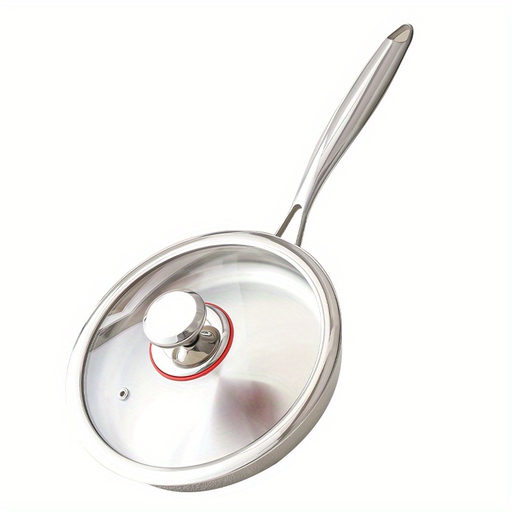
Why This Fits Their Persona: This cook wants a reliable workhorse for searing, sautéing and simmering. They value precise heat control and durability over the temporary convenience of non-stick, making this 28cm skillet a perfect investment for daily family meals.
Its triple-layer clad base ensures it won't warp on induction hobs and provides exceptionally even heat, while the 304 stainless steel surface won't degrade or peel over time.
Superior Heat Distribution: The aluminium core provides rapid, even heating.
Durable & Non-Toxic: The 304 steel interior is safe, non-reactive and resists scratches from metal utensils.
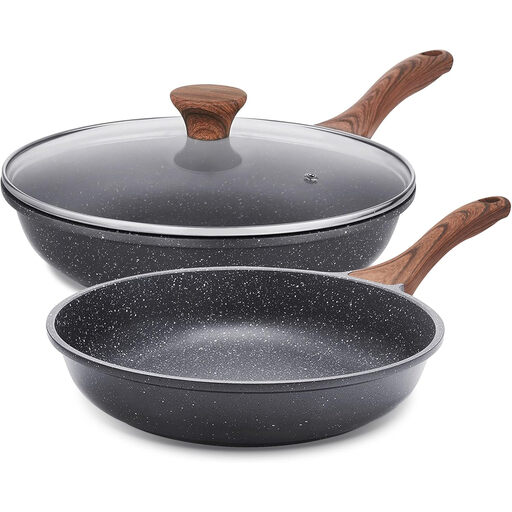
Why This Fits Their Persona: This cook prioritises effortless food release and quick clean-up, especially for delicate items like eggs and fish. They understand that non-stick is a consumable and prefer its ease of use for specific tasks.
While it has a coating, it is manufactured without intentionally added PFOA. Its solid cast aluminium body and magnetic base provide good heat distribution and induction compatibility, avoiding the pitfalls of flimsy pans.
Effortless Food Release: The granite-style coating is ideal for low-oil cooking and simple clean-up.
All-Hob Ready: The high magnetic conductive base works efficiently on all hobs, including induction.
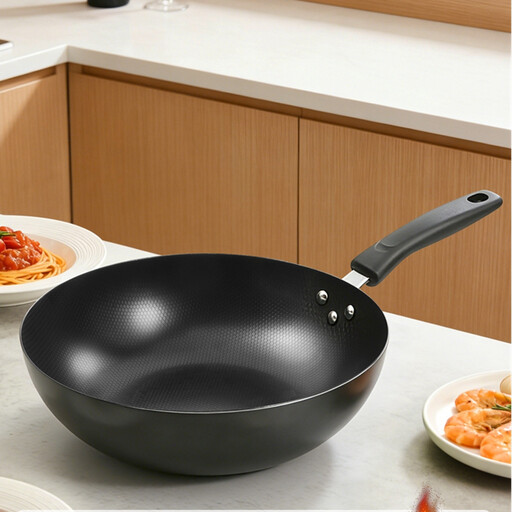
Why This Fits Their Persona: This user is focused on specific techniques like high-heat stir-frying. They need a pan that responds instantly to temperature changes and can achieve the 'wok hei' flavour profile, a task for which carbon steel is traditionally suited.
Instead of a synthetic coating, this wok develops a natural non-stick patina through seasoning. Its carbon steel material is designed for high heat and won't warp like a flimsy pan when used correctly.
Excellent Heat Response: Carbon steel heats up and cools down very quickly, giving the cook precise control.
Develops Natural Patina: With proper care and seasoning, it builds a durable, non-stick surface that improves with age.
We have compiled a complete, real-time list of products that fully satisfy these strict selection criteria and UK safety regulations.
The key is proper heat management. First, preheat the pan over medium heat for a minute or two. A simple test is to sprinkle a few drops of water; if they bead up and dance across the surface, the pan is ready. Then, add your oil and let it heat up until it shimmers. This creates a temporary barrier between the food and the pan's surface, preventing sticking.
For those who cook regularly and are tired of replacing warped or peeling non-stick pans, a tri-ply pan is a worthwhile long-term investment. Its durability, even heating and versatility (hob-to-oven) provide performance that single-layer or coated pans cannot match over time. It is a tool designed to last for many years, not just a season.
For daily cleaning, warm, soapy water and a non-abrasive sponge are usually sufficient. For stubborn food residue or discolouration, you can create a paste of baking soda and water or use a specialised stainless steel cleaner. To maintain its lustre, always dry the pan thoroughly after washing to prevent water spots. Unlike non-stick pans, you don't have to worry about damaging a delicate coating.