
24/7 Customer Support

Free returns

Same-day & Next-day Delivery

Quality Guaranteed

Unlock Your Welcome Offers: FREE Delivery | Up to 80% OFF | Free 30-day JoyPlus trial
Download the APP
As a Joybuy Product Recommendation Officer, my role is to help you navigate the crowded shelves and make informed choices. Tricolour quinoa has become a pantry staple for many health-conscious households in the UK, but not all packets are created equal. Choosing the right one can be the difference between a vibrant, fluffy salad and a disappointing, mushy side dish.
Before you add a bag to your basket, it's worth knowing about a few common pitfalls. Many shoppers find themselves paying a premium for what is essentially marketing hype, or end up with a product that doesn't deliver the texture they expected. Let's look at what really matters.
The 3 Pitfalls to Avoid When Buying Mixed Quinoa:
mixed quinoa is the same. Some cheaper mixes are bulked out with an overwhelming amount of white quinoa, with only a token sprinkle of red and black. This denies you the varied texture and richer, nuttier flavour that a good white red and black quinoa blend should provide.gluten-free ancient grain, some brands use vague health buzzwords to justify higher prices. The real value lies in verifiable nutritional information, such as the protein and fibre content, not in marketing slogans.To ensure you get a high-quality product that works for your meals, focus on these three practical parameters instead of the marketing clutter.
The ratio of the three quinoa types is the single most important factor for texture and flavour.
quinoa for salads as it doesn't clump together.A well-balanced blend, such as one with 60% white, 30% red and 10% black quinoa, provides a harmonious mix of a fluffy base, a satisfying chew and a crunchy finish.
Quinoa is known for being a source of plant-based protein. To verify this, always check the nutritional information per 100g. A quality high protein quinoa product will typically offer around 4-5g of protein and 3-4g of fibre per 100g once cooked. This makes it a genuinely substantial addition to a balanced diet, particularly for those on vegan or vegetarian plans. Also, confirm it is explicitly labelled as gluten-free if you have coeliac disease or a severe intolerance and check for any "may contain" allergen warnings from the packing facility.
Before you buy, if possible, look at the grains through the packaging. You want to see distinct, whole, seed-like grains. If the packet contains a noticeable amount of fine powder or broken-looking pieces, it's a sign of lower-quality processing. These fragments will turn to mush when cooked, ruining the texture of your dish.
We've matched some options from our catalogue to different kitchen needs, helping you find the right fit while avoiding the common pitfalls.
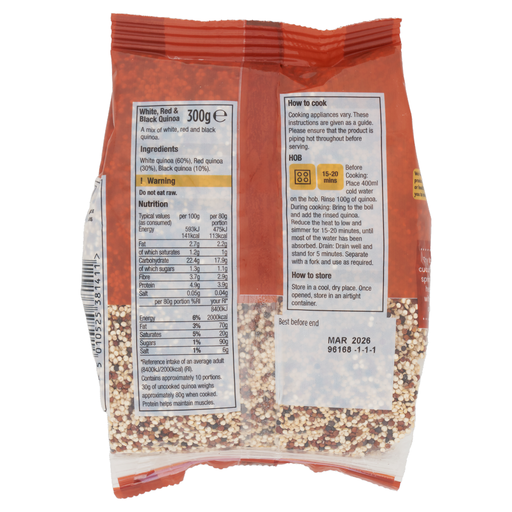
Why This Fits Their Persona: This is an ideal all-rounder for the UK kitchen. The balanced blend of textures and colours makes it perfect for everything from vibrant summer salads to a hearty base for a weeknight chilli or curry.
It directly addresses the "unbalanced blend" pitfall by clearly stating its 60% white, 30% red and 10% black quinoa ratio, ensuring a consistent and pleasing texture every time.
Provides a good source of protein (4.9g per 100g) and fibre (3.7g per 100g). It is also explicitly free from cereals containing gluten.
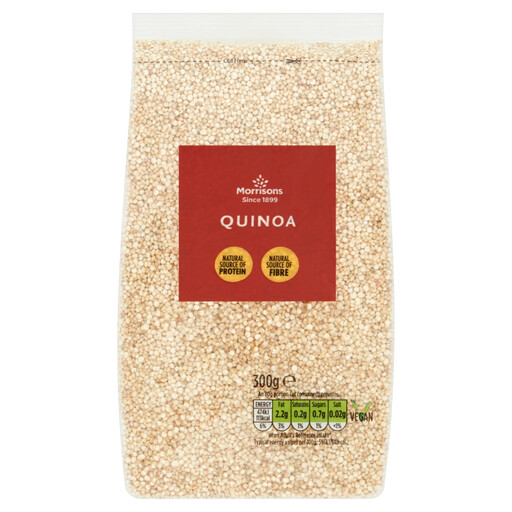
Why This Fits Their Persona: For those who prefer a predictable, soft texture and mild flavour. This single-colour white quinoa acts as a neutral canvas, perfect for absorbing the flavours of sauces, dressings and broths.
By opting for 100% white quinoa, you completely avoid the "unbalanced blend" pitfall. You get a consistent, light and fluffy result that is ideal as a simple substitute for rice or pasta.
Offers a high fibre content (4.2g per 100g) and a quick cooking time. Note the allergen advice: "May Contain: CEREALS CONTAINING GLUTEN".
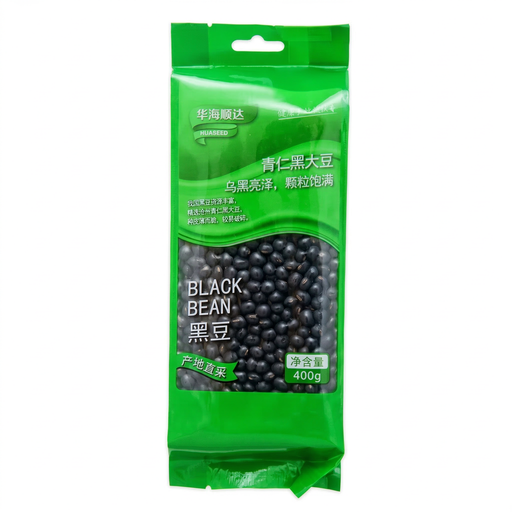
Why This Fits Their Persona: For those building a versatile, high-protein pantry, black beans are a fantastic complement or alternative to quinoa. They are perfect for creating substantial, nutrient-dense meal-prep bowls for the week.
This helps you avoid the "paying for hype" pitfall by diversifying your pantry with another cost-effective, high-value staple. It broadens your options beyond a single 'superfood'.
Delivers an exceptionally high protein content of 38.6g per 100g (uncooked), along with substantial carbohydrates for energy. A true powerhouse for plant-based diets.
We have compiled a complete, real-time list of products that fully satisfy these strict selection criteria and UK safety regulations.
To avoid a mushy texture, the key is the right ratio and method. First, rinse the quinoa thoroughly in a fine-mesh sieve to remove its natural coating, called saponin, which can taste bitter. Use a 1:2 ratio of quinoa to water (e.g., 1 cup of quinoa to 2 cups of water). Bring the water to a boil, add the quinoa, then reduce the heat to a low simmer. Cover and cook for about 15 minutes, or until the water is absorbed. Finally, remove it from the heat and let it stand, covered, for 5 minutes before fluffing with a fork.
The difference is mainly in texture and flavour. White quinoa is the softest and has the most neutral taste. Red quinoa is a bit chewier and nuttier, and holds its shape well, making it great for salads. Black quinoa is the crunchiest of the three, with a slightly sweeter, earthier flavour profile. A tricolour blend gives you the benefits of all three in one dish.
Quinoa itself is a naturally gluten-free ancient grain. However, cross-contamination can occur in facilities where products containing gluten are also packed. For those with coeliac disease or high sensitivity, it is crucial to check the label. The Morrisons White Red & Black Quinoa is listed as "Free from: CEREALS CONTAINING GLUTEN." In contrast, the standard Morrisons Quinoa (white) carries a "May Contain: CEREALS CONTAINING GLUTEN" warning. Always read the specific product's packaging for the most accurate allergen information.