
24/7 Customer Support

Free returns

Same-day & Next-day Delivery

Quality Guaranteed

Unlock Your Welcome Offers: FREE Delivery | Up to 80% OFF | Free 30-day JoyPlus trial
Download the APP
Whether you run a small online shop, organise stock in a warehouse, prepare household items for a move or simply need practical packaging boxes, the wrong carton can create unnecessary cost and hassle. Triplast single wall cardboard boxes are available in several internal sizes and pack quantities, but comparing the dimensions alone is not enough.
A box that is too large may need excessive void fill and can increase parcel volume. One that is too small may force contents against the walls or leave no room for protective paper. Before buying, check the construction, usable capacity and quantity supplied.
Product listings may show both measurements. Internal dimensions indicate the approximate space available for your items, while external dimensions include the cardboard walls and folded flaps. For example, a box with internal dimensions of 229mm x 152mm x 152mm has external dimensions of approximately 234mm x 157mm x 162mm.
Measure the item, including any wrapping or padding, against the internal dimensions. Allow a little clearance without leaving a large empty cavity.
“Cardboard box” is a broad term. Board thickness, flute type and grade affect how a box handles everyday packing and transit. Single wall cartons are useful for many lightweight products, but they are not automatically suitable for heavy, fragile or sharp-edged goods.
The Triplast range uses B-flute corrugated cardboard, with an approximate 3mm wall thickness. This provides a practical balance between low weight, rigidity and everyday protection. For unusually heavy contents or demanding distribution conditions, consider whether double wall packaging would be more suitable.
A five-box pack can be sensible for occasional household use, but it may offer less value for a seller dispatching orders every week. Conversely, a 100-pack takes more storage space and ties up money if your requirements are uncertain.
Think about your expected usage over the next few months, available storage and whether the boxes are supplied flat-packed. Flat-packed boxes reduce clutter before assembly, but the quantity still needs to match your workspace.
Corrugated cardboard contains a fluted inner layer between outer liners. B-flute is approximately 3mm thick in the supplied Triplast specifications. It is commonly used for general packaging because it offers a relatively compact profile while providing more structure than a single sheet of paperboard.
For books, clothing, small household goods, components, gifts and other lightweight items, single wall boxes can be a practical choice. Use suitable internal padding for fragile products and avoid exceeding the box’s sensible load capacity.
The boxes use the FEFCO 0201 format, a standard four-flap carton style. The top and bottom flaps meet in the centre and can be secured with packing tape. This format is straightforward for e-commerce packing, office organisation, stock rooms and home moves.
Assembly is simple, but sealing remains important. Apply tape along the central seam and reinforce the base when the contents are dense or the parcel will be handled repeatedly.
The listed manufacturing tolerance is ±10mm, so avoid choosing a carton where the product only just fits. The Triplast boxes are made from up to 90% recycled content and are described as fully kerbside recyclable, with zero plastic content. Reuse the carton where its condition allows, then follow local UK recycling guidance.
Check that the box has been stored in a dry place. Moisture can reduce the board’s rigidity and make sealing less reliable.
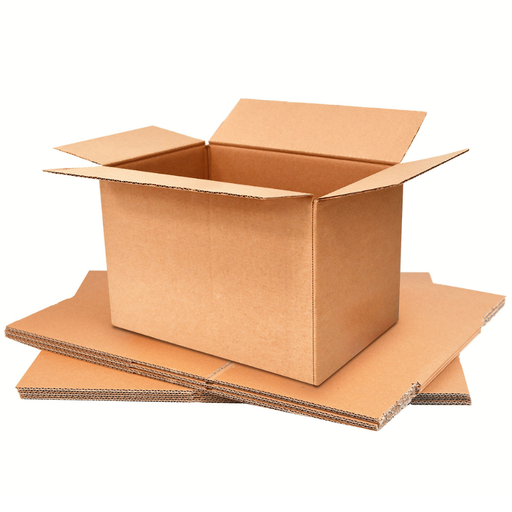
Why This Fits Their Persona: A five-box quantity suits households, students, occasional sellers and anyone checking the size before committing to a larger stock purchase.
The listing provides internal and external measurements, helping buyers avoid guessing the usable capacity or overbuying.
B-flute single wall construction; flat-packed FEFCO 0201 format for compact storage before use.
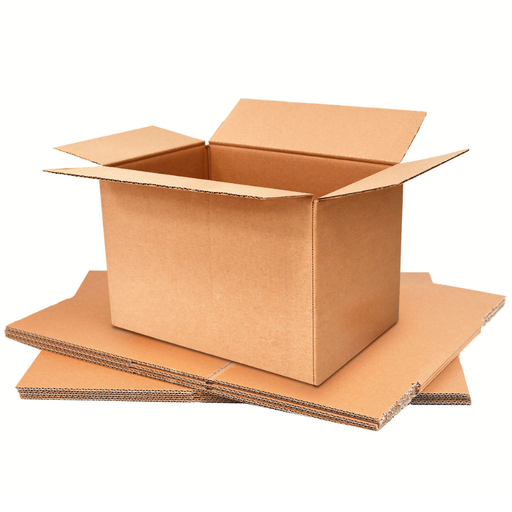
Why This Fits Their Persona: Buyers who prioritise a consistent packing setup can keep one standard carton size for repeat orders, stock organisation or regular dispatches.
The 50-box quantity avoids repeatedly paying for small packs while retaining the same stated dimensions and construction.
Pack of 50; up to 90% recycled content and fully kerbside recyclable according to the product details.

Why This Fits Their Persona: The larger internal footprint suits sellers, offices and households packing several smaller items together, provided the combined load remains appropriate for single wall board.
Checking the 305mm x 229mm x 152mm internal size helps prevent forcing products into a small carton or leaving several unsuitable gaps.
Pack of 25; B-flute cardboard with a flat-packed four-flap design for repeat packing tasks.
We have compiled a complete, real-time list of products that fully satisfy these strict selection criteria and UK safety regulations.
They can be suitable for many lightweight parcels when the contents are packed securely and the assembled box is sealed properly. Check the carrier’s current size, weight and packaging requirements before dispatch, as these vary by service.
Their usable life depends on handling, moisture, load and whether they are reused. A dry box that is not crushed or torn can often be reused for storage or another shipment. Replace cartons showing weakened corners, damp patches or damaged flaps.
Not necessarily. A larger pack may reduce the cost per box, but only if you will use the cartons and have dry storage available. Compare the pack quantity with your expected dispatch volume, then select the internal dimensions that minimise wasted space and protective filling.