
24/7 Customer Support

Free returns

Same-day & Next-day Delivery

Quality Guaranteed

Unlock Your Welcome Offers: FREE Delivery | Up to 80% OFF | Free 30-day JoyPlus trial
Download the APP
Buying packaging boxes for shipping can appear straightforward until boxes arrive too small, collapse under the contents or occupy valuable storage space. For small businesses, online retailers, offices and household users, the right choice depends on more than a low price.
Triplast single wall cardboard boxes are designed for lightweight, everyday packing, with compact sizes and multiple pack quantities. Before choosing, it is worth checking the internal measurements, board construction and intended use rather than relying on broad phrases such as “strong packaging”.
A box listed as 7 x 5 x 5 inch cardboard boxes may have internal dimensions of approximately 178 x 127 x 127mm, while the external measurements are larger. The difference accounts for the cardboard walls and folded flaps.
Always compare the product’s internal dimensions with the item you plan to pack. Leave enough room for protective paper, bubble wrap or other cushioning without forcing the flaps closed.
Single wall boxes are lightweight and economical, but they are not automatically suitable for dense, fragile or heavy contents. A B-flute box can provide useful rigidity and cushioning for small products, components, stationery and household items, yet heavier goods may require a thicker board or double wall construction.
Check the contents’ weight, whether the parcel will be stacked and how much handling it may receive during delivery.
A pack of 100 may reduce the cost per box, but it also needs dry, suitable storage. If you only send occasional parcels, cardboard boxes in packs of 10 or 25 may reduce clutter and avoid holding unused stock.
Flat-packed cardboard boxes take less room before assembly, although they should still be kept away from damp areas such as garages with condensation or unheated sheds.
The three dimensions are usually shown as length x width x height. For these Triplast options:
All three products use the FEFCO 0201 style. This is the familiar regular slotted carton format with four top and four bottom flaps, assembled by folding and sealing with tape.
These are single wall boxes made with B-flute corrugated cardboard, with an approximate wall thickness of 3mm. The fluted layer helps provide rigidity while keeping the box relatively light.
This construction is practical for:
The board grade is listed as 125K/T. However, board grade alone does not determine whether a parcel is suitable for a particular courier journey. Packing method, contents, tape quality and stacking conditions also matter.
The Triplast boxes are made from up to 90% recycled content and contain no plastic. They are described as fully kerbside recyclable, subject to normal local collection requirements.
Reuse the boxes where they remain dry and structurally sound. Before recycling, remove excessive tape and check your council’s guidance, as local collection rules can vary. Do not use damp, crushed or torn packaging for important shipments.
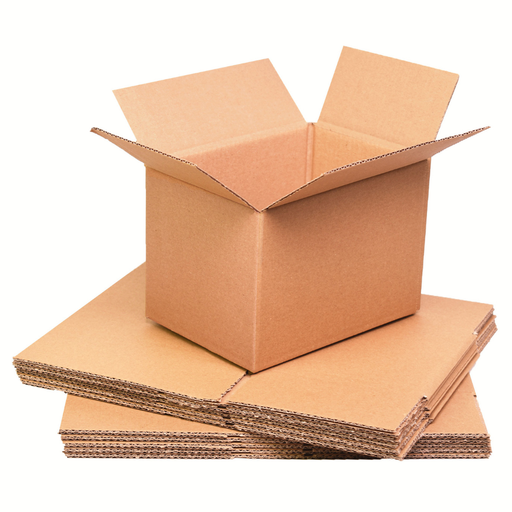
Why This Fits Their Persona: A manageable quantity for occasional senders, new online sellers and households that need small cardboard boxes without committing to bulk stock.
The pack of 10 avoids overbuying while the stated internal dimensions help prevent mistakes caused by measuring only the outside of a box.
178 x 127 x 127mm internal capacity; flat-packed B-flute construction with four-flap FEFCO 0201 assembly.
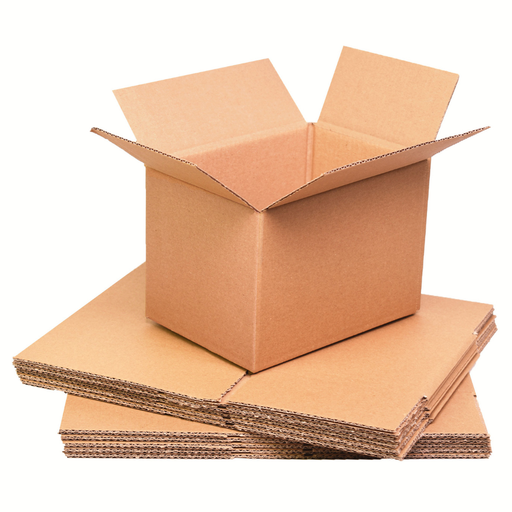
Why This Fits Their Persona: Suitable for sellers and offices that value consistent packaging dimensions and want a larger supply of matching boxes for regular dispatches.
The flat-packed format limits storage clutter, while the listed tolerance and internal measurements make stock planning more predictable.
Pack of 100; up to 90% recycled content; approximately 3mm B-flute wall and plastic-free construction.
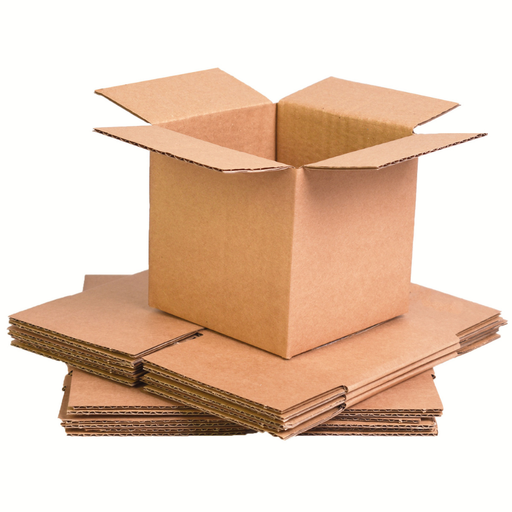
Why This Fits Their Persona: The compact cube format suits sellers, warehouses and offices dispatching small components, samples or uniformly sized products.
Its clearly stated 101mm cube dimensions help match small items closely, reducing unnecessary void space and oversized packaging.
Pack of 25; 101 x 101 x 101mm internal size; FEFCO 0201 format made with B-flute corrugated cardboard.
These boxes are intended for lightweight items. Do not exceed the packaging limits set by your courier, and inspect reused boxes for weakened corners, creases or moisture damage.
We have compiled a complete, real-time list of products that fully satisfy these strict selection criteria and UK safety regulations.
They can be suitable for lightweight, non-fragile items when the size, board construction and sealing method are appropriate. Use internal cushioning for delicate contents and check the chosen courier’s parcel requirements. For heavy or highly fragile goods, consider packaging with a stronger wall construction.
A dry, undamaged box can often be reused, but its lifespan depends on handling, weight and storage conditions. Discard boxes with soft corners, crushed panels, tears or signs of damp. Keeping flat-packed boxes in a dry indoor space helps preserve their structure before use.
Brown corrugated cardboard is commonly accepted through kerbside recycling, but local council rules differ. Remove as much tape and non-cardboard material as practical, keep the cardboard dry and check your local collection guidance before disposal.