
24/7 Customer Support

Free returns

Same-day & Next-day Delivery

Quality Guaranteed

Unlock Your Welcome Offers: FREE Delivery | Up to 80% OFF | Free 30-day JoyPlus trial
Download the APP
Tropical fruit drinks can bring mango, lychee, pineapple, guava and coconut flavours to the UK kitchen without requiring preparation. However, attractive packaging does not always tell you what is inside. A carton labelled as a “fruit drink” may contain only a modest percentage of juice, while a “no added sugar” recipe may still include sweeteners.
Before buying tropical juice drinks, compare the product description, ingredient list, pack size and storage instructions. This helps you avoid paying for a large multipack that does not suit your household, or choosing a drink that is too sweet, too bulky or inconvenient to finish after opening.
Fruit drink, juice drink and juice from concentrate are not interchangeable descriptions. A pineapple juice drink may contain 30% pineapple juice and pulp, while a mixed tropical drink may contain 10% fruit juices from concentrate. The flavour can still be pronounced because of added flavourings, acidity regulators or sweeteners.
Check the quantitative ingredient declaration, such as “mango puree 17%” or “coconut water 100%”, rather than relying on front-of-pack imagery.
A no-added-sugar mango drink can still contain naturally occurring sugars from fruit, as well as sweeteners. For example, Maaza Mango No Added Sugar Drink lists 17% mango puree and sweeteners including sucralose and acesulfame K. Compare the nutrition panel per 100ml and per serving before deciding whether it suits your preferences.
Fruit drink multipacks offer convenience, but six 1-litre cartons need cupboard or fridge space. Once opened, many tropical juice drinks must be refrigerated and consumed within three to five days. Smaller cans or pouches can be more practical for lunchboxes, picnics and occasional use, while large cartons suit families and entertaining.
Look for the percentage of juice, puree or coconut water. These figures make comparisons easier:
A higher fruit percentage does not automatically mean the drink will match your taste. It usually indicates a different style and texture, so consider whether you want a smooth drink, pulp, jelly pieces or a lighter fruit blend.
Read the nutrition panel per 100ml, then calculate the amount in the container you intend to drink. A 1-litre carton can contain ten 100ml portions, so the total may be considerably higher than the small panel figure suggests.
If you prefer a lighter option, Capri-Sun Tropical lists 19 kcal per 100ml, while Capri-Sun Zero Orange lists 4 kcal per 100ml. These drinks use sweeteners, so check the ingredient list if you are avoiding them. Sunpride also contains aspartame and acesulfame K and states that it contains a source of phenylalanine; it is not suitable for people with phenylketonuria (PKU).
Choose packaging around how the drink will be used:
Check the best-before date, storage conditions and opening instructions. Shake drinks containing pulp or puree before serving, and refrigerate leftovers promptly according to the label.
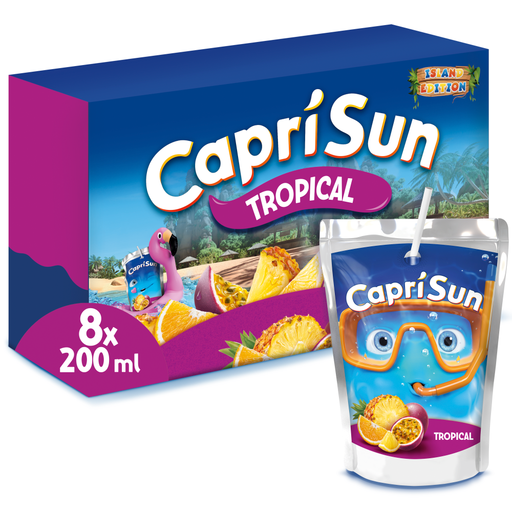
Why This Fits Their Persona: Eight individual pouches provide portion-controlled tropical juice drinks for lunchboxes, picnics or occasional family outings without opening a full carton.
The 200ml format reduces the chance of leaving a large opened carton unfinished. The label states 10% fruit juice from concentrate, so shoppers can assess the fruit content clearly.
Eight 200ml pouches; 19 kcal per 100ml; no artificial colours or preservatives listed.
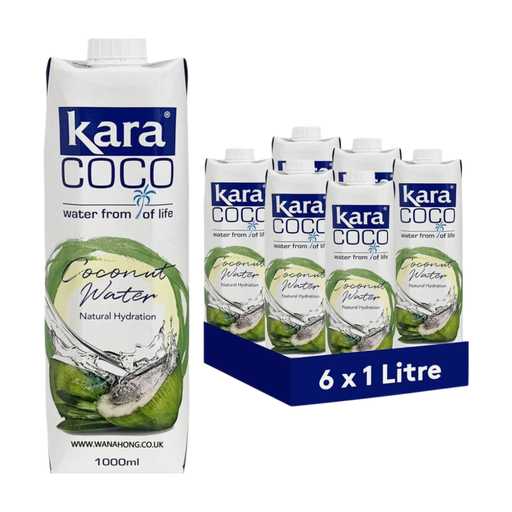
Why This Fits Their Persona: A six-carton supply suits shoppers who want a simple coconut water option for chilled serving, smoothies or regular household use.
The product lists 100% coconut water, with no added sugars, preservatives or artificial flavours in the supplied description. This makes the ingredient profile straightforward to compare.
19 kcal per 100ml; contains potassium, sodium and magnesium; pasteurised and ready to drink.
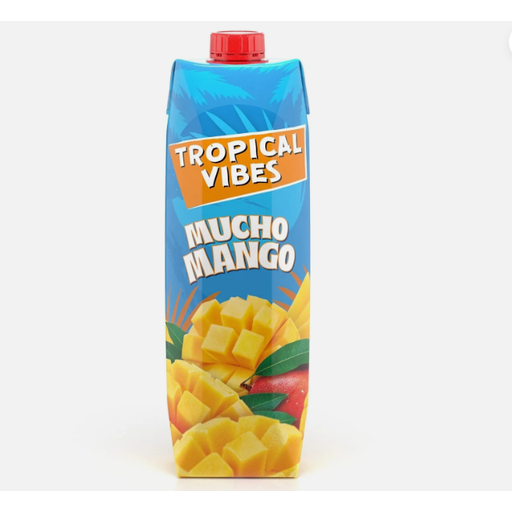
Why This Fits Their Persona: Six 1-litre cartons are suited to larger households, gatherings, Caribbean food shoppers and anyone using mango drinks in smoothies or mixers.
The pack quantity is clear, helping heavy users compare cost and storage before ordering. Its 32% mango pulp content is stated rather than implied by packaging imagery.
Six 1-litre cartons; 32% mango pulp; suitable for chilled serving and recipe use.
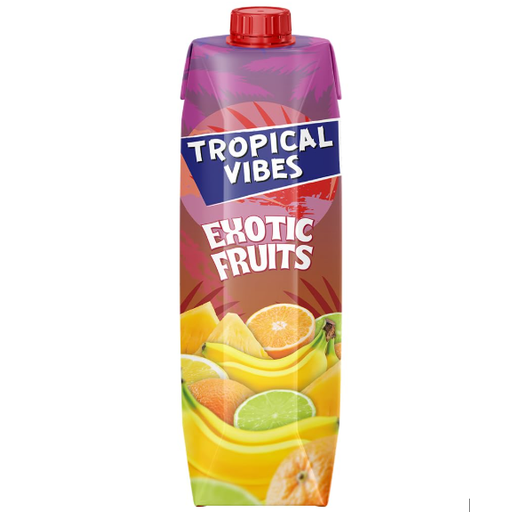
Why This Fits Their Persona: A mixed exotic fruit profile works for family breakfasts, barbecues and sharing occasions where different guests may prefer passion fruit, guava, pineapple, mango or papaya notes.
The mixed fruit ingredients are listed, so buyers can check whether the flavour profile suits the occasion instead of choosing from a vague “tropical” description.
Six 1-litre cartons; mixed exotic fruit juices; unopened cartons can be stored at ambient temperature.
We have compiled a complete, real-time list of products that fully satisfy these strict selection criteria and UK safety regulations.
For a more textured drink, Mogu Mogu Lychee Drink with Nata de Coco 1L contains nata de coco pieces. It is closer to a drink-and-snack format than a conventional fruit juice drink, so check the coconut allergen information and colour details on the pack.
Yeo’s Lychee Drink 300ml offers a smaller serving size for chilled Asian food pairings or occasional refreshment. For pineapple fans, Tropical Sun Pineapple Juice Drink With Pulp 330ml contains pineapple juice, pieces and pulp, making it suitable for serving over ice or using as a mixer.
If you want a broader flavour profile, Sunpride 1ltr Tropical Juice Drink combines orange, apple, pineapple, mango and passion fruit. Always review the sweetener and phenylalanine information before buying.
Small pouches or cans are usually easier to pack than opened 1-litre cartons. Check the stated age guidance, straw warnings and serving size. Capri-Sun Tropical is supplied in 200ml pouches, while J2O Apple & Raspberry Fruit Blend comes in 250ml cans for individual servings.
This varies by product. Many 1-litre cartons require refrigeration and consumption within three to five days. Coconut water may have a shorter recommended period after opening. Follow the product label rather than relying on a general rule.
No. Coconut water is the liquid from coconuts, while mango drinks, guava drinks and pineapple juice drinks are usually water-based beverages containing juice or puree plus other ingredients. Check the ingredient percentage and nutrition panel to select the format that suits your household.