Flat dwellers without an outside vent route
You need to avoid routing a hose through a wall or window, but the dryer must also fit the available space. A stated noise value matters when it will run near living or sleeping areas.


A heat-pump dryer is a sensible starting point for a small flat without a practical outside vent route; a condenser dryer also avoids a vent hose, while a vented dryer needs a route outdoors. For tumble-safe bedding, check the care label and the exact model’s programme load limit rather than relying on its headline drum capacity. Measure the appliance space and delivery route, and compare the energy information and noise value before choosing.
You need to avoid routing a hose through a wall or window, but the dryer must also fit the available space. A stated noise value matters when it will run near living or sleeping areas.
You need to check the bedding care label, the exact model’s programmes and the permitted load for the programme you intend to use. Headline drum capacity alone cannot establish whether a particular duvet is suitable.
You want to compare model-specific energy information and consider lower-temperature drying or moisture sensing. Which? notes that heat-pump dryers often cost more to buy than vented or conventional condenser models, so the initial outlay remains part of the decision.
Consider it when: You have no practical outside vent route and want lower-temperature drying; Bosch UK describes its heat-pump dryers as vent-free.
Trade-off: Which? notes a higher initial outlay is common, and the technology alone does not establish whether an individual duvet will fit its programme limit.
Consider it when: An outside vent hose is impractical and you are comparing alternatives without one, .
Trade-off: Check the exact model’s energy information and how its collected water must be emptied or drained; vent-free installation does not establish heat-pump performance.
Consider it when: The flat has a practical, permitted route for its hose to carry air outside.
Trade-off: The hose may need to be routed through an external wall or window, which may rule this type out before other features are compared.
| Concern | What to check | Who this matters to |
|---|---|---|
| Installation and fit | Confirm the venting requirements; measure the installed depth, door clearance and delivery route. | If there is no suitable outside vent, I need a dryer that can reach and fit its intended space. Around 38% of consumers put installation and fit first. |
| Bedding suitability | Check the bedding care label and the exact model’s bedding or duvet programme load limit. | When I regularly dry a duvet, I need to know whether its weight is permitted on the relevant programme. Roughly 31% of consumers prioritise bedding suitability. |
| Energy and fabric care | Compare the exact models’ energy information, drying programmes and any moisture-sensing options. | For frequent bedding loads, I want to weigh energy use and lower-temperature care against the initial outlay; about 31% of consumers make energy use and fabric care their main concern. |
A duvet programme may permit a much smaller load than the dryer’s headline capacity. AEG Support says its Duvet programme is usually limited to 3 kg; the limit for another model must be checked separately.
Check your bedding’s care label, then read the exact dryer manual for the appropriate programme and its maximum load.
A vented dryer needs a route to the outside, which may be impractical in a flat.
Confirm a practical, permitted outside route before selecting one; otherwise compare heat-pump and condenser models.
A dryer that fits the width of a recess may still be too deep or difficult to move through the delivery route. Its stated noise value also matters near living areas or bedrooms.
Measure the recess and access route in all dimensions, allow for the door and service access, and compare stated dB values for the models you are considering.
Lint build-up and overloaded sockets are avoidable fire risks.
London Fire Brigade advises cleaning the tumble-dryer filter after every load and not overloading sockets with energy-hungry appliances.
Bosch UK presents heat-pump dryers as a vent-free, lower-temperature option relevant to flats without an outside vent route.
AEG UK lists heat-pump models with bedding-focused programmes, including the 9 kg TR959M6BC.
Beko UK lists tumble dryers across compact and larger capacities, including heat-pump and condenser options.
Miele UK states that its current tumble-dryer range uses heat-pump technology and includes 8 kg and 9 kg choices.
These heat-pump dryers are options to consider if your flat lacks a practical outside vent route. Before choosing one for bedding, check the exact model’s programme load limit against the item you need to dry, as well as its fit in your flat.
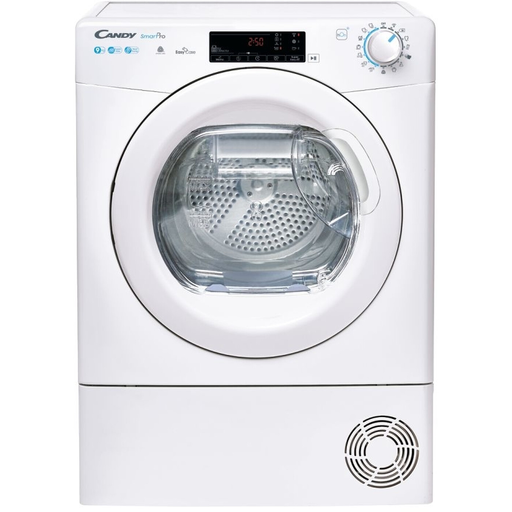 No image available
Consider this vent-free dryer where an outside hose is impractical. Its stated energy rating is A++; check the model manual for a suitable bedding programme and its load limit, then measure the intended space and delivery route.
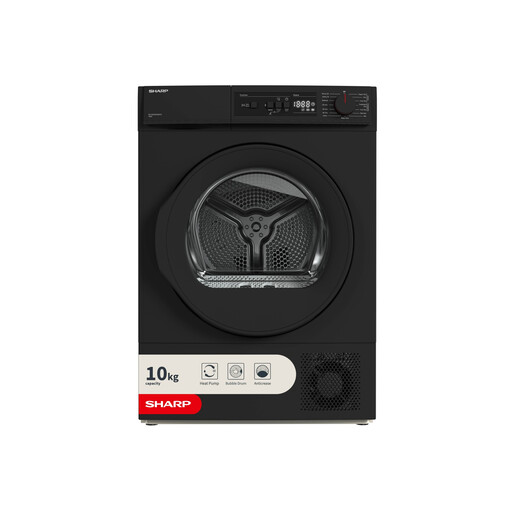 No image available
Its vent-free dryer type is worth considering for a flat without an outside hose route. The stated energy rating is A++; confirm the programme limit for your bedding rather than treating the 10 kg drum capacity as a duvet allowance, and check the available space.
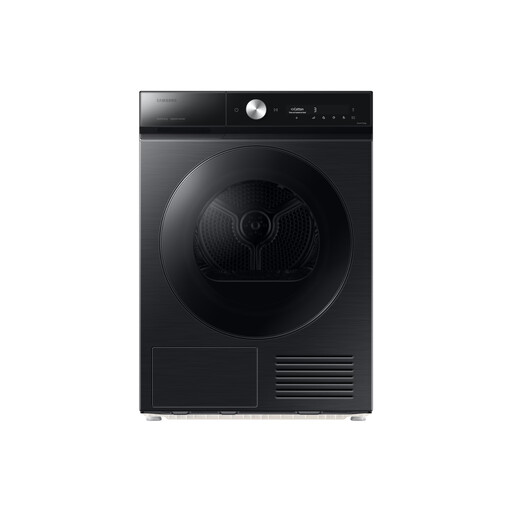 No image available
This heat-pump model is an option where a vent hose is impractical. Its stated energy rating is A+++; compare current model-specific energy information, and check bedding programme limits and installation dimensions before deciding.
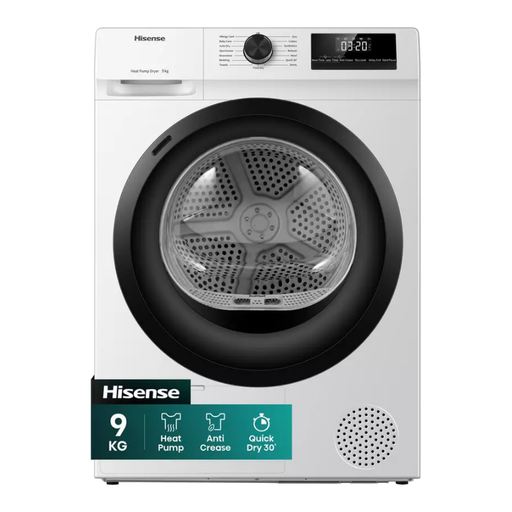 No image available
Consider its heat-pump type if your flat has no practical vent route. The stated energy rating is A++; use the exact manual and your bedding’s care label to assess programme suitability, and measure the recess and delivery route.
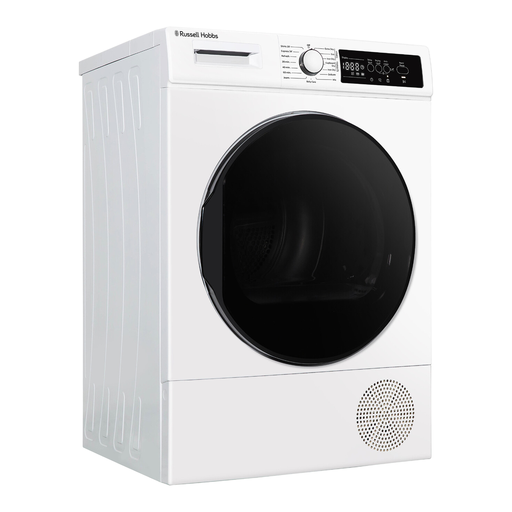 No image available
Its heat-pump type makes it an option where an outside vent hose is impractical. Check the exact manual for the permitted bedding load, and confirm its installed dimensions and stated noise value if it will run near living or sleeping areas.
Yes, particularly if you cannot practically route a vent hose outside: Bosch UK describes its heat-pump dryers as vent-free, while vented dryers require an outside hose route. Still check the exact model’s dimensions, noise value and bedding programme; a condenser dryer is another option without a vent hose.
No. Check the duvet’s care label and the maximum load for the exact dryer programme. AEG Support says its Duvet programme is usually limited to 3 kg, illustrating why headline drum capacity is not a programme-specific allowance.
Look for an appropriate Duvet, Bedlinen or equivalent programme and confirm its permitted load for the item you intend to dry. Moisture sensing is also worth checking: Beko UK describes sensor programmes that stop at the selected dryness level, but features vary by model.
Clean the lint filter after every load. London Fire Brigade also advises against overloading electrical sockets with energy-hungry appliances.
Compare the energy label and product information for each exact model rather than assuming that all dryers of one type have the same energy use. Check the information shown on the listing against the model you intend to buy, especially when comparing labels displayed in different formats.