Who needs to consider what?

Housemates sharing electricity bills

If bedding is dried regularly, compare each model’s energy information and intended programme use. Electrical Safety First identifies heat-pump dryers as more energy-efficient than condenser and vented types, but the choice still has to fit the house and its laundry routine.

Students with limited laundry space

Measure the intended position, including space for the door, plugs, pipes and required ventilation. A smaller machine may be easier to position, but its load limits may mean dividing bedding into more turns.

Housemates drying bedding in rotation

Check the care label on each item and the dryer’s permitted load before considering drum capacity, sensor settings or a bedding programme. Do not overfill a dryer with bulky items such as duvets.

What matters when choosing?

Heat-pump dryer

Consider it when: The house has no suitable outside vent and reducing electricity use matters.

Allow for: Capacity, depth, cycle length and bedding settings still vary by model.

Condenser dryer

Consider it when: An outside vent is impractical and the house can manage the water tank or an approved drain connection.

Allow for: Electrical Safety First identifies heat-pump dryers as more energy-efficient.

Vented dryer

Consider it when: A suitable outside vent is already available and the accommodation provider permits the installation.

Allow for: It needs an exhaust route; Electrical Safety First recommends professional installation.

ConcernWhat to checkWho this matters to
Electricity use Compare the current energy information and the programmes you expect to use for bedding. When we split the electricity bill, I want regular bedding loads to use less electricity; roughly 31% of consumers put electricity use first.
Bedding loads Check each item’s care label and the dryer’s load limits; look for a bedding programme if tangling is a concern. If bedding goes through the machine between housemates’ turns, I need enough room for permitted items to move; around 31% of consumers make bedding-load handling their primary concern.
Space and installation Measure depth and door clearance, then check ventilation requirements and access to a suitable socket. I need the dryer to fit the shared laundry area without obstructing its door or ventilation; about 23% of consumers put installation fit first.
Shared maintenance Check access to the lint filter and water tank, and agree who attends to them after use. With several people using one machine, I want filter cleaning and fault reporting to be everyone’s responsibility; roughly 15% of consumers prioritise safe shared use.

Mistakes to avoid

  • Assuming every bedding item can go in the dryer

    A bedding programme does not override an item’s care label, and bulky items can overload the drum. Do not pack a dryer with items such as duvets.

    Read each label and the dryer’s load instructions, then divide permitted bedding into manageable loads.

  • Choosing drum capacity before measuring

    A dryer with enough rated capacity may still be too deep for the intended position or lack the clearance needed to open its door.

    Measure from plugs and pipes as well as the wall, and compare the space with the exact model’s dimensions and installation instructions.

  • Planning to use a shared extension lead

    Electrical Safety First warns that connecting a tumble dryer alongside other appliances can overload an extension lead and create a fire risk.

    Position the machine so its plug reaches a suitable fixed wall socket, and do not use it if the plug, cable or socket is damaged.

  • Leaving filter cleaning to another housemate

    Lint can accumulate when responsibility is unclear. Humberside Fire and Rescue Service advises cleaning the lint filter after every load.

    Agree that the person unloading the dryer cleans the filter, checks the tank where applicable and reports unusual operation.

Brands and model lines to consider

Bosch

The WQG24502GB illustrates a heat-pump option for houses prioritising a bedding programme and a larger rated drum.

  • Bosch lists a 9 kg capacity and a bed-linen programme with a reversing drum for this model.
  • The programme does not make unsuitable bedding tumble-safe; check individual labels, load limits and installation space.

Beko

The BM3T3713 illustrates a lower-capacity heat-pump option to assess where laundry space is constrained.

  • Beko lists a 7 kg capacity and sensor drying for this model.
  • Check its exact dimensions and permitted bedding loads before deciding whether the smaller drum suits shared use.

Hotpoint

The C HD 94M WBS UK illustrates a 9 kg heat-pump route where a colder laundry location may affect the choice.

  • Hotpoint lists a ColdGuard programme specified for temperatures as low as 0°C.
  • Its stated 67.2 cm depth needs checking against the installation space; Hotpoint’s FastDry claim concerns clothing, not bedding.

Hisense

The DH1Q902BW2 is a 9 kg heat-pump model to consider if anti-crease functionality is relevant to shared laundry turns.

  • The Joybuy listing identifies anti-crease functionality for this model.
  • Check the model’s bedding-cycle guidance and installation instructions before choosing it for the house.

Heat-pump dryers on Joybuy

These 9 kg heat-pump models are choices to assess for separate, tumble-safe bedding loads in a shared house. For each one, check the permitted bedding load, available cycle and installation space before buying.
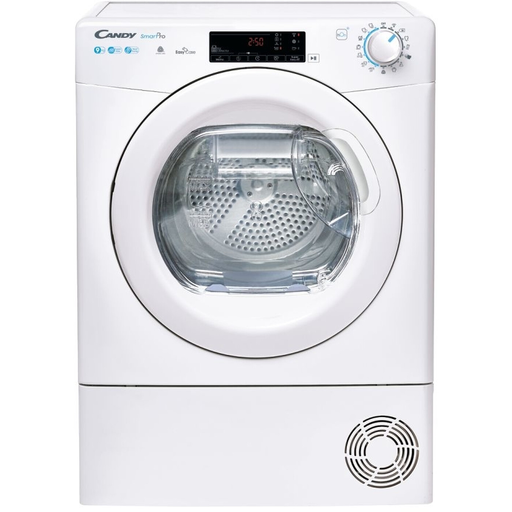
Candy CSOE H9A2TE-80 heat-pump tumble dryer

Candy CSOE H9A2TE-80 Smart Pro, 9 kg

For shared bedding turns, check which permitted items fit the drum without being packed tightly.

Heat-pump model. Confirm that its available cycles suit the bedding you intend to dry.

View on Joybuy
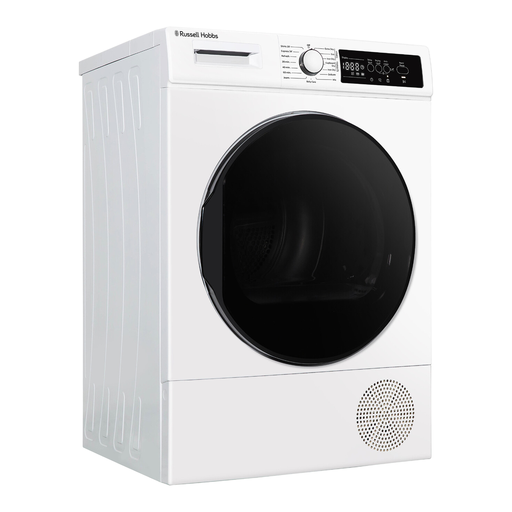
Russell Hobbs RH9HPTD1E12W heat-pump dryer

Russell Hobbs RH9HPTD1E12W, 9 kg

If several housemates share bedding turns, compare the permitted load for each item with the room available for the machine.

Heat-pump model. Check its manual for bedding-cycle and installation guidance.

View on Joybuy
Hoover HRE H9N2TE-80 heat-pump tumble dryer

Hoover HRE H9N2TE-80, 9 kg

For a house rotating bedding loads, establish which cycle and load size the manual permits before relying on the rated capacity.

Heat-pump model; the product name also identifies Sensor Dry and Wi-Fi connectivity.

View on Joybuy
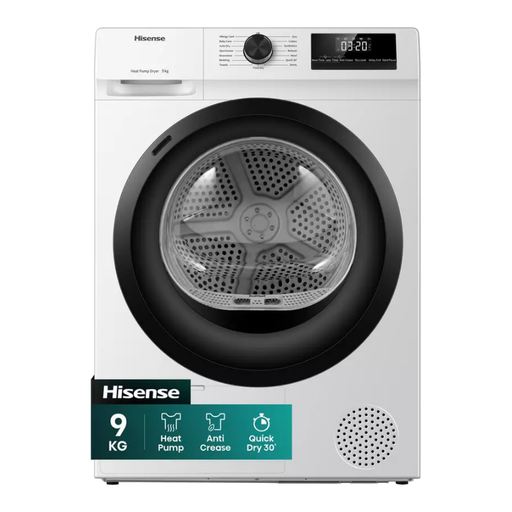
Hisense DH1Q902BW2 heat-pump tumble dryer

Hisense DH1Q902BW2 1 Series, 9 kg

Housemates interested in anti-crease functionality should still check that the chosen cycle permits their tumble-safe bedding.

Heat-pump model with anti-crease functionality. Check its installation instructions against the available socket and space.

View on Joybuy

Questions about bedding and shared use

Can we tumble-dry bedding in a student-house dryer?

Yes, if each item’s care label permits tumble drying and its size is within the dryer’s load instructions. Do not pack bulky bedding tightly into the drum; do not overfill it with items such as duvets either.

Does a student house need a heat-pump dryer?

Not necessarily, but it is a sensible type to assess where there is no suitable outside vent and electricity use matters. Electrical Safety First says heat-pump dryers need no wall opening and are more energy-efficient than condenser and vented types; the individual machine must still fit the space and bedding load.

Can the dryer share an extension lead with other appliances?

Do not plan to run it that way. Electrical Safety First warns that a tumble dryer used alongside other appliances can overload an extension lead; position it where its plug reaches a suitable fixed wall socket.

Who should clean a shared dryer?

Agree that the person unloading it cleans the lint filter after every load, as advised by Humberside Fire and Rescue Service. Follow the model’s instructions for its water tank and other maintenance, and make sure housemates report faults.

What electrical checks apply in student accommodation?

For rented homes covered by England’s electrical-safety standards, Ministry of Housing, Communities & Local Government guidance says landlords must arrange inspection and testing of the electrical installation by a qualified person at least every five years. That guidance lists student halls of residence among excluded tenancies; if you live in halls or elsewhere in the UK, ask your accommodation provider which requirements apply.