
24/7 Customer Support

Free returns

Same-day & Next-day Delivery

Quality Guaranteed

Unlock Your Welcome Offers: FREE Delivery | Up to 80% OFF | Free 30-day JoyPlus trial
Download the APP
Navigating the world of tumble dryers can feel overwhelming. With endless features and technical jargon, it is easy to make a purchase you later regret. As a Joybuy Product Recommendation Officer, my role is to help you sidestep the common pitfalls and find an appliance that genuinely fits your home, lifestyle and budget. Let's cut through the marketing clutter and focus on what truly matters.
Before you spend your hard-earned money, be aware of these common traps:
To make an informed choice, you need to understand three key parameters. These factors will have the biggest impact on cost, convenience and how well the machine fits into your home.
This is the most important decision you will make. Each type works differently and is suited to different homes and budgets.
The right capacity depends entirely on your household's needs.
Always measure your available space before buying. Standard freestanding tumble dryer models are typically 60cm wide, but depth can vary, especially for heat pump models.
A tumble dryer's energy rating, which runs from A+++ (most efficient) to G (least efficient), has a direct impact on your electricity bill. A heat pump tumble dryer will almost always have an A++ or A+++ rating, while condenser models typically fall in the B or C range. The annual energy consumption (measured in kWh) is listed on the energy label and gives you a clear idea of the expected running costs.
Based on a practical assessment of features, value and suitability for different UK households, here are some standout options.
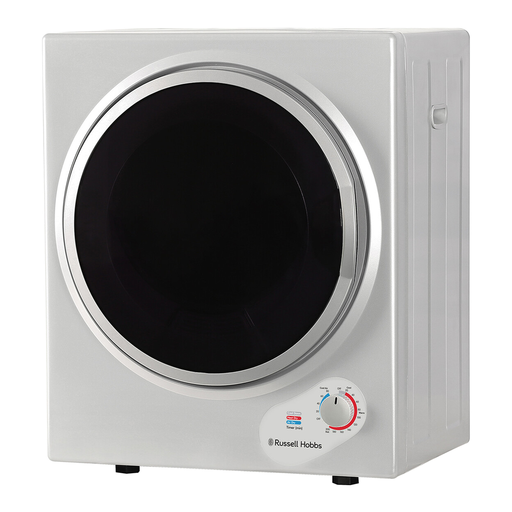
Why This Fits Their Persona: This is the perfect solution for anyone living in a small flat, student accommodation or mobile home where space is at a premium. Its compact design allows it to be placed on a countertop or even mounted on a wall, freeing up valuable floor space.
It directly challenges the "bigger is better" myth by providing a 2.5kg capacity perfectly sized for smaller, more frequent loads, ensuring you are not wasting energy drying a half-empty drum.
Its main advantage is its flexible installation—it can be placed on a worktop or wall-mounted. It is also a very quiet tumble dryer, ideal for small living spaces.

Why This Fits Their Persona: This Hoover tumble dryer is a dependable workhorse for a small to medium family. The 8kg capacity is ample for daily laundry and as a condenser model, it can be installed anywhere without needing a vent, offering great flexibility for busy households.
It offers a sensible balance between upfront cost and running expenses. While its B energy rating isn't as low as a heat pump's, it provides a much more accessible price point for families on a budget.
Its key advantage is its practicality. The 24-hour delay timer allows you to schedule cycles for off-peak hours and the front-accessible water tank makes maintenance straightforward.
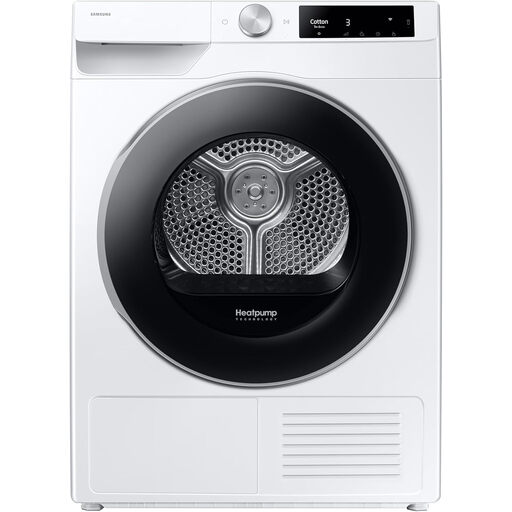
Why This Fits Their Persona: For those prioritising long-term savings and technology, this Samsung tumble dryer is an excellent choice. The large 9kg capacity is ideal for big families and its smart features offer genuine utility for managing energy and laundry schedules remotely.
It justifies its premium price by tackling the running cost trap head-on with its A+++ rating. The SmartThings app with AI Energy Mode also makes its smart features genuinely useful for monitoring and reducing consumption.
Its standout advantage is the combination of A+++ energy efficiency and intelligent drying. The OptimalDry system uses sensors to adjust drying time automatically, protecting clothes and saving energy.
We have compiled a complete, real-time list of products that fully satisfy these strict selection criteria and UK safety regulations.
The running cost varies significantly based on the dryer's technology and energy rating. As a rough guide:
No. Only vented tumble dryers require an external hose to expel moist air. Both condenser and heat pump models are self-contained. They collect water from your clothes in an internal reservoir, which you simply need to empty after a few cycles. This makes them far more flexible to install.
With proper care, a modern tumble dryer can be expected to last between 10 and 13 years. To maximise its lifespan, it is essential to perform regular maintenance. The most critical task is to clean the lint filter after every single use. A clogged filter restricts airflow, forces the machine to work harder and poses a significant fire risk. For condenser and heat pump models, you should also regularly empty the water container and clean the condenser unit according to the manufacturer's instructions.