Choose a tumble dryer by whether a suitable programme can dry your actual uniform load before bedtime, rather than planning to run it while everyone sleeps. For frequent use, compare heat-pump models with the right capacity and sensor drying; if time is tight, check the stated duration and load limit of a rapid programme against the garments’ care labels.
Who needs an evening-ready dryer?
Households facing a morning uniform deadline
Parents and carers drying a small set of shirts, trousers, jumpers or PE kit need a programme that finishes before they go to bed. A rapid-cycle time is useful only if its stated load limit covers the clothes they need to dry.
Households drying uniforms regularly
When school clothes go through the dryer repeatedly during the week, energy information, the size of a normal load and sensor-controlled stopping matter alongside cycle time.
Buyers concerned about garment care
For everyday school clothes, check the care labels and choose a suitable programme rather than assuming one setting works for every garment. Sensor drying may help avoid running a cycle longer than needed, but it does not replace those checks.
What matters when choosing?
Work backwards from bedtime: establish which programme suits the uniform load and when it will finish, then compare running information and whether the appliance fits its intended space.
| Concern |
What to check |
Who this matters to |
| Finishing before bedtime |
Check the stated programme duration, permitted load in kg and garment-care instructions. A rapid-cycle time need not apply to a full drum. |
If I need tomorrow’s uniform dry tonight, I need a cycle I can finish and unload while awake; around 40% of consumers put that deadline first. |
| Repeated use and garment care |
Compare the applicable energy label, normal batch size and whether the chosen programme uses moisture sensing. |
When uniforms need drying throughout the school week, I want to weigh repeat-use energy information against the risk of drying clothes longer than necessary; around 30% of consumers make this their primary concern. |
| Installation and safe access |
Measure installed depth and required clearances; check vent or water-handling arrangements, wall-socket access and space to clean the lint filter. |
If the laundry space is tight, I need the dryer to fit without blocking ventilation or routine maintenance; for around 30% of consumers, safe, practical placement comes first. |
Common buying mistakes
-
Planning to dry uniforms while asleep
West Yorkshire Fire and Rescue Service advises against using a tumble dryer while you are asleep or out of the house. A delayed start does not resolve that safety concern.
Choose a suitable load and programme that can finish before bedtime, or start the laundry earlier when the next-morning deadline cannot move.
-
Applying a rapid-cycle time to every load
A quoted time may cover less than the dryer’s full capacity. Beko, for example, states that its B5T48231R RapiDry programme can dry up to 5 kg in one hour; that is not a promise for every load or programme.
Compare the maker’s stated load limit and garment guidance with the uniforms you intend to dry.
-
Choosing by drum capacity alone
A larger stated capacity does not tell you how long a small uniform load will take. Energy Saving Trust also advises comparing appliance energy information rather than relying on the rating in isolation.
Check the energy label and programmes against your usual batches, including the small loads that have to be ready that evening.
-
Measuring the appliance but not its working space
A dryer that fits into an opening may still leave too little room for required ventilation, socket access or filter cleaning.
Check the exact model’s installed dimensions and clearances, use a suitable wall socket rather than a shared extension lead, and leave access to clean the filter after use.
Brands to consider
Beko
The B5T48231R is a model to examine when a stated small-load drying time matters.
- Beko states that its RapiDry programme can dry up to 5 kg in one hour and lists sensor drying on this 8 kg heat-pump model.
- The one-hour claim is limited to the stated load; check the selected programme and garment labels before building an evening routine around it.
AEG
The TR718AE4B offers a point of comparison for an 8 kg heat-pump dryer with humidity-sensor controls.
- AEG lists ProSense humidity sensors for this model, alongside an anti-crease setting and delay-start controls.
- Use timing controls only for a cycle that finishes while someone is awake; check the intended programme and the model’s installed dimensions.
Bosch
The WTH85222GB is an 8 kg heat-pump model for comparing automatic dryness settings and water-drain arrangements.
- Bosch lists AutoDry and an optional water-drain accessory for the WTH85222GB.
- Those features do not establish when a particular uniform load will finish; check the manual and care labels.
Miele
Miele lists heat-pump dryers in 8 kg and 9 kg capacities, with features that vary by model.
- The range provides different capacities and model-specific programme and connectivity options to compare.
- Check the exact model’s programme, dimensions and garment guidance rather than applying a feature from one model across the range.
Joybuy heat-pump dryer options
These heat-pump dryers are options for comparing capacity and finding a programme that suits an evening uniform load. Before relying on a short cycle, check its garment guidance and load limit, and plan for drying to finish while you are awake.
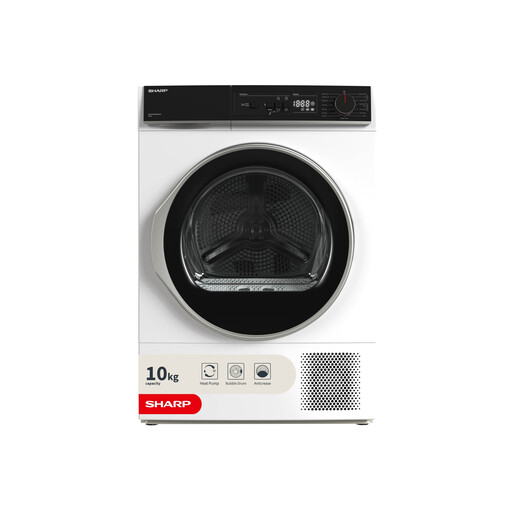 Image unavailable
Sharp KD-NHA0S6GW1D-EN 10 kg heat-pump tumble dryer
Consider this model if your normal household batches call for its stated 10 kg capacity. Check which programme suits the smaller uniform load and whether it can finish before bedtime; capacity alone does not establish the cycle time.
View on Joybuy
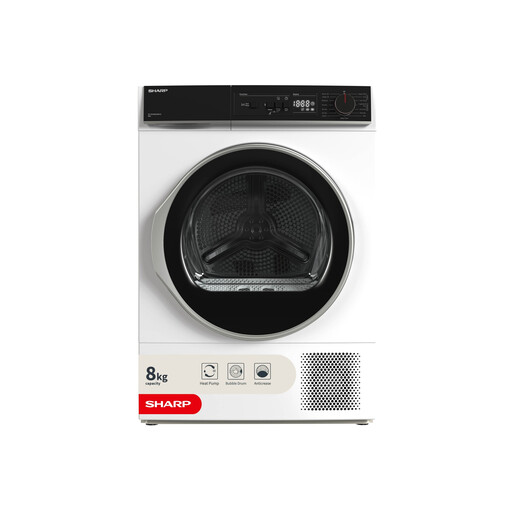 Image unavailable
Sharp KD-NHA8S6GW1D-EN 8 kg heat-pump tumble dryer
The stated 8 kg capacity is a different batch-size option from the 10 kg Sharp model. For an urgent set of uniforms, check the chosen programme’s load limit and garment instructions before relying on its timing.
View on Joybuy
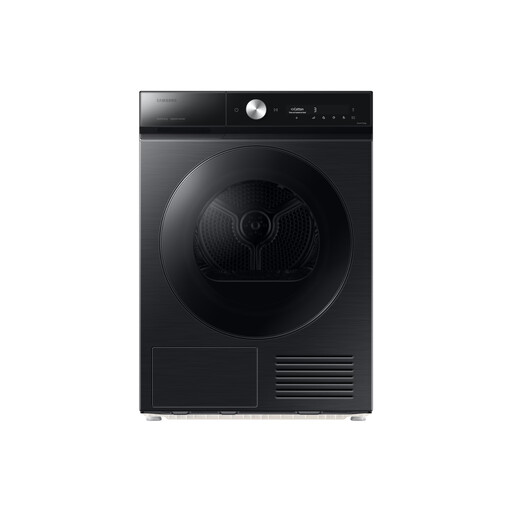 Image unavailable
Samsung Series 8 AI Energy DV90BB9545GBS1 9 kg heat-pump tumble dryer
If a timed evening programme is important, check whether this model offers one suitable for your actual uniform load and its care labels. Its stated capacity is 9 kg, not a guarantee that every programme accepts or dries that amount before bedtime.
View on Joybuy
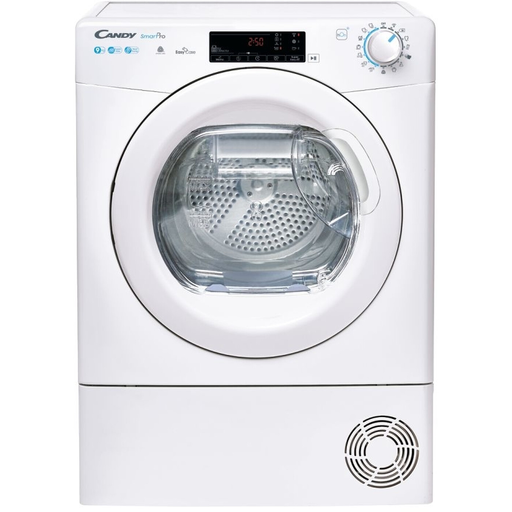 Image unavailable
Candy CSOE H9A2TE-80 9 kg Smart Pro heat-pump tumble dryer
This 9 kg heat-pump model is an option for households comparing larger routine batches. Check the duration and permitted load of a programme suitable for uniforms before counting on it for an evening deadline.
View on Joybuy
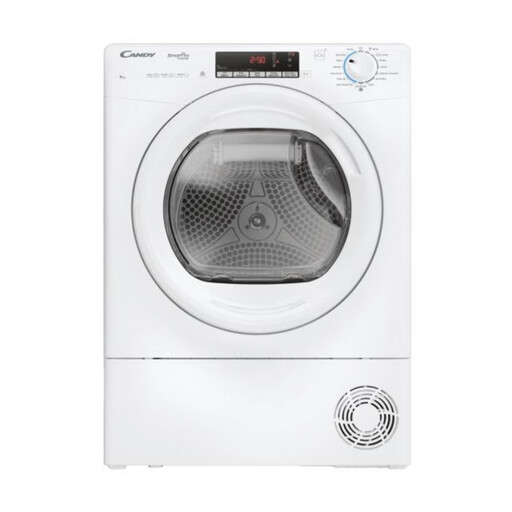 Image unavailable
Candy CROE H9A3TE-80/N 9 kg heat-pump tumble dryer
For repeated school-week loads, compare this model’s stated 9 kg capacity with your normal batch size. Confirm a suitable programme’s duration and load limit if the clothes must be unloaded before bed.
View on Joybuy
Questions about uniform drying
Can I set a tumble dryer to run while I sleep?
Do not plan an unattended overnight cycle. West Yorkshire Fire and Rescue Service advises against using a dryer while asleep or away from home; choose a suitable load and start early enough to finish while someone is awake.
Does a heat-pump dryer need an external wall vent?
A heat-pump dryer does not need the external wall opening required by a vented dryer, according to Electrical Safety First. Check the chosen model’s installation clearances and how you will handle collected water.
How should I compare dryers for repeated electricity use?
Compare the energy label and product information for the appliances you are considering, alongside the size of the loads you usually dry. Energy Saving Trust explains that labels include energy-use information; capacity or a rapid-cycle claim alone does not answer the running-use question.
What maintenance matters during the school week?
Clean lint and fluff from the filter after every use and follow the model’s manual for other cleaning. Keep ventilation clear, avoid overloading, and stop using the appliance if you notice scorch marks or damaged wiring.


